Some World Cup matches are remembered for brilliance. Others are remembered for drama, heartbreak, or unforgettable goals. Then there is the Disrace of Gijon.
It was a match that contained almost no excitement, very little football worth celebrating, and enough controversy to leave a permanent scar on the World Cup. More than four decades later, it remains one of the darkest chapters in tournament history.
The game was not memorable because of what happened. It became infamous because of what stopped happening.
For 80 painful minutes, the world watched two teams seemingly abandon competition in favor of convenience. The result eliminated Algeria from the 1982 World Cup and sparked outrage across the football world.
Most importantly, the Disgrace of Gijon forced FIFA to change the way World Cups are played forever.
The Road to Gijón
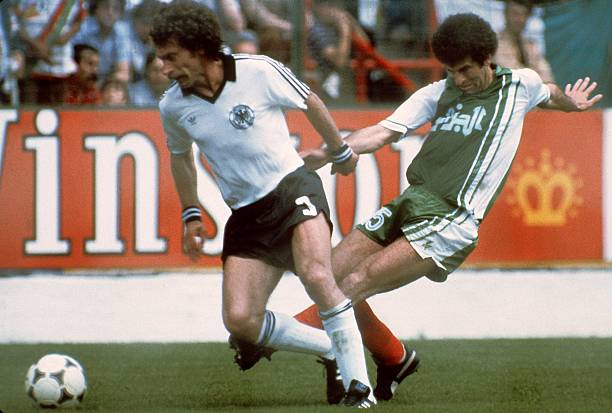
The controversy unfolded during the group stage of the 1982 World Cup in Spain.
Algeria had already captured global attention by defeating West Germany 2-1 in one of the greatest upsets in World Cup history. It was a remarkable result that challenged assumptions about African football and announced Algeria as a serious force.
The North Africans followed that victory with a defeat against Austria before bouncing back to beat Chile 3-2 in their final group match.
After completing their schedule, Algeria sat anxiously and waited.
One final game remained in the group: West Germany against Austria.
Because the fixtures were not played simultaneously, both teams knew exactly what result they needed before kickoff.
That knowledge would prove disastrous.
The Equation Was Simple
The standings created a dangerous situation.
West Germany needed a victory to qualify. Austria would also progress if Germany won by one or two goals.
A larger German victory would eliminate Austria.
A draw or Austrian win would eliminate West Germany.
The ideal outcome for both European teams was a narrow German victory.
Algeria could do nothing but watch.
When the teams walked onto the pitch in Gijón on 25 June 1982, many expected a tense, competitive encounter.
Instead, football witnessed something very different.
West Germany Scores Early
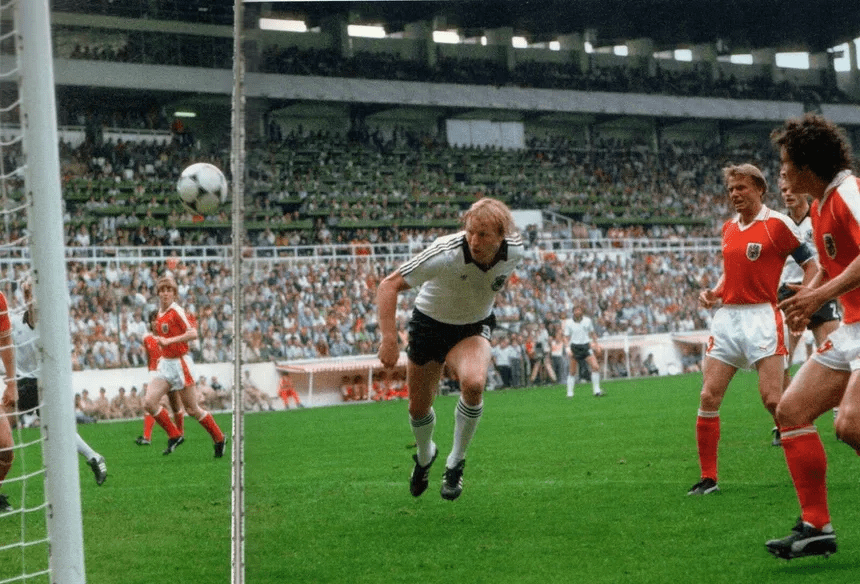
The match began normally enough.
West Germany attacked with purpose during the opening minutes and found the breakthrough in the 10th minute. Forward Horst Hrubesch headed home to give the Germans a 1-0 lead.
At that moment, the scoreline perfectly suited both teams.
Germany had the victory they needed.
Austria remained in a qualifying position.
What followed transformed an ordinary football match into one of the most infamous events in sporting history.
Eighty Minutes of Non-Competition
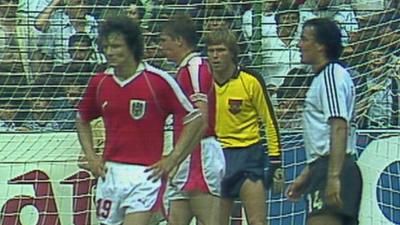
After Hrubesch’s goal, the intensity disappeared almost immediately.
Rather than pushing for more goals, West Germany slowed the game down. Austria showed little interest in attacking. Players passed the ball around harmlessly, often in their own half, without any apparent desire to create chances.
The pace became painfully slow.
Challenges disappeared. Forward runs became rare. Risk-taking vanished entirely.
Spectators inside the stadium quickly realized what was happening.
The crowd began whistling and jeering. Fans waved banknotes in mockery, suggesting the result had effectively been arranged. Some supporters reportedly burned flags in frustration.
Television commentators struggled to hide their disgust.
Across the world, millions watched a match that increasingly looked less like a competition and more like a mutual agreement.
The final 80 minutes became a symbol of sporting bad faith.
Algeria’s Fury
For Algeria, the situation was devastating.
Their players had fought hard throughout the tournament. They had achieved one of the World Cup’s greatest upsets by defeating West Germany and had earned two victories from three matches.
Yet their fate was now being determined by two teams who appeared content to protect a result that benefited both of them.
Algerian officials were furious.
Supporters felt robbed.
Many observers believed Algeria had been denied a fair chance to qualify for the knockout rounds.
Whether there was any explicit agreement between the teams remains a matter of debate. No evidence has ever emerged proving a formal arrangement.
However, what happened on the field convinced many people that both sides had chosen self-preservation over honest competition.
The phrase the Disgrace of Gijon quickly entered football’s vocabulary.
Reactions Around the World
The backlash was immediate. Media outlets across Europe condemned the match. Newspapers described it as shameful, embarrassing, and damaging to football’s reputation.
German commentators criticized their own national team.
Austrian journalists expressed similar frustration.
One television commentator famously suggested viewers should turn their sets off because what they were watching no longer deserved to be called football.
The controversy overshadowed much of the tournament.
Instead of discussing tactics, goals, or qualification battles, fans were debating sportsmanship and integrity.
The match had exposed a flaw in the competition’s structure.
FIFA Forced to Act Following the Disgrace of Gijon
The lasting significance of the Disgrace of Gijon lies in what happened afterward.
FIFA recognized that allowing teams to know previous results created opportunities for manipulation.
The governing body understood that even if no formal collusion had taken place, the format itself encouraged behavior that undermined fair competition.
As a result, FIFA introduced a major change.
Beginning with the 1986 World Cup, all final group-stage matches would be played simultaneously.
This rule ensured that teams could no longer calculate exactly what result they needed based on an earlier game.
The change remains in place today.
Whenever fans watch the final round of World Cup group matches being played at the same time, they are witnessing a direct consequence of the Disgrace of Gijon.
The Legacy of the Match
The match ended 1-0 to West Germany. Both European teams progressed while Algeria went home.
West Germany eventually reached the final before losing to Italy, but their journey remained overshadowed by the controversy in Gijón.
For Algeria, the match became a painful reminder of what many believed was an injustice. Yet it also strengthened the country’s place in World Cup history. Their performances in Spain helped challenge stereotypes about African football and paved the way for future generations.
The incident also became a lesson for football administrators.
Tournaments depend on trust. Fans must believe that every team is trying to win and that every match is being contested honestly.
When that belief is damaged, the sport itself suffers.
The Match That Changed Everything
More than 40 years later, the Disgrace of Gijon remains one of football’s most controversial moments.
The game featured only one goal, but its impact was enormous. It exposed weaknesses in the World Cup format, sparked international outrage, and led directly to one of the most important rule changes in tournament history.
Football can produce moments of beauty, courage, and inspiration.
It can also produce moments that reveal its flaws.
The 1982 West Germany vs Austria fixed result controversy remains the ultimate example of how strategy can cross the line into something far less admirable.
Yet from that ugly chapter came a lasting reform that continues to protect the integrity of the World Cup today.
That is why the Disgrace of Gijon is remembered not just as a scandal, but as the match that changed football forever.

1 comment
[…] the infamous “Disgrace of Gijón” later denied Algeria progression, their performance remains one of football’s greatest […]