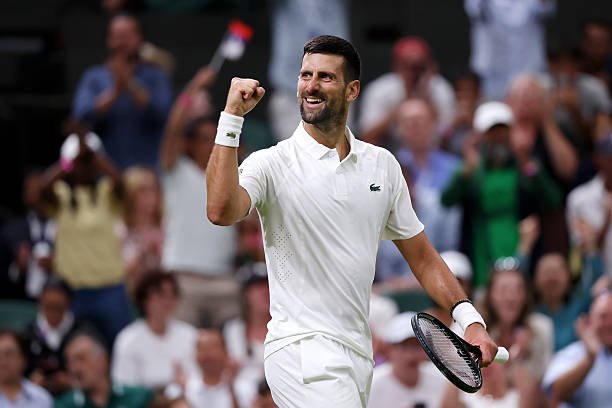
China Open action saw Novak Djokovic return to winning ways as the 39-year-old defeated Nuno Borges 6-3, 7-6 (7-2) to claim his first victory since reaching the Wimbledon semi-finals in July, although the 24-time Grand Slam champion had to work through a difficult second set and physical discomfort before eventually securing his place in the second round.
Djokovic, who had not competed at the Beijing tournament since 2015, maintained his extraordinary unbeaten record at the event with his 30th consecutive victory, extending a run that began during his previous appearances between 2009 and 2015. Despite his success on the court, however, this was far from a straightforward return, as the Serbian struggled physically during parts of the match and required medical attention before finally overcoming Borges in one hour and 50 minutes.
Djokovic makes winning return to Beijing

The opening set initially suggested that Djokovic might ease comfortably through his first match in Beijing for 11 years, as he established control against Borges and eventually secured the set 6-3. The Portuguese player, however, remained competitive and pushed Djokovic considerably harder in the second set, forcing the former world number one to find solutions when his level began to dip.
Djokovic’s physical condition became increasingly noticeable as the match progressed, with the Serbian using his racquet to stretch his back between games and subsequently taking a medical timeout so that his right shoulder could receive treatment.
The interruptions did little to change the overall outcome, however, as Djokovic maintained enough composure and experience to navigate the difficult moments before producing a dominant performance in the second-set tie-break. He won the tie-break 7-2, completing a victory that extended his perfect record in Beijing while also ending his longest wait for a competitive victory this season.
The result was particularly significant because Djokovic had not won a match since his run to the Wimbledon semi-finals in July, making his return to the China Open an important opportunity to rebuild momentum.
Djokovic’s first win since Wimbledon comes with physical concerns
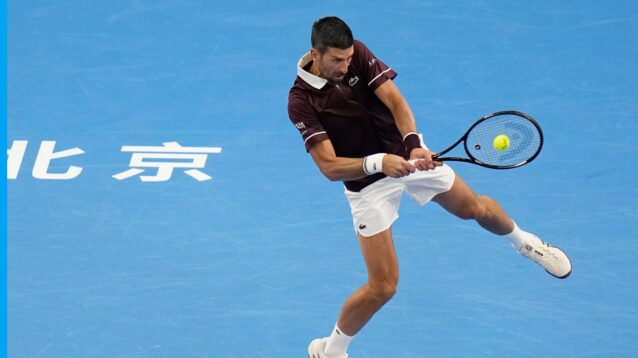
While the victory will provide Djokovic with encouragement, his performance also highlighted some of the physical difficulties he has been managing in recent months.
The Serbian revealed in August that he had been dealing with an underlying health condition that had caused particular problems in hot and humid conditions for the past couple of years, and the conditions in Beijing appeared to present another demanding test for a player who is now 39.
Against Borges, Djokovic was visibly uncomfortable at different stages, particularly during the second set, when he needed to stretch his back between games before eventually receiving treatment on his right shoulder. Nevertheless, rather than allowing the physical problems to derail his return, he remained composed enough to take control of the decisive moments.
That resilience proved particularly important when the match moved into the tie-break, where Djokovic produced the more convincing tennis and won seven of the nine points contested before closing out the match.
The victory therefore represents more than simply another entry in Djokovic’s remarkable Beijing record, as it also provides him with competitive match practice after a lengthy period without a win.
China Open record remains intact
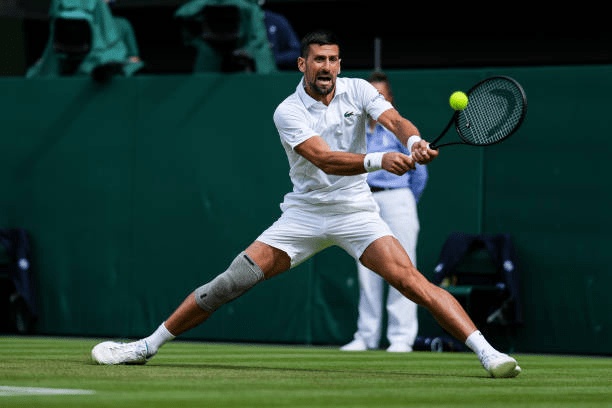
Djokovic’s relationship with the China Open has been particularly successful throughout his career, and his latest victory means his unbeaten record at the tournament remains intact despite his long absence.
The Serbian has previously won six titles in Beijing between 2009 and 2015, making his return to the tournament one of the most anticipated storylines of this year’s event. His victory over Borges takes his winning streak at the competition to 30 consecutive matches, although the difficulty of his opening contest suggests that his route towards another title could be considerably more demanding than his record might indicate.
Djokovic is also attempting to win the China Open for a record-extending seventh time, which would add another achievement to an already extraordinary career that includes 24 Grand Slam singles titles.
His next opponent will be Chinese wildcard Bu Yunchaokete, meaning Djokovic will face a player who will have the advantage of home support and the opportunity to compete against one of the greatest players in tennis history.
The second-round encounter will therefore provide another test of Djokovic’s physical condition as well as his ability to build momentum throughout the tournament.
Boulter also advances in Beijing

There was also British success in the women’s draw, as Katie Boulter advanced to the second round with a straight-set victory over Japan’s Mai Hontama.
Boulter, 30, produced a controlled performance to win 6-3, 6-4 and book her place in the next round, where she will face Czech seventh seed Karolina Muchova.
Her victory adds another British interest to the tournament, although Boulter’s next assignment will represent a significantly different challenge against a seeded opponent who will enter the contest with expectations of progressing further into the competition.
For Djokovic, however, the focus will remain firmly on his own campaign and the question of whether his successful return to Beijing can develop into another deep run.
Can Djokovic build momentum in Beijing?
The victory over Borges gives Djokovic an important first step after his disappointing run of results since Wimbledon, but the manner of the match also means there are legitimate questions surrounding how his body will respond as the tournament progresses.
His ability to overcome physical discomfort and win a competitive second set will provide encouragement, particularly because he showed enough quality in the tie-break to close out the contest decisively. At the same time, the shoulder treatment and difficulties caused by the conditions will be factors to monitor during his next matches.
Djokovic’s extraordinary record at the China Open provides plenty of historical evidence of his comfort in Beijing, but his current circumstances are different from those of his previous title-winning campaigns, with the 39-year-old managing the demands of an increasingly physical stage of his career.
For now, though, the immediate objective has been achieved. Djokovic has returned to the China Open with a victory, extended his unbeaten Beijing run to 30 matches and, after waiting since Wimbledon for another competitive win, has given himself another opportunity to build momentum towards a potential seventh title.
