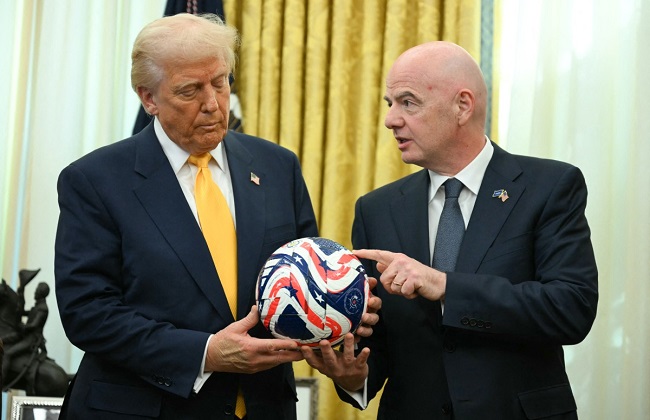
FIFA president Gianni Infantino has ignited one of the biggest governance controversies in modern football after unveiling a $40m plan, a proposal that promises every member association up to $40 million if they support a sweeping commercial restructuring that would allow outside investors to buy minority stakes in the governing body’s flagship competitions.
The proposal has triggered fierce criticism from UEFA, Concacaf, several national football associations, club organizations, and leading figures across the game, many of whom argue that the issue is less about the money and more about transparency, governance, and the future ownership of football’s biggest tournaments.
With the football world now divided, FIFA’s $40m plan has become one of the most debated issues in international football ahead of the 2027 FIFA Congress.
FIFA’s $40m plan promises unprecedented financial rewards
According to documents obtained by BBC Sport, FIFA’s $40m plan would reward each of the organization’s 211 member associations with up to $40 million, provided they approve Infantino’s proposal to establish a new commercial subsidiary responsible for managing FIFA’s major competitions, including the FIFA World Cup.
Under the proposal, member associations that formally back the initiative before the September 19 deadline will immediately qualify for an initial $20 million, which FIFA says will become available from January 1, 2027. The remaining funding would follow under the broader commercial structure once the new model is implemented.
Infantino explained in a five-page letter that the funds would be generated through the sale of a minority stake in FIFA Forward Enterprise, a commercial subsidiary designed to maximize revenues through private investment.
Supporters inside FIFA argue that the proposal represents an opportunity to generate billions in additional revenue that could be reinvested into football development around the world. Critics, however, see it as an unprecedented shift toward the commercialization of the sport.
UEFA leads strong opposition to FIFA’s proposal
The strongest resistance has come from UEFA, which responded almost immediately after reports of the proposal emerged.
European football’s governing body described the initiative as crossing a line and has scheduled an emergency meeting involving all 55 member associations to formulate a collective response.
The concerns extend beyond the financial model itself. Many officials believe the proposal was developed without adequate consultation and that member associations are now being asked to approve a plan whose key negotiations have already taken place.
Several senior figures reportedly believe they were presented with a completed arrangement rather than being invited to participate in meaningful discussions.
Because UEFA represents many of football’s most commercially valuable nations and competitions, its position could prove decisive if opposition continues to grow.
FIFA insists the proposal benefits global football
Despite the mounting criticism, FIFA has defended the initiative as an ambitious effort to expand football’s financial resources and increase investment in developing nations.
Infantino argued that it is his responsibility as FIFA president to explore opportunities capable of transforming the game’s financial future while ensuring that member associations receive clear financial benefits.
The governing body believes external investment could generate approximately $10 billion, significantly increasing the resources available for infrastructure projects, grassroots development, youth football, women’s football, coaching programs, and national federations.
From FIFA’s perspective, FIFA’s $40m plan represents a long-term investment strategy rather than the privatization of football itself.
National associations question governance process
While the financial incentives are substantial, several football associations have expressed concern about the governance surrounding the proposal.
England’s Football Association stated that it had received no meaningful consultation before details emerged publicly and questioned both the process and the principles behind the initiative.
The Football Association of Wales also acknowledged receiving no substantial information regarding the proposal before reports surfaced.
France’s Football Federation echoed similar concerns, arguing that member associations should have been fully involved in discussions about a proposal that could reshape the future commercial structure of international football.
These reactions suggest that procedural concerns may become just as significant as the financial arguments surrounding FIFA’s $40m plan.
Global criticism extends beyond UEFA
The opposition has not been limited to Europe.
Concacaf, whose member nations helped host the 2026 FIFA World Cup, issued a strongly worded statement expressing disappointment over the lack of consultation.
The confederation emphasized that football’s governing institutions are custodians of the game and should make decisions collectively and transparently.
Meanwhile, the Asian Football Confederation also acknowledged the importance of exploring innovative commercial opportunities but stressed that initiatives of this magnitude should be built on transparency, good governance, and meaningful consultation.
European Football Clubs, which represents more than 850 clubs, similarly questioned why organizations directly affected by the proposal had not been consulted before it became public.
Critics fear wider consequences for the football calendar
Beyond governance concerns, many observers believe the proposal could accelerate broader structural changes within international football.
Some officials fear additional commercial investment may increase pressure for tournament expansion, including renewed discussions around enlarging future FIFA World Cups beyond current formats.
Those concerns are particularly significant because the international calendar is already under considerable strain following the expansion of UEFA club competitions and FIFA tournaments.
Several administrators worry that commercial objectives could increasingly influence sporting decisions if private investors acquire financial interests in major competitions.
As a result, FIFA’s $40m plan has become part of a wider debate about the balance between commercial growth and preserving football’s sporting integrity.
Javier Tebas, Sepp Blatter and others join criticism
La Liga president Javier Tebas emerged as one of the proposal’s fiercest critics.
He accused Infantino of attempting to influence votes ahead of the 2027 FIFA presidential election, arguing that football development should never become a mechanism for securing political support.
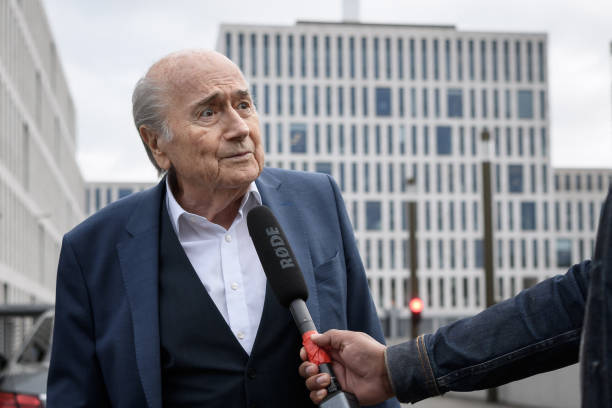
Former FIFA president Sepp Blatter also criticized the proposal, claiming football’s commercial future should not be treated as a personal asset capable of being sold.
Borussia Dortmund president and German Football Association vice-president Hans-Joachim Watzke described the initiative as an “absolute attack on football,” warning that European unity could significantly affect FIFA’s plans.
Such criticism from former and current football leaders illustrates just how divisive FIFA’s $40m plan has become.
Some member associations remain open to FIFA’s $40m plan
Not every reaction has been negative.
Czech Football Association president David Trunda suggested he could see practical benefits for smaller football nations, provided additional details are eventually shared.
For many developing associations, the promise of significant new funding could represent transformational investment in facilities, coaching, youth academies, and grassroots participation.
This highlights the central dilemma facing football’s global membership. While wealthier federations may focus primarily on governance issues, smaller associations could view the financial opportunities offered by FIFA’s $40m plan as too significant to ignore.
FIFA faces defining vote in football’s future
The coming weeks could prove pivotal for both FIFA and world football.
With member associations required to respond before September 19, football’s governing body now faces intense scrutiny over both the substance of its proposal and the process used to introduce it.
Whether FIFA’s $40m plan succeeds or fails, the debate has already exposed deep divisions between FIFA, UEFA, national associations, clubs, and influential figures throughout the game.
As football continues to balance commercial growth with sporting governance, the outcome of this vote may shape how the world’s biggest sport is managed for decades to come.

2 comments
[…] Set to Leave Newcastle as… FIFA Opens Disciplinary Proceedings Against Argentina After Stormy… Breaking: FIFA’s $40m plan sparks global backlash as… Breaking: Welbeck Set for Chelsea Medical as Xabi… Barcola Agrees Liverpool Move as PSG Winger […]
[…] campaign against Infantino after the European governing body escalated its legal challenge over Gianni Infantino’s abandoned plan to sell a stake in a new FIFA commercial subsidiary to private […]