Football has produced some incredible stories over the years, but few are as unusual as the story of Luis Monti.
Imagine losing a World Cup final with one country and then, four years later, winning the World Cup with another. Today, such a scenario would be impossible. FIFA regulations strictly govern international eligibility. But in football’s early years, the rules were far more relaxed.
The story of Luis Monti remains one of the strangest chapters in World Cup history, and it helped shape the international football regulations we know today.
The Player Who Played for Two Countries in One World Cup
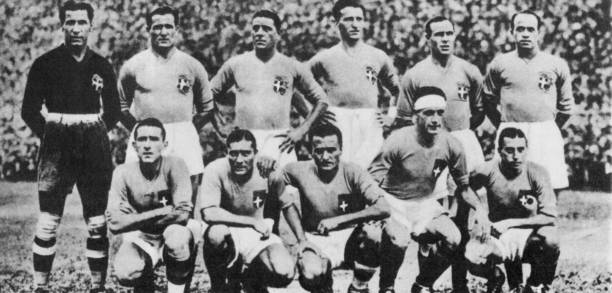
When people discuss football records that may never be broken, the story of the player who played for two countries in one World Cup era deserves a place near the top.
Luis Monti represented Argentina at the 1930 FIFA World Cup and Italy at the 1934 FIFA World Cup.
He did not simply appear in both tournaments. He reached the final in both. First as a runner-up. Then as a champion.
No player before or since has experienced a World Cup journey quite like that.
Who Was Luis Monti?
Born in Buenos Aires in 1901, Luis Monti was one of the finest midfielders of his generation.
Known for his physical presence, aggressive tackling, and leadership qualities, Monti became a key figure for Argentine club San Lorenzo before earning recognition on the international stage.
At a time when football was still developing globally, Monti stood out as one of South America’s elite players.
His performances eventually earned him a place in Argentina’s squad for the inaugural FIFA World Cup in Uruguay in 1930.
Little did anyone know that his name would later become synonymous with one of football’s most unusual eligibility stories.
Luis Monti and Argentina’s 1930 World Cup Run
The first FIFA World Cup took place in Uruguay in 1930.
Argentina entered the tournament as one of the favorites and quickly demonstrated their quality.
Luis Monti was the engine of the team. His ability to break up attacks and control midfield battles helped Argentina progress through the tournament with confidence.
The Albiceleste defeated France, Mexico, Chile, and the United States to reach the final against hosts Uruguay.
For much of the match, Argentina looked destined to become football’s first world champions.
They led 2-1 at half-time before Uruguay mounted a dramatic comeback to win 4-2 in front of a passionate home crowd in Montevideo.
For Monti, it was heartbreak.
He had come within touching distance of football’s biggest prize but left Uruguay with only a runners-up medal.
The Move That Changed Everything
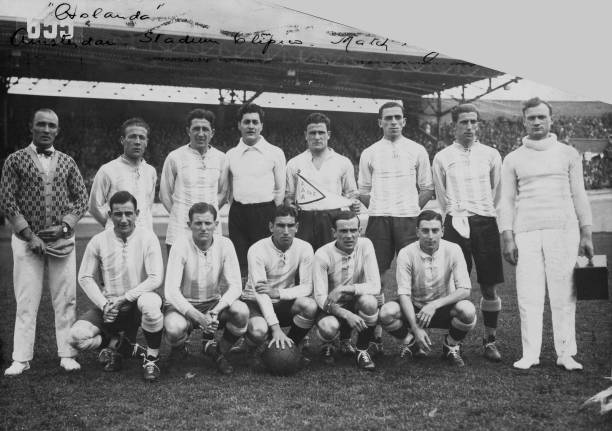
Following the 1930 World Cup, European clubs began aggressively recruiting South American talent.
Italy, under Benito Mussolini’s regime, was determined to build a dominant national team ahead of the 1934 World Cup, which it would host.
Luis Monti moved to Italian giants Juventus and quickly established himself as one of the country’s best players.
At the time, FIFA’s eligibility regulations were nowhere near as strict as they are today.
Players with family ties or ancestral connections could often switch national teams with relatively little resistance.
Monti possessed Italian heritage, making him eligible to represent Italy.
The opportunity soon arrived.
Luis Monti Switches from Argentina to Italy
Today, once a player appears in a senior competitive international match, changing national teams is generally impossible.
Back then, the situation was very different.
As Italy prepared for the 1934 World Cup, Luis Monti was selected for the Italian national team.
The decision raised eyebrows but remained completely legal under the rules of the era.
Suddenly, the player who played for two countries in one World Cup era was preparing for another shot at football immortality.
Four years after losing a World Cup final with Argentina, Monti would attempt to win one with Italy.
World Cup Glory in 1934
The 1934 World Cup was held in Italy and carried enormous political significance.
The host nation was under immense pressure to win.
Luis Monti became one of the cornerstones of the Italian side throughout the tournament.
Italy battled through difficult matches against the United States, Spain, Austria, and Czechoslovakia.
In the final, they defeated Czechoslovakia 2-1 after extra time.
This time, Monti was on the winning side.
The midfielder who had suffered defeat in the 1930 final finally lifted the World Cup trophy in 1934.
His achievement remains unique in football history.
He is still remembered as the player who played for two countries in one World Cup era, reaching two finals for two different nations and experiencing both heartbreak and triumph.
Why FIFA Changed the Rules

Stories like Luis Monti’s eventually convinced football authorities that international eligibility needed clearer regulations.
As the sport became more competitive and national identity became increasingly important, FIFA introduced stricter rules governing national team representation.
The governing body wanted to protect the integrity of international football and prevent countries from effectively recruiting established internationals from rival nations.
Over time, eligibility regulations evolved into the much stricter system used today.
While some players can still switch national allegiances under specific circumstances, no player can replicate Monti’s journey of representing two countries in separate World Cups after already competing for one nation at the tournament.
The loophole that made his story possible was effectively closed.
Why Luis Monti’s Story Still Matters
The story of Luis Monti is about more than regulations and eligibility rules.
It captures a fascinating period in football history when the game was still finding its identity.
International football looked very different in the 1930s. National teams, player movement, and eligibility standards were evolving rapidly.
Monti happened to live at the center of that transformation.
His career serves as a reminder of how much football has changed while also highlighting the global nature of the sport even in its earliest years.
Very few players can claim to have played in two World Cup finals.
Even fewer can say they did it for two different countries.
Only Luis Monti can say he lost one and won one.
A Football Story That Can Never Happen Again
Modern football is full of remarkable achievements, but some records belong permanently to history.
Luis Monti’s journey from Argentina’s defeated finalist in 1930 to Italy’s World Cup winner in 1934 remains one of the most extraordinary stories the tournament has ever produced.
His unique place in football history is secure.
After all, the player who played for two countries in one World Cup era is not just a headline.
It is the story of Luis Monti, a football pioneer whose career helped change the rules of the game forever.
Only in football. Can you think of another sport where an athlete could lose a world championship with one country and then win it with another just four years later?
