Football has produced countless surprises, but few compare to the Miracle of Bern. It remains one of the greatest upsets in sporting history, a match that transformed a nation and proved that no team, no matter how dominant, is unbeatable.
Before the 1954 World Cup final, Hungary looked invincible. They had gone four years without losing a match, possessed some of the greatest players the game had ever seen, and had already humiliated West Germany 8-3 earlier in the tournament.
Yet when the final whistle blew in Bern, Switzerland, it was West Germany celebrating a stunning 3-2 victory. The result became known as the Miracle of Bern, a moment that changed football history forever.
The Golden Team Nobody Could Stop
To understand the significance of the Miracle of Bern, you first need to understand just how powerful Hungary were.
The Hungarian national team of the early 1950s was often called the “Golden Team.” Led by legendary captain Ferenc Puskás, they revolutionized football with fluid movement, technical excellence, and attacking brilliance.
Their squad featured stars such as Sándor Kocsis, Nándor Hidegkuti, and József Bozsik. Together, they produced football that many considered years ahead of its time.
Hungary arrived at the 1954 World Cup unbeaten in 31 consecutive matches. They had defeated England 6-3 at Wembley in 1953, becoming the first non-British side to beat England on home soil. They followed that up with a crushing 7-1 victory in Budapest.
By the time the tournament started, most observers believed the trophy already belonged to Hungary.
An 8-3 Warning in the Group Stage
The road to the Miracle of Bern actually began with a humiliation.
Hungary and West Germany met during the group stage, and the result was brutal. Hungary demolished the Germans 8-3 in one of the most one-sided matches in World Cup history.
Puskás scored twice. Kocsis added goals. Hungary’s attack tore through the German defense at will.
For many fans and journalists, that match confirmed what they already believed. If the teams met again, Hungary would win comfortably.
West Germany’s coach, however, had other ideas.
A Calculated Gamble
German manager Sepp Herberger deliberately rested several key players against Hungary in the group-stage encounter.
He understood that qualification mattered more than a single result. While the defeat damaged Germany’s reputation, it allowed important players to remain fresh for the knockout rounds.
As the tournament progressed, West Germany quietly improved while Hungary continued their march toward what seemed an inevitable title.
Hungary’s Path to the Final
Hungary looked unstoppable throughout the tournament.
They defeated South Korea 9-0 and crushed West Germany 8-3 in the group stage. In the quarter-finals, they survived a violent battle against Brazil, often called the “Battle of Berne,” winning 4-2.
They then beat defending champions Uruguay 4-2 after extra time in a dramatic semi-final.
Despite injuries to key players, including Puskás, Hungary reached the final with their unbeaten streak intact.
The football world expected them to complete their masterpiece.
The 1954 Hungary Final Comeback That Shocked the World
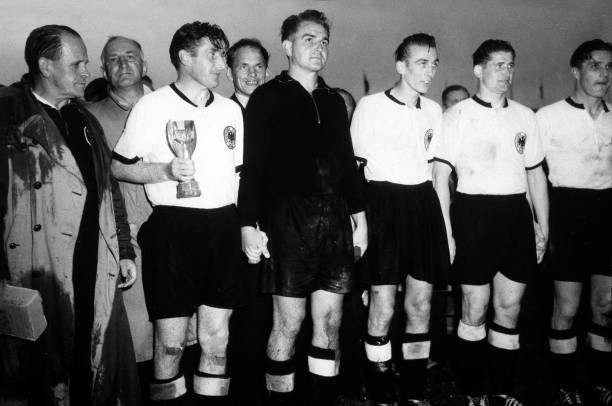
The final on 4 July 1954 began exactly as everyone predicted.
Within eight minutes, Hungary were leading 2-0.
Puskás opened the scoring after just six minutes. Two minutes later, Zoltán Czibor doubled the advantage.
The German supporters inside the Wankdorf Stadium feared another humiliation.
Then something remarkable happened.
West Germany refused to collapse.
Just ten minutes after falling two goals behind, Max Morlock pulled one back. Shortly afterward, Helmut Rahn equalized.
Suddenly the impossible seemed possible.
The 1954 Hungary final comeback was underway.
Rain, Determination, and Belief
Heavy rain fell throughout the match, creating difficult conditions.
German players wore innovative screw-in boots developed by sports manufacturer Adidas founder Adi Dassler. The adjustable studs gave them better traction on the wet pitch.
Hungary still controlled large portions of the game and created numerous chances. Their technical quality remained obvious.
But Germany defended with incredible determination.
Goalkeeper Toni Turek produced several outstanding saves. Every tackle, clearance, and block kept German hopes alive.
As the match entered its final stages, tension filled the stadium.
Helmut Rahn Creates the Miracle
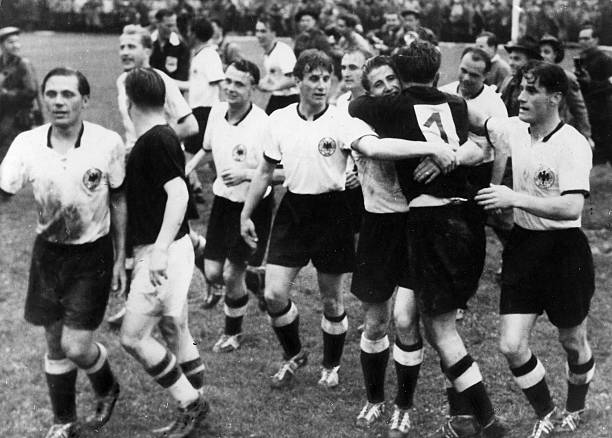
With six minutes remaining, Helmut Rahn received the ball near the edge of the penalty area.
He cut inside and unleashed a low shot that flew into the corner of the net.
West Germany led 3-2.
The stadium erupted.
Hungary desperately searched for an equalizer. Puskás thought he had found it when he scored late in the game, but the goal was ruled offside.
Moments later, the referee blew for full time.
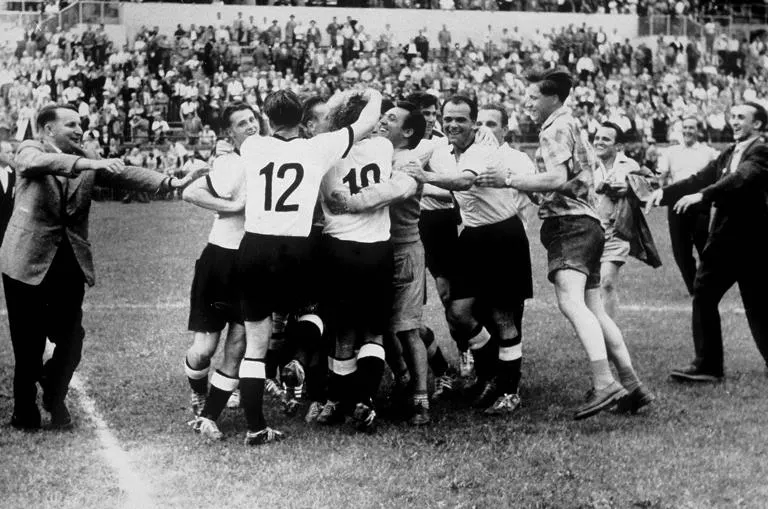
The Miracle of Bern was complete.
West Germany had defeated the greatest team in the world.
Why the Miracle of Bern Meant So Much
The victory was about more than football.
Less than a decade after World War II, West Germany was rebuilding its identity and confidence. The country remained divided and carried the burden of its recent history.
Winning the World Cup gave people something positive to celebrate.
Many historians believe the Miracle of Bern became a symbol of Germany’s post-war recovery. It helped inspire national pride and optimism during a difficult period.
For millions of Germans, it was the moment they felt their country could move forward again.
The Legacy of the Miracle of Bern
The Miracle of Bern remains one of football’s most enduring stories.
It serves as a reminder that sport is never decided on paper. Hungary possessed the better team, the bigger stars, and the stronger record. They had already beaten West Germany by five goals in the same tournament.
None of it mattered on the day that counted most.
While Hungary’s Golden Team is still remembered as one of the greatest sides never to win the World Cup, West Germany’s triumph became one of football’s ultimate underdog stories.
More than 70 years later, the Miracle of Bern continues to inspire players and fans alike.
It proved that football can be unpredictable, cruel, beautiful, and unforgettable all at once.
Conclusion
The story of the Miracle of Bern is not simply about a football match. It is about belief overcoming certainty.
Hungary entered the final as overwhelming favorites after four years without defeat and an 8-3 demolition of West Germany earlier in the tournament. Yet football had one final twist to offer.
The 1954 Hungary final comeback never happened. Instead, it was Germany who produced the comeback that stunned the world.
And that is why the Miracle of Bern remains one of the greatest moments in World Cup history.
Could any modern World Cup upset ever match the Miracle of Bern, or will West Germany’s 1954 triumph always stand alone? That is left to be seen as we look at the 2026 FIFA World Cup.
