The World Cup has produced countless unforgettable matches, but few games have ever matched the drama, controversy, emotion, and chaos of the Night of Seville.
Played on July 8, 1982, the Germany vs France semi-final at the Ramón Sánchez-Pizjuán Stadium in Seville remains one of the most extraordinary matches in football history. It had everything: stunning goals, a horrific challenge, an incredible comeback, and the first penalty shootout ever seen at a FIFA World Cup.
More than four decades later, fans still debate the events of that night. For many, the 1982 World Cup semifinal remains the most controversial and heartbreaking match the tournament has ever produced.
The Night of Seville
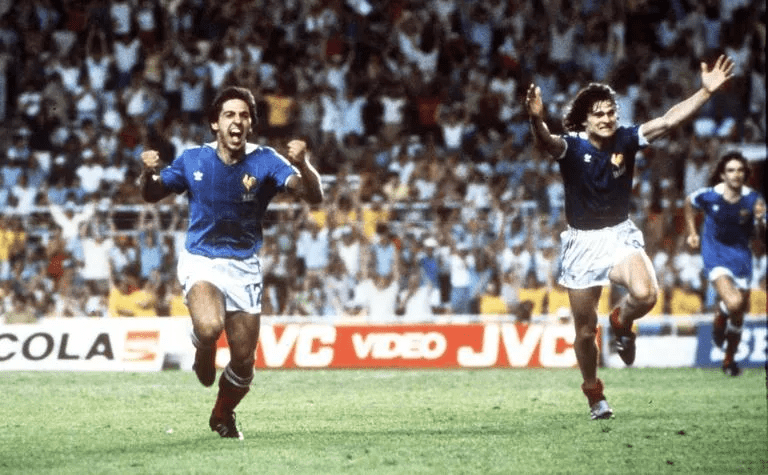
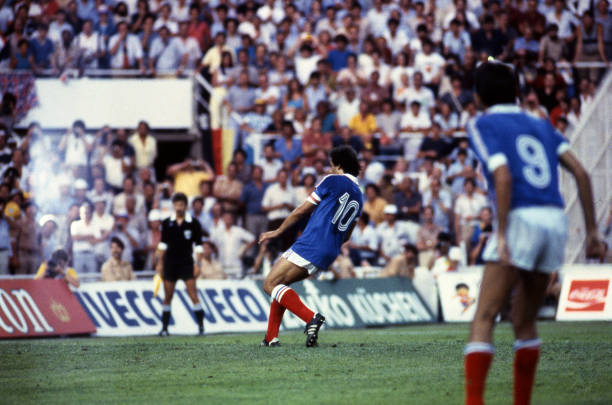
France arrived in Seville with one of the most talented generations in their history. Led by Michel Platini, Alain Giresse, Jean Tigana, and Bernard Genghini, they played an attractive brand of football that had captured the imagination of neutral supporters.
West Germany, meanwhile, had survived a turbulent tournament. Their path to the semi-final had been far from convincing, but they possessed experience, resilience, and a reputation for thriving under pressure.
The match began at a frantic pace. Germany struck first in the 17th minute when Pierre Littbarski scored after a scramble inside the French penalty area. France responded ten minutes later when Platini calmly converted a penalty to level the score at 1-1.
At that stage, nobody could have imagined what was about to unfold.
The Challenge That Shocked the World
The defining moment of the Night of Seville came midway through the second half.
France substitute Patrick Battiston raced through on goal after a perfectly weighted pass from Platini. With only goalkeeper Harald Schumacher to beat, Battiston nudged the ball past him and prepared for a potential finish.
Instead of attempting to play the ball, Schumacher charged directly into Battiston with full force.
The collision was brutal.
Battiston collapsed unconscious onto the pitch. He suffered damaged vertebrae, lost several teeth, and required immediate medical attention. Television viewers around the world watched in disbelief as French players desperately called for help.
What made the incident even more controversial was the referee’s decision.
No foul was awarded.
No yellow card was shown.
No red card was given.
Schumacher simply took the goal kick while Battiston was carried away on a stretcher. The German goalkeeper later appeared remarkably unconcerned by the severity of the collision, which only intensified public outrage.
For many football fans, that moment remains one of the darkest officiating decisions in World Cup history.
France Produce Their Finest Football on the Night of Seville
Despite the emotional shock of losing Battiston, France refused to collapse.
The match ended 1-1 after normal time, sending the 1982 World Cup semifinal into extra time. What followed seemed certain to send France into their first World Cup final.
In the 92nd minute, Marius Trésor smashed home a brilliant volley to give France a 2-1 lead. Six minutes later, Alain Giresse curled in a magnificent finish to make it 3-1.
The French bench erupted. Supporters celebrated wildly. Germany looked beaten.
With less than half an hour remaining, a two-goal advantage appeared impossible to overcome. France were playing beautiful football and seemed destined for glory.
Yet Germany had other ideas.
Germany Refuse to Die
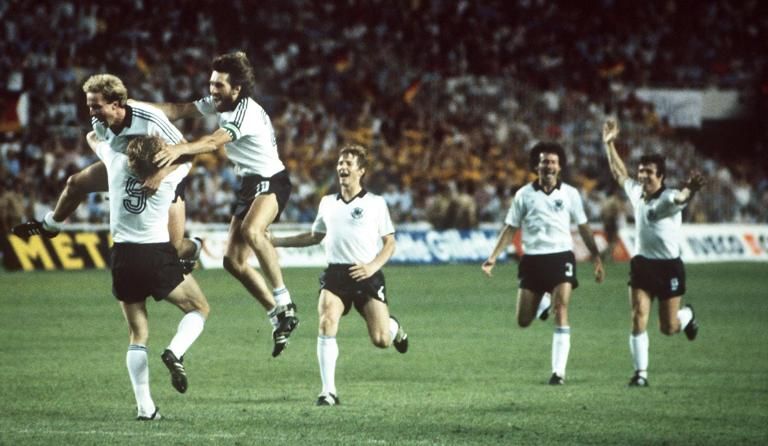
One of the defining characteristics of German football has always been its refusal to surrender.
Just when France believed the game was won, Germany launched an astonishing comeback.
Karl-Heinz Rummenigge, who had been struggling with injury throughout the tournament, came off the bench and scored in the 102nd minute to reduce the deficit to 3-2. The goal changed everything.
Suddenly, nervousness crept into the French team.
Six minutes later, Germany struck again. Klaus Fischer produced a spectacular overhead kick that flew into the net and stunned the stadium into silence.
From 3-1 down, Germany had dragged the score back to 3-3.
The French players looked shell-shocked. Supporters who had been celebrating moments earlier could barely believe what they were witnessing.
The match had transformed from a French masterpiece into a nightmare.
The First World Cup Penalty Shootout
When extra time ended, the teams remained level.
For the first time in World Cup history, a semi-final would be decided by a penalty shootout.
Nobody knew exactly what to expect because the format was still relatively new in international football.
The pressure was immense.
Both sides converted several penalties before the drama intensified. French defender Maxime Bossis stepped forward knowing his team desperately needed a goal.
Schumacher guessed correctly and made the save.
Germany then had the opportunity to win the shootout. Horst Hrubesch converted the decisive penalty, securing a 5-4 victory and sending West Germany into the World Cup final.
French players collapsed to the ground in despair.
Germany celebrated one of the greatest escapes in football history.
Why the Night of Seville Still Matters
Many World Cup matches have been dramatic, but the Night of Seville occupies a unique place in football history.
The game introduced the World Cup to penalty shootouts. It featured one of the greatest comebacks ever seen in a major international tournament. Most importantly, it sparked global debate about player safety, sportsmanship, and refereeing standards.
For France, the defeat became a national trauma. Many supporters believed their team had been robbed, not only because of the Schumacher-Battiston incident but also because they had played the better football throughout the contest.
For Germany, it became another chapter in their reputation for resilience and mental strength under pressure.
The images from Seville remain unforgettable: Battiston unconscious on the grass, Platini in tears, Fischer’s bicycle kick, Schumacher’s penalty save, and Germany’s celebrations at the final whistle.
The Legacy of a Football Classic
Football has changed dramatically since 1982, but few matches have generated the same emotional impact as Germany vs France in Seville.
It was a match that contained brilliance and brutality, beauty and heartbreak. It showcased football at its most thrilling and its most controversial.
More than forty years later, the Night of Seville continues to be discussed whenever fans debate the greatest World Cup matches ever played.
Some remember the comeback. Some remember the penalties. Most remember Battiston lying motionless on the pitch and wondering how no punishment followed.
One thing is certain: the 1982 World Cup semifinal remains one of the most unforgettable nights football has ever witnessed.
