Jon Rahm, the Spanish star widely regarded as one of the top golfers of his generation, has emphatically rejected a settlement offer from the DP World Tour, calling the conditions “extortionate” and decrying what he sees as unfair treatment of players who defected to the rival LIV Golf League. His refusal to sign terms agreed by eight of his LIV peers has triggered a growing rift between the 31-year-old and European golf’s organisational body — with significant competitive and reputational stakes.
Speaking ahead of the LIV Golf event in Hong Kong, Rahm criticized the tour’s expectations, especially a requirement that he compete in six DP World Tour events per season including two selected by the tour itself as part of a broader framework to reinstate membership and clear fines. “I just refuse to play six events… and that’s not what the rules say,” he told reporters, sharply contrasting his stance with the eight players who signed the settlement under those terms.
Settlement Terms Seen as Unequal by World No. X
The offer from the DP World Tour designed to allow players simultaneously to compete on both circuits \included the payment of outstanding fines for competing without release, withdrawal of pending appeals, and participation in a series of tour events beyond the standard minimum. Rahm’s principal objection is to the expanded six-event requirement, which exceeds the usual four-event minimum necessary for full tour membership and Ryder Cup eligibility.
“I don’t know what game they’re trying to play right now,” Rahm said, arguing that the tour was leveraging players’ marketability while penalizing them for competing elsewhere. “It just seems like, in a way, they’re using our impact in tournaments and fining us and trying to benefit both ways from what we have to offer… in a way they’re extorting players like myself.”
Rahm also offered a counter-proposal: he would sign the agreement immediately if the mandated number of DP World Tour events were reduced to the traditional four that mirror existing membership expectations. The tour, however, declined to accept this compromise.
Fines, Appeals, and a Ryder Cup in Jeopardy
The dispute carries more than contractual disagreements it has immediate competitive consequences. Rahm reportedly faces fines approaching $3 million for violating DP World Tour rules by playing LIV Golf events without prior release. He appealed those sanctions in 2024, allowing him to compete at the Ryder Cup in 2025, but that appeal is still unresolved.
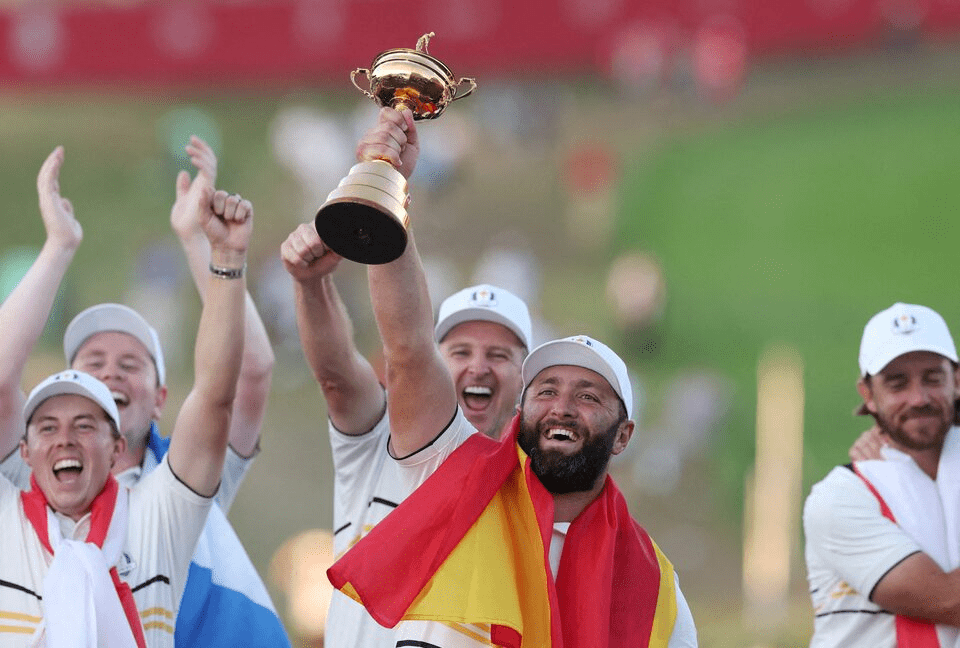
If Rahm ultimately loses his appeal and refuses to pay the penalties, he could be barred from competing in DP World Tour events, jeopardizing his eligibility for the 2027 Ryder Cup in Ireland a competition where he’s been a cornerstone of Europe’s recent success.
That prospect underscores the steep price Rahm is willing to pay for principle, rejecting a pathway back into the tour’s fold that others such as Tyrrell Hatton, Thomas Detry, and several other LIV members have accepted. Those players paid fines, withdrew appeals, and agreed to the extra appearance requirements to secure full playing rights and, in Hatton’s case, preserve Ryder Cup prospects.
Tensions With Peers and the Politics of Golf
Rahm’s rejection of the settlement has not existed in a vacuum. His comments echo broader fractures within golf’s professional landscape a sport still reeling from the recrystallization of power and player loyalty following the rise of LIV Golf, backed by Saudi investments that shook the traditional structures of men’s golf.
One flashpoint came earlier this year when Rory McIlroy, a Ryder Cup captain and high-profile DP World Tour member, publicly urged Rahm and others to “pay to play” in golf’s most storied team event. Rahm, in turn, rebutted those remarks, suggesting McIlroy’s argument lacked context and did not apply equally to all affected players.
“I’ll gladly pay my way to go on the Ryder Cup, not have to pay to still be a member of the DP World Tour,” Rahm said, framing his dispute not as an attack on the sport’s traditions but as a stand for individual liberty in how players structure their professional commitments.
Implications for Golf’s Fragmented Landscape
Rahm’s defiance highlights how the relationship between traditional tours and LIV Golf continues to evolve and in some cases, strain. The conditional settlement program rolled out by the DP World Tour reflected an attempt to bridge competitive ecosystems without undermining regulatory authority. Yet Rahm’s public critique suggests that at least one of golf’s biggest stars believes the balance remains skewed.
Even as world ranking points and greater cooperation have started to integrate LIV Golf into the broader professional system, fundamental disagreements over governance, discipline, and player autonomy persist. For Rahm, whose career includes major championships and Ryder Cup triumphs, the choice to stand firm on a contractual disagreement may resonate beyond the immediate conflict, shaping debates over how modern professional golf accommodates its elite performers.
What Comes Next
With arbitration pending and no resolution in sight, the standoff between Rahm and the DP World Tour adds another twist to golf’s unsettled era. Rahm remains focused on his current LIV schedule, but his long-term standing in Europe’s biggest team competition is uncertain unless a compromise is struck or his appeal succeeds.
Whether other top players take a similar stand or opt for reconciliation will likely shape the narrative of professional golf in the years ahead with the Ryder Cup, international ranking systems, and tour alliances all in the balance.