Defense in the National Basketball Association has undergone a dramatic transformation over the past two decades. What once defined greatness on the defensive end, physical dominance, hand-checking, and paint protection, has steadily given way to speed, versatility, and tactical intelligence. The evolution of modern NBA defense is directly tied to a series of rule changes that have reshaped how the game is played on both ends of the floor.
Understanding modern NBA defense requires looking beyond effort and intensity. It demands an appreciation of how rules have influenced spacing, shot selection, and the very philosophy of guarding opponents.
The End of Hand-Checking and the Rise of Offensive Freedom
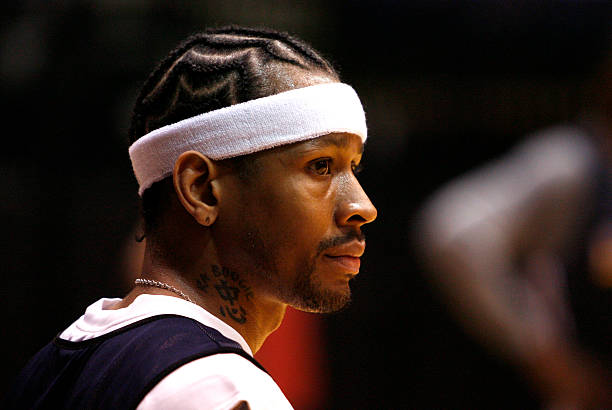
One of the most significant turning points in modern NBA defense came in 2004, when the league strictly enforced the ban on hand-checking. Previously, defenders could use their hands to guide and disrupt ball handlers, making it easier to contain perimeter players.
Once that physical tool was removed, offensive players gained a major advantage. Guards and wings suddenly had more freedom to attack off the dribble, leading to an explosion of perimeter scoring.
Players like Allen Iverson had already demonstrated how difficult elite ball handlers could be to guard. After the rule change, that challenge became even greater. Defenders were forced to rely more on footwork, anticipation, and positioning rather than physical contact.
This shift marked the beginning of modern NBA defense, where agility and technique replaced brute strength on the perimeter.
Defensive Three-Second Rule and Spacing Revolution
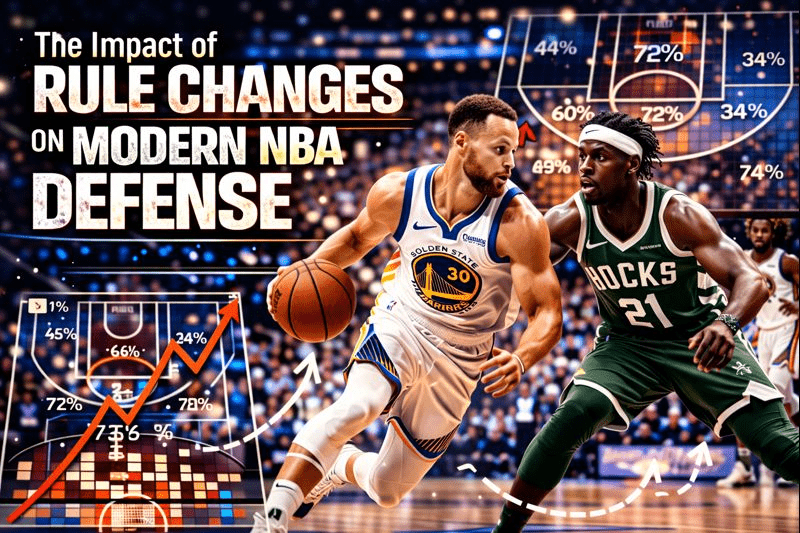
Another crucial rule shaping modern NBA defense is the defensive three-second violation. This rule prevents defenders from camping in the paint without actively guarding an opponent.
The impact has been profound. Big men can no longer simply protect the rim by standing near the basket. Instead, they must constantly move, read the play, and balance rim protection with perimeter awareness.
This change has contributed to the rise of floor spacing. Offenses now spread the court with shooters, forcing defenders to cover more ground. As a result, modern NBA defense requires big men who can switch onto smaller players and defend in space.
Players like Draymond Green have thrived in this environment, redefining what it means to be a defensive anchor. His ability to guard multiple positions reflects the demands created by modern rules.
Freedom of Movement Emphasis
In recent years, the NBA has placed additional emphasis on freedom of movement. Officials now penalize defenders for holding, bumping, or impeding offensive players off the ball.
This has made it even more difficult to play traditional physical defense. Off-ball screens, cuts, and movement are harder to disrupt, allowing offenses to create open looks more consistently.
For modern NBA defense, this means defenders must be smarter and more disciplined. Instead of relying on contact, they must anticipate actions and navigate screens efficiently.
The result is a game that prioritises skill and precision, both offensively and defensively.
Switching: The Backbone of Modern NBA Defense
As rule changes have increased offensive spacing and movement, defensive strategies have adapted accordingly. Switching has become the foundation of modern NBA defense.
Switching allows teams to handle pick-and-roll actions without giving up open shots or driving lanes. However, it requires players who can guard multiple positions effectively.
This is why versatility is now one of the most valuable traits in the NBA. A player who can defend guards, wings, and bigs provides immense strategic flexibility.
Teams like the Golden State Warriors have built championship success on this principle, using switch-heavy defenses to neutralizhttps://www.nba.com/warriors/e elite offenses.
The Decline of Traditional Rim Protectors
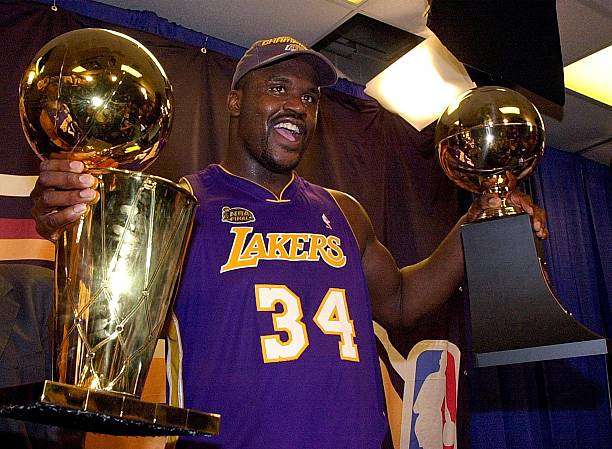
In the past, dominant rim protectors were the backbone of defense. Players like Shaquille O’Neal controlled the paint, and defensive schemes were built around their presence.
Modern NBA defense, however, has reduced the reliance on traditional big men. While rim protection remains important, it is no longer sufficient on its own.
Big men must now defend pick-and-rolls, close out on shooters, and switch onto smaller players. Those who cannot adapt often struggle to stay on the floor in high-stakes games.
This evolution has led to the rise of mobile bigs who combine size with agility, reflecting the changing demands of the game.
Analytics and Shot Selection
Rule changes have also influenced shot selection, which in turn impacts modern NBA defense. The emphasis on three-point shooting and efficiency has reshaped offensive strategies.
Teams now prioritize shots at the rim, three-pointers, and free throws. Mid-range shots, once a staple of the game, have become less common.
For defenders, this means focusing on limiting high-value shots. Contesting three-point attempts and protecting the rim are now the primary objectives.
Analytics-driven strategies have made modern NBA defense more calculated. Teams study tendencies, identify weaknesses, and design schemes to force opponents into less efficient shots.
The Mental Side of Modern NBA Defense
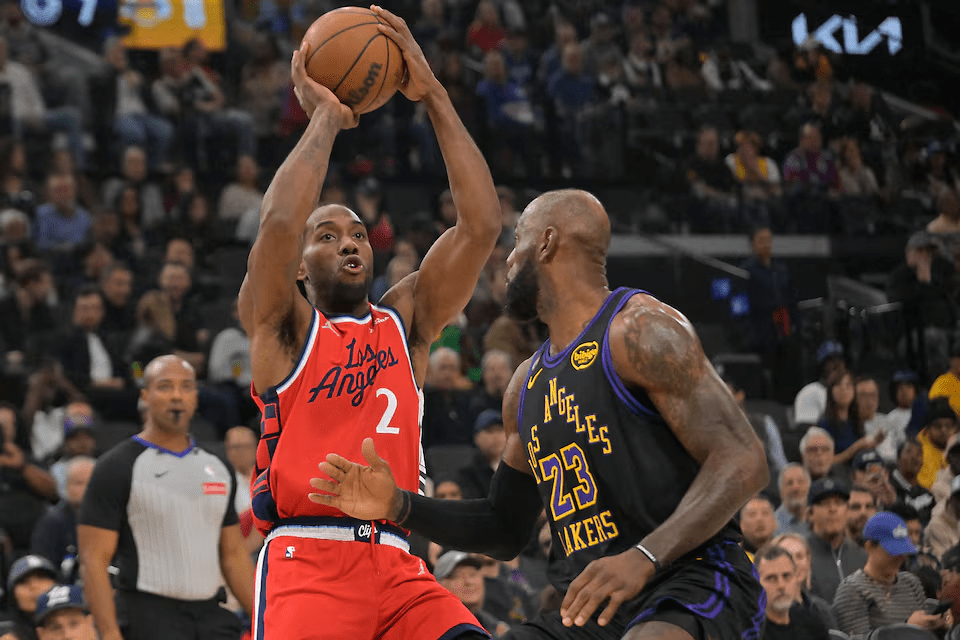
With physical tools limited by rules, mental sharpness has become increasingly important. Modern NBA defense relies heavily on communication, awareness, and decision-making.
Players must read plays in real time, anticipate movements, and adjust quickly. A single mistake can lead to an open three or an easy basket.
This mental aspect separates good defenders from great ones. It is not just about effort but about understanding the game at a deeper level.
How Superstars Challenge Modern NBA Defense
Despite all these advancements, elite offensive players continue to push the boundaries of what defense can achieve. Players like Stephen Curry have revolutionised scoring with their shooting range and off-ball movement.
Defending such players requires constant adaptation. Teams must combine multiple strategies, including switching, trapping, and zone defense, to contain them.
This ongoing battle between offense and defense drives the evolution of the NBA, ensuring that modern NBA defense is always changing.
Why Modern NBA Defense Is More Complex Than Ever
The combination of rule changes, analytics, and evolving player skill sets has made modern NBA defense incredibly complex. It is no longer about stopping a single player but about managing space, movement, and efficiency.
Coaches must design schemes that account for every possible action, while players must execute those plans with precision.
This complexity is what makes today’s NBA so fascinating. Every possession is a chess match, with teams constantly adjusting to gain an advantage.
Conclusion
Modern NBA defense is the product of years of rule changes and strategic evolution. From the ban on hand-checking to the emphasis on freedom of movement, each adjustment has shaped how teams approach the game.
What remains constant is the importance of defense in winning championships. While the methods have changed, the objective has not.
In today’s NBA, success on the defensive end requires versatility, intelligence, and adaptability. As the game continues to evolve, modern NBA defense will keep transforming, reflecting the ever-changing nature of basketball at the highest level.
