For more than a decade, the Premier League has been marketed as the best football league in the world. With massive TV deals, global fanbases, and clubs spending billions on players, English football has dominated headlines and conversations across the sport. In addition, for more than three decades, the English Premier League has been widely considered the most exciting domestic football league in the world. Packed stadiums, dramatic title races, and global superstars turned it into a global phenomenon. From the late-1990s dominance of Thierry Henry and Cristiano Ronaldo lighting up stadiums, to modern tactical battles between elite managers, the league has been the center of football culture.
But the 2025–26 UEFA Champions League knockout stage has reignited a familiar debate: Has the Premier League actually fallen off?
The early results from the Round of 16 raised eyebrows across Europe. Six Premier League clubs entered the stage full of optimism. Yet after the first leg of matches, not a single English side managed to win. The results were brutal: four defeats and two draws against continental rivals.
For a league that prides itself on being the pinnacle of football, those results sparked a wave of criticism, questions, and analysis. Is this simply a bad week for English clubs, or is it evidence that the Premier League’s supposed dominance has been overstated?
This article breaks down the debate, looking at the rise of the Premier League, recent Champions League results, historical performance, tactical trends, financial factors, and the evolution of European football to determine whether the Premier League is truly declining.
The Premier League’s Rise to Global Dominance
To understand whether the Premier League has “fallen off,” we first have to understand how dominant it became.
Founded in 1992, the Premier League quickly transformed English football into a global entertainment product. Massive TV deals and international marketing allowed clubs to sign some of the world’s best players. Clubs like Manchester United, Arsenal, Liverpool and more recently Chelsea and Manchester City have built worldwide fanbases.
The league also benefited from iconic eras:
- The dominance of Wayne Rooney and Manchester United under Sir Alex Ferguson
- Arsenal’s unbeaten “Invincibles” season in 2003–04
- The arrival of billionaire ownership transforming clubs like Manchester City and Chelsea
By the 2010s, the Premier League was the most watched football league on the planet, broadcast in over 200 countries.
So, when fans ask whether the league has fallen off, they’re really asking whether it still lives up to that extremely high standard.
The Premier League’s Reputation as the Best League in the World
Before analyzing whether the league has declined, it’s important to understand why the Premier League earned its reputation in the first place.
Several factors contributed to its dominance:
1. Financial Power
The Premier League generates more revenue than any other football league in the world.
Its broadcasting deals stretch across continents, giving even mid-table clubs budgets that rival European giants.
This financial strength allows English teams to:
- Sign top international talent
- Build world-class facilities
- Hire elite managers
2. Global Popularity
The Premier League has become a global entertainment product. Matches are broadcast in more than 200 countries, and clubs like Manchester United, Liverpool, Chelsea and Arsenal have massive international followings. This global reach strengthens the league’s brand and commercial appeal.
3. Competitive Balance
Unlike many European leagues dominated by a few clubs, the Premier League has historically been seen as unpredictable. Multiple teams can challenge for the title or European spots, making it one of the most competitive leagues domestically. However, this domestic competitiveness may also have unintended consequences.
The Premier League Paradox
Ironically, the Premier League’s greatest strength may also be its biggest weakness. Because the league is so competitive, every match requires maximum intensity. Teams rarely get an easy weekend; this is in contrast when compared with that of other European leagues.

In La Liga, dominant teams can rotate players against weaker opponents. In Bundesliga, top clubs often enjoy comfortable wins that allow them to conserve energy. In Ligue 1, powerhouse squads frequently dominate domestic competition.
However, in the Premier League clubs rarely have that luxury. The physical and mental demands of the English schedule are relentless. By the time Champions League knockout games arrive, fatigue becomes a real factor.
The Champions League Results That Sparked the Debate
The conversation about the Premier League’s decline gained momentum during the Champions League Round of 16 first legs in March 2026. English clubs produced a set of results that many analysts described as alarming. Across six matches involving Premier League teams, the combined record was:
- 0 wins
- 2 draws
- 4 losses
- 6 goals scored
- 16 goals conceded
Some of the results were particularly damaging.
- Manchester City suffered a 3–0 defeat away to Real Madrid in the Bernabéu.
- Chelsea was heavily beaten 5–2 by Paris Saint-Germain.
- Tottenham Hotspur conceded five goals in a 5–2 loss to Atlético Madrid.
- Liverpool lost 1–0 to Galatasaray away from home.
Even the better performances highlighted the struggles. Newcastle drew 1–1 with Barcelona, conceding a stoppage-time penalty that denied them a victory.
Arsenal also managed only a 1–1 draw against Bayer Leverkusen, scoring late to salvage the tie.
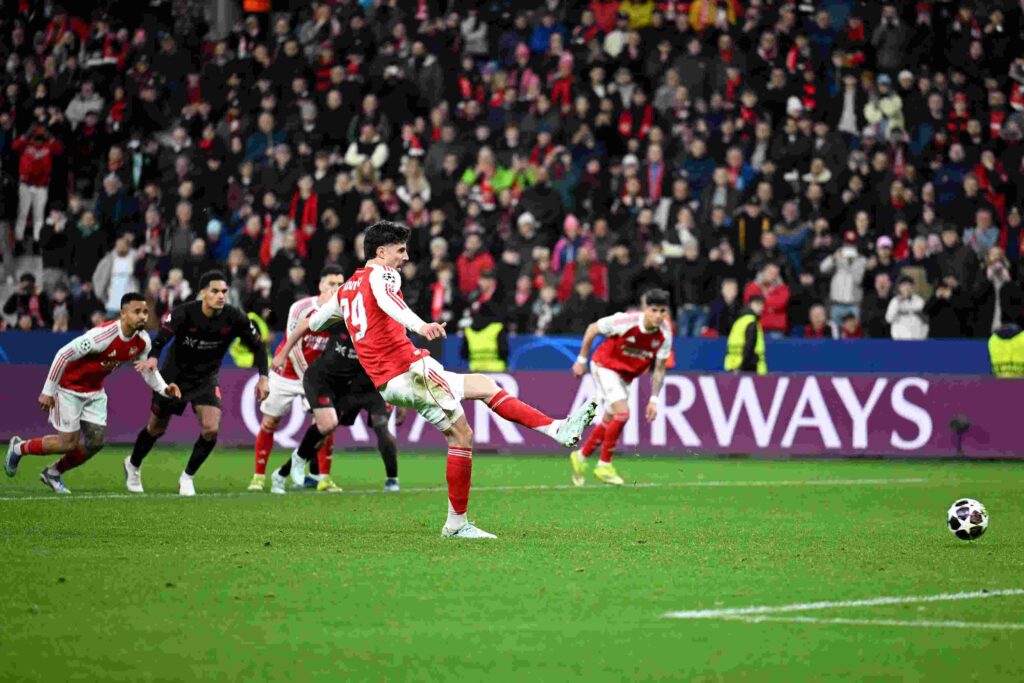
Taken together, these results painted a concerning picture: English teams looked vulnerable against Europe’s elite.
The Champions League: The Ultimate Benchmark
When debating whether a league is the best in the world, there is one competition that matters more than any other:
The UEFA Champions League.
The Champions League brings together the best teams from across Europe, making it the ultimate test of league strength.
Historically, English clubs have enjoyed periods of dominance. For example, the 2008 Champions League final featured two English teams, highlighting the Premier League’s influence at the time. However, the balance of power in Europe has always shifted between leagues.
Spain’s La Liga dominated the 2010s, while the Bundesliga and Serie A have also had strong periods. Recent Champions League results suggest the Premier League may be entering a more competitive era rather than dominating outright.
Tactical Differences Between England and Europe
Another reason English teams sometimes struggle in Europe is tactical contrast. Premier League football traditionally emphasizes:
- High tempo
- Aggressive pressing
- Direct attacking transitions
- Physical duels
While this style creates exciting matches, it can also leave teams vulnerable against tactically disciplined opponents. Clubs like Real Madrid and Atlético Madrid are masters of:
- Defensive organization
- Game management
- Strategic counterattacks
Knockout football often rewards patience and tactical control rather than pure intensity. The defeat of Manchester City by Real Madrid is a good example. City dominated possession early but struggled to break down Madrid’s disciplined defense and were punished on the counterattack. Also, in the game between PSG v. Chelsea, Chelsea lack of game management cost them the tie in the late stages of the game.

These contrast highlights how tactical nuances can influence European knockout matches.
Are Other European Leagues Catching Up?
Another possibility is that the Premier League hasn’t declined at all. Instead, the rest of Europe has improved. Clubs across the continent are investing heavily in:
- Data analytics
- Sports science
- Youth development
- Tactical innovation
La Liga
Spanish teams remain tactically sophisticated and highly experienced in European competitions. Clubs like Real Madrid continue to thrive in the Champions League thanks to a strong winning culture and strategic squad management.
Ligue 1
French clubs have significantly increased investment in recent years. Teams like Paris Saint-Germain have assembled world-class squads capable of competing with any team in Europe.
Bundesliga
German clubs emphasize tactical structure and youth development, producing players who are technically and physically prepared for elite competition. Teams like Bayer 04 Leverkusen have become tactically sophisticated and extremely difficult to beat. In other words, the Premier League isn’t necessarily declining, the gap between leagues may simply be shrinking.
Squad Depth vs Fixture Congestion
Another factor affecting English clubs is the intensity of the Premier League schedule. Compared to most European leagues, English teams face:
- A packed domestic calendar
- Two domestic cup competitions
- High-intensity weekly matches
This relentless schedule can impact player fitness and performance in European competitions. Studies have shown that teams playing in European competitions can experience a slight drop in domestic performance due to fatigue and fixture congestion.
While Premier League clubs have deep squads, the physical demands of the league may still leave them at a disadvantage when facing more rested European opponents.
Financial Dominance Does Not Guarantee Success
Another misconception is that money automatically translates into European trophies. Premier League clubs spend enormous amounts in the transfer market, but spending alone does not guarantee success.
Football history is full of examples where:
- Expensive squads underperform
- Smaller teams outperform expectations
- Tactical discipline beats financial power
In fact, the Champions League knockout stages often reward teams with:
- Clear tactical identity
- Strong defensive organization
- Experience in high-pressure matches
These qualities are not always linked to financial resources. Historically, clubs like Real Madrid have mastered these elements better than almost anyone. Their Champions League pedigree remains unmatched.
The Psychological Edge in European Football
Knockout competitions require a different mindset. League seasons reward consistency. The Champions League rewards moments. A single mistake, a missed chance, or a defensive lapse can determine an entire tie. Clubs with strong European traditions often thrive in these situations. Experienced clubs like Real Madrid have developed a reputation for thriving in these situations.
Their victory over Manchester City demonstrated the importance of:
- Composure
- Clinical finishing
- Tactical discipline
These psychological advantages can make the difference in tight matches. Although, these psychological factors might be difficult to measure but it is impossible to ignore.
The UEFA Coefficient Paradox
Despite criticism, the Premier League still performs extremely well in UEFA’s league rankings. England currently sits at the top of the UEFA coefficient table, meaning its clubs collectively perform strongly in European competitions. This ranking even allows the Premier League to secure additional Champions League qualification spots in some seasons.
In other words, while individual matches may suggest decline, the overall European performance of English clubs remains strong.
Media Narratives and Football Hype
Football narratives move quickly. One bad week in Europe can suddenly create headlines about crisis and decline. But dominance in football has always been cyclical. For example, in the early 2000s, Italian clubs dominated the Champions League. During the 2010s, Spanish teams ruled Europe. The Premier League has enjoyed its own periods of supremacy as well. What we may be seeing now is simply a more balanced European landscape.
What the Data Actually Suggests
Looking beyond headlines, several facts challenge the idea that the Premier League has “fallen off.”
- English clubs still have the highest combined revenue in world football.
- The Premier League continues to attract the world’s best managers and players.
- England leads the UEFA coefficient rankings.
- Multiple English clubs regularly reach the Champions League knockout stages.
These indicators suggest that the league remains one of the strongest in Europe.
The Future of the Premier League
Despite recent struggles, several factors suggest the Premier League will remain a global powerhouse.
Youth Development
English academies are producing some of the most exciting young players in Europe. Homegrown talent is increasingly shaping the future of top clubs.
Tactical Innovation
Premier League managers are among the most influential tacticians in modern football. Coaches constantly adapt their strategies to remain competitive. All the best coaches around the world want to have coaching in the premier league to their resume.
Financial Stability
Commercial strength ensures continued investment in:
- Training infrastructure
- Global scouting networks
- Player development
These advantages make a long-term decline unlikely.
Final Verdict: Has the Premier League Fallen Off?
So, has the Premier League fallen off? The answer is more complicated than a simple yes or no. Recent Champions League results certainly exposed weaknesses in English clubs.
The Round of 16 first legs in 2026 showed that Premier League teams are far from unbeatable in Europe. However, those results alone do not prove a long-term decline. Additionally, fans and analyst alike have argued that the 2025-26 season has been the worst in a for some years. However, the Premier League remains:
- Financially dominant
- Globally popular
- Highly competitive
- Strong in UEFA rankings
What we may be witnessing is not the fall of the Premier League, but the rise of stronger competition across Europe. Football’s landscape is constantly evolving, and no league can dominate forever. For fans, that unpredictability is exactly what makes the Champions League so compelling.