Every tournament has a beginning. Every era has a first. But on July 13, 1930, in Montevideo, Uruguay, one man struck a ball into a net and created a moment that would echo through nearly a century of football history.
The first ever World Cup goal was scored before most of the world even knew the World Cup existed, in front of a small crowd, in waterlogged conditions, by a French midfielder whose name most football fans today couldn’t tell you without Googling it.
His name was Lucien Laurent. And what he did that afternoon changed football forever, even if nobody, including Laurent himself, fully understood it at the time.
Who Scored the First Ever World Cup Goal?
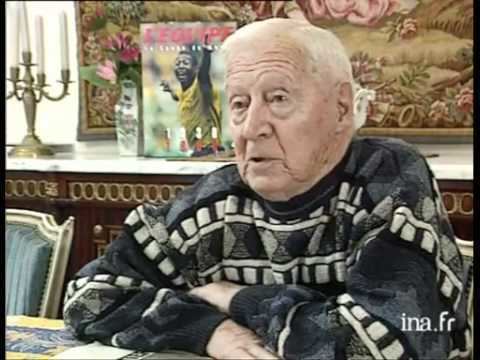
Lucien Laurent was a 26-year-old French midfielder playing his club football in France at a time when the sport was still finding its professional footing in Europe. He was not a superstar. He was not a household name. He was a solid, technically capable footballer who happened to be in the right place at the right moment in history.
In the 19th minute of France’s opening match against Mexico at the inaugural 1930 FIFA World Cup, Laurent received a cross from his teammate Ernest Liberati and volleyed the ball cleanly into the net. Clean, composed, and unremarkable in execution, yet the first ever World Cup goal was born.
No one in that stadium fully grasped what they had just witnessed. There was no global television broadcast. There were no social media replays. The moment passed as moments did in 1930 quickly, quietly, and only truly understood much later.
The Conditions Behind the First Ever World Cup Goal
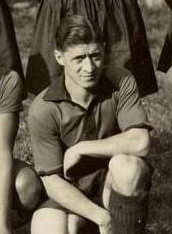
The story of the first ever World Cup goal cannot be told without describing the remarkable circumstances surrounding it. The 1930 World Cup was played entirely in Uruguay, a decision that caused enormous controversy. Most European nations refused to make the long sea voyage across the Atlantic, the journey took weeks. France, to their credit, made the trip.
What greeted them in Montevideo was not exactly a warm welcome from the weather. The pitch for the France vs Mexico match was waterlogged. Heavy rain had left the playing surface heavy and unpredictable. The ball, a heavy, leather construction that absorbed water and grew heavier as the match went on, was nothing like the modern footballs players work with today.
Laurent struck his shot cleanly despite all of it. The first ever World Cup goal was scored not on a pristine pitch under bright lights, but in muddy, difficult conditions that most modern players would struggle to perform in. That detail alone adds to the remarkable nature of the moment.
A Man Who Earned Nothing And Everything
Here is perhaps the most striking part of the story of the first ever World Cup goal: Lucien Laurent earned virtually nothing from it. No bonus. No commercial deal. No medal ceremony specifically honoring the milestone. Players at the 1930 World Cup were not professional in the modern sense, they were largely amateur or semi-professional, and the financial rewards for participation were minimal.
Laurent returned to France after the tournament and continued playing club football in relative obscurity. For decades, most football fans had no idea he existed, let alone that he had scored the first ever World Cup goal. The milestone sat quietly in the record books while the World Cup itself grew into the biggest sporting event on the planet.
Laurent lived to the extraordinary age of 97, dying in 2005. In his later years, particularly from the 1990s onward, he began to receive recognition for his place in history. Journalists tracked him down. Football historians celebrated him. He gave interviews with a warmth and humility that made him immediately likeable. He spoke about the first ever World Cup goal not with bitterness about the lack of reward, but with genuine pride that he had been part of something so significant.
“I had no idea it would become what it became,” he said in one of his final interviews. “We just played football.”
The 1930 World Cup: A Tournament the World Almost Missed
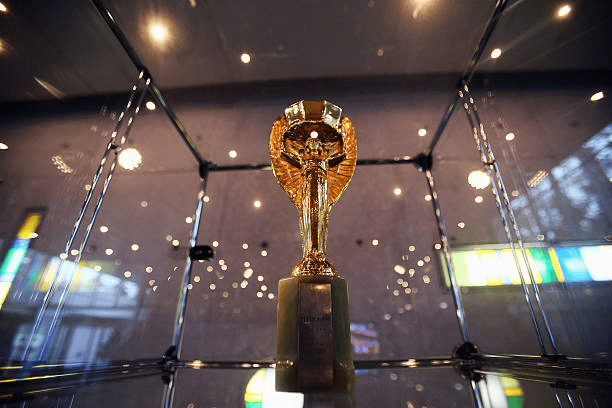
To fully appreciate the first ever World Cup goal, you need to understand how fragile that inaugural tournament actually was. FIFA president Jules Rimet had fought for years to make the World Cup a reality. When Uruguay was chosen as hosts, partly because they were the reigning Olympic football champions, the European response was largely one of indifference and refusal.
Only four European nations made the trip: France, Belgium, Yugoslavia, and Romania. Several South American nations also participated, alongside the United States and Mexico. It was a small, imperfect, logistically chaotic tournament. And yet from that chaos came the first ever World Cup goal and a competition that would grow to be watched by over a billion people per final.
Why the First Ever World Cup Goal Still Matters Today
In an era of billion-dollar broadcasting deals, superstar players, and wall-to-wall media coverage, it is worth pausing to remember where it all began. The first ever World Cup goal was not struck by a Pelé or a Maradona or a Ronaldo. It was struck by a quiet Frenchman on a muddy pitch in South America, in front of a few thousand spectators, in a tournament most of Europe had declined to attend.
That contrast between the smallness of that moment and the enormity of what the World Cup has become is what makes Lucien Laurent goal so powerful. Every goal scored at every World Cup since 1930 carries a direct line back to that 19th-minute volley in Montevideo. Every tournament, every final, every moment of World Cup magic begins with the first ever World Cup goal.
Lucien Laurent started it all. It is long past time we remembered his name.

1 comment
Gerçekten çok faydalı ve bilgilendirici bir içerik olmuş, emeğinize sağlık.