Football has changed dramatically over the past century and a half, but few laws have shaped the sport as profoundly as the offside rule. Every tactical revolution, from rigid formations to Total Football and modern high pressing, has been influenced by changes to this single law. The evolution of offside rule has not only altered how attackers score goals but has also transformed how defenders organize themselves, how coaches build systems, and how referees interpret the game.
What began as a restrictive law inspired by rugby has gradually become one of football’s most sophisticated regulations. The story of the evolution of offside rule is therefore not simply about rewriting a law; it is about football constantly adapting to become faster, more entertaining, and fairer for both attackers and defenders.
The evolution of offside rule began with football’s earliest laws
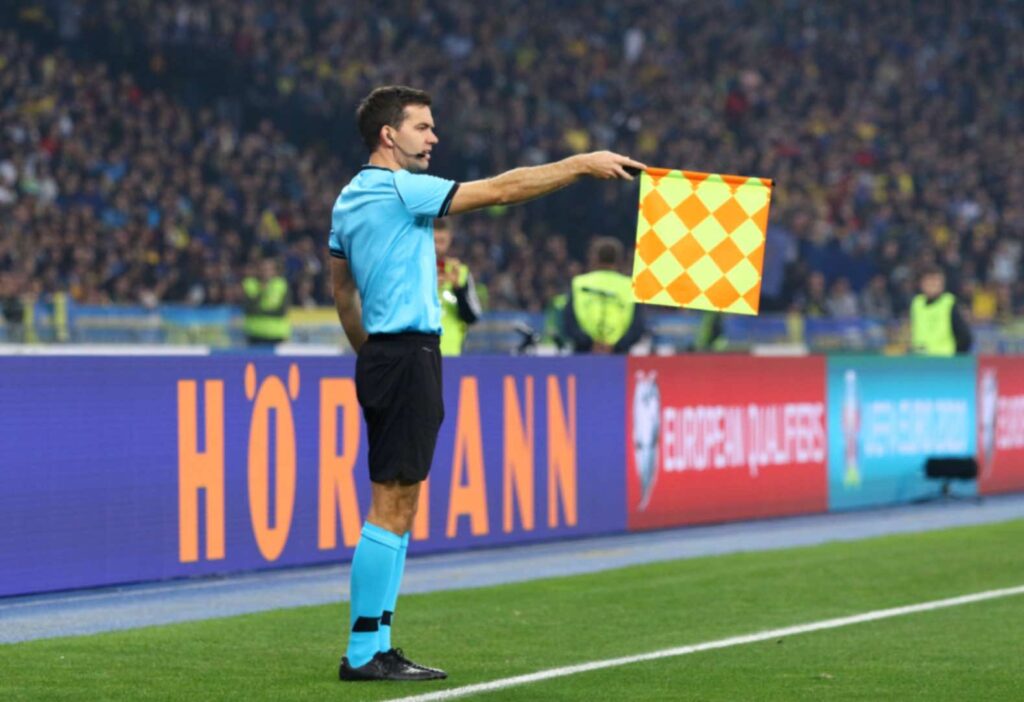
The earliest version of football’s offside law appeared in the Cambridge Rules before being incorporated into the Football Association’s original Laws of the Game in 1863. During this period, the law was incredibly strict because any attacking player positioned ahead of the ball was automatically considered offside, regardless of how many defenders stood between him and the goal.
This version closely resembled rugby and effectively prohibited forward passing. Players advanced mainly through dribbling or short backward passes, making attacking football slow and predictable. Defenders enjoyed an overwhelming advantage because they could simply remain behind the ball, knowing attackers had very little freedom to exploit space.
The restrictive nature of these early laws soon convinced football authorities that change was necessary if the sport was to grow in popularity.
Offside rule history changed dramatically in 1866
The first major breakthrough in the offside rule history arrived just three years later when the Football Association introduced a more attack-friendly interpretation.
Instead of requiring attackers to remain behind the ball, the revised law allowed players to receive forward passes provided that at least three opponents stood between them and the goal line.
Although this still heavily favored defenders compared to today’s standards, it represented a revolutionary shift. Teams could now build attacks with greater creativity, passing combinations became more effective, and football gradually evolved from an individual dribbling contest into a genuine passing game.
Many historians consider this amendment the true beginning of modern football because it encouraged teamwork rather than individual ball carrying.
How did offside rule change in 1925?
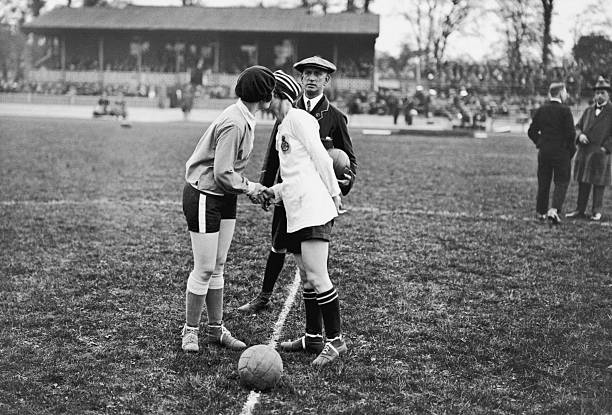
Perhaps no amendment has had a greater impact on football than the famous 1925 revision.
Before this change, attackers required three defenders between themselves and the goal when the ball was played. Defenders quickly learned how to exploit the law by stepping forward together and catching attackers offside repeatedly, causing matches to become increasingly defensive and low scoring.
Recognizing that spectators wanted more goals, the International Football Association Board reduced the requirement from three defenders to just two.
This seemingly small adjustment completely transformed the sport. Goals immediately increased across England, while managers were forced to rethink defensive organization.
The famous WM formation developed partly as a direct response to this amendment, while attacking football entered one of its most exciting eras.
The evolution of offside rule inspired tactical revolutions
The evolution of offside rule has never existed in isolation because every amendment has forced coaches to rethink how football should be played.
As defensive lines became more organized, teams learned to use the offside trap as a tactical weapon rather than simply defending deep. Instead of chasing attackers, defenders moved forward together at precisely the right moment, forcing opponents into offside positions.
Decades later, tactical innovators such as Rinus Michels and Johan Cruyff built systems that relied heavily on coordinated pressing, compact defensive shapes, and intelligent positioning, all of which depended upon a precise understanding of the offside law.
Modern coaches such as Pep Guardiola, Jurgen Klopp, and Carlo Ancelotti, continue to design defensive systems around the offside line, demonstrating how deeply the law remains connected to football strategy.
How offside rule developed through active and passive interpretations
One of the most confusing aspects of modern football involves active and passive offside, but these concepts did not always exist.
For many years, merely standing in an offside position automatically resulted in an offence. This often punished attackers who had little influence on the play.
Recognizing this problem, football lawmakers gradually introduced a more nuanced interpretation.
Today, an attacker is penalized only if they become actively involved by playing the ball, interfering with an opponent, or gaining an advantage from their position. Simply standing in an offside position no longer constitutes an offence if the player does not affect play.
This clarification represented another important milestone in how offside rule developed, making refereeing decisions more focused on genuine competitive advantage rather than technical positioning alone.
Technology has transformed the evolution of offside rule

Perhaps the biggest recent chapter in the evolution of offside rule has been the arrival of technology.
Before Video Assistant Referee (VAR), assistant referees made split-second judgments based solely on human eyesight. Marginal offside decisions frequently produced controversy because attackers and defenders often moved at incredible speed.
VAR introduced frame-by-frame analysis, allowing officials to examine precise player positions before confirming goals or disallowing them.
Although this greatly improved accuracy, it also created fresh debates. Fans questioned whether goals should be ruled out because of a shoulder, knee, or toe being marginally ahead of the final defender.
To address these concerns, FIFA introduced semi-automated offside technology at major tournaments, combining artificial intelligence, limb-tracking cameras, and sensor-equipped match balls to speed up decisions while maintaining accuracy.
Technology continues to shape the modern evolution of offside rule, balancing fairness with the need to preserve football’s excitement.
How did offside rule change to encourage attacking football?
Throughout football’s history, lawmakers have consistently adjusted the offside law with one objective in mind: encouraging attacking play.
Every significant amendment has attempted to create more scoring opportunities without giving attackers an unfair advantage.
Modern interpretations often favor goals whenever possible. Officials are instructed to delay raising the flag during obvious attacking situations until the move concludes, allowing VAR to review close decisions afterward rather than stopping promising attacks prematurely.
These changes ensure that exciting moments are less likely to disappear because of incorrect assistant referee decisions while maintaining the integrity of the competition.
The answer to how did offside rule change is therefore remarkably consistent across generations: each revision has sought to make football faster, more entertaining, and more balanced.
The evolution of offside rule continues today
The evolution of offside rule is far from complete because football’s lawmakers continue exploring ways to improve the game.
Former Arsenal manager Arsène Wenger has proposed a new interpretation under which attackers would remain onside provided any part of their body capable of scoring remains level with the final defender. Supporters believe this would encourage more attacking football, while critics argue it could place defenders at an unfair disadvantage.
Whether or not such proposals are eventually adopted, they demonstrate that football remains willing to evolve alongside changing tactics, technology, and fan expectations.
The offside rule history proves that no football law has influenced the game’s development more profoundly. From its restrictive beginnings in the nineteenth century to today’s technologically assisted decisions, the rule has continually adapted to preserve competitive balance while encouraging attacking football.
As new technologies emerge and tactical innovations continue, how offside rule developed will remain one of football’s most fascinating stories. The evolution of offside rule has never been about making the game easier or harder; it has always been about ensuring football remains fair, exciting, and capable of evolving with every new generation.
