Every great sport eventually reaches a moment when tradition must surrender to necessity. Football, despite its status as the world’s most popular game, spent much of the twentieth century wrestling with a surprisingly simple question: what should happen when two teams have exhausted every ounce of energy, ninety minutes have passed, extra time has failed to separate them, and neither side deserves to leave the pitch defeated?
Long before the drama of players standing twelve yards from goal became one of football’s defining spectacles, administrators relied on solutions that now seem almost impossible to believe. Yet those methods were accepted because no better alternative appeared to exist. The history of penalty shootouts is therefore not merely the story of a rule change but the story of football discovering a fairer way to decide its greatest contests.
Today, it is almost impossible to imagine the sport without penalty shootouts. World Cups have been won because of them, European Championships have been defined by them, and generations of footballers have seen their careers immortalized or haunted by a single kick. The history of penalty shootouts has become inseparable from football history itself because it represents football at its most unforgiving, where technical excellence meets psychological resilience and the smallest mistake can echo for generations.
Before the History of Penalty Shootouts, Football Relied on Chance

Modern supporters would struggle to believe that there was once no universally accepted method of deciding knockout matches, yet for decades this was simply part of football history. When teams remained level after extra time, the preferred solution was usually a replay, allowing both sides another opportunity to settle the contest on the pitch. While replays worked reasonably well in domestic competitions, they became increasingly impractical in international tournaments, where tight schedules, long-distance travel, and broadcasting commitments left organizers with little flexibility.
Whenever a replay proved impossible, football turned to methods that had remarkably little to do with football itself. Organizers occasionally drew lots, while referees sometimes settled the fate of nations with nothing more sophisticated than the toss of a coin. It was a remarkable contradiction. A sport built upon preparation, discipline, tactical intelligence, and technical brilliance occasionally entrusted its biggest decisions to pure chance, reducing months, and sometimes years, of effort to the outcome of a spinning piece of metal.
Perhaps the most famous example occurred during the 1968 UEFA European Championship. Italy and the Soviet Union battled through extra time without producing a winner, forcing officials to resort to a coin toss. The captains accompanied the referee into the dressing room, where fate, rather than football, determined who would progress. Italy won the toss, reached the final, and eventually lifted the European Championship, but the incident exposed an uncomfortable truth. If football wished to preserve its integrity, it needed a conclusion that rewarded players instead of luck. That moment became one of the defining chapters in the history of penalty shootouts, even though the shootout itself had not yet been invented.
Karl Wald and the Birth of Penalty Shootout History
The man who eventually transformed football was neither a legendary striker nor an influential manager. He was Karl Wald, a German referee whose greatest contribution to the sport came not from enforcing its laws but from imagining how they could be improved.
In 1970, Wald proposed an idea that was both remarkably simple and profoundly revolutionary. Instead of allowing fate to determine tied knockout matches, each team would take five penalties in alternating order, with sudden death deciding the contest if the scores remained level after those attempts. His proposal ensured that players, rather than fortune, would determine the outcome.
The brilliance of Wald’s suggestion lay in its balance. Every team received the same number of opportunities, every goalkeeper faced identical conditions, and every player stepped into the same spotlight. Victory would no longer belong to the luckiest team but to the one that displayed greater composure under extraordinary pressure. Football’s lawmakers recognized the fairness of the proposal, and later that year they formally adopted it, marking the official beginning of the penalty shootout history that supporters know today.
The Panenka That Changed Football Forever
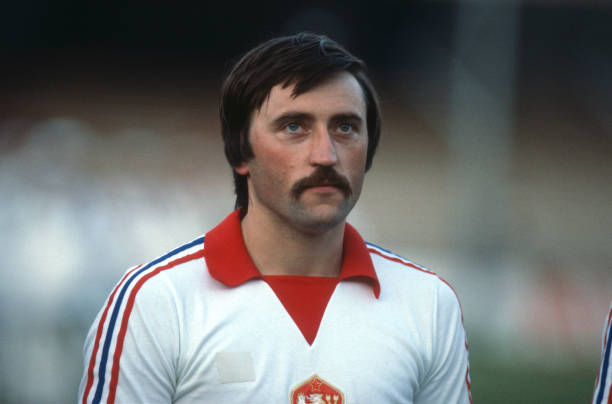
Every great innovation eventually produces a defining moment, and for the history of penalty shootouts, that moment arrived at the UEFA European Championship in 1976.
Czechoslovakia and West Germany finished the final locked at 2–2 after extra time, forcing the first major international tournament final to be decided by penalties. As the shootout unfolded, most players relied on power and precision until West Germany’s Uli Hoeneß sent his effort over the crossbar. That miss handed Antonín Panenka the opportunity to win the championship.
What happened next remains one of the most iconic moments in football history. Rather than striking the ball with force, Panenka delicately chipped it down the middle as goalkeeper Sepp Maier dived away. It was a finish of breathtaking confidence, and its influence has endured for almost half a century. Today, every softly chipped penalty taken in that fashion still bears Panenka’s name, proving that a single moment can redefine both technique and legacy.
The World Cup Embraces Penalty Shootouts
Although the system was introduced in 1970, the FIFA World Cup did not adopt penalty shootouts immediately. That changed in Spain in 1982 when West Germany and France produced one of the greatest matches the tournament has ever witnessed. After a thrilling 3–3 draw following extra time, the teams entered the World Cup’s first-ever penalty shootout, with West Germany eventually prevailing 5–4.
That evening marked a turning point in the history of penalty shootouts because the World Cup, football’s grandest stage, had fully embraced them. Since then, every generation has witnessed unforgettable moments from twelve yards, ensuring that the drama of penalties became an inseparable part of the tournament’s identity.
Penalty Shootouts That Shaped Football History
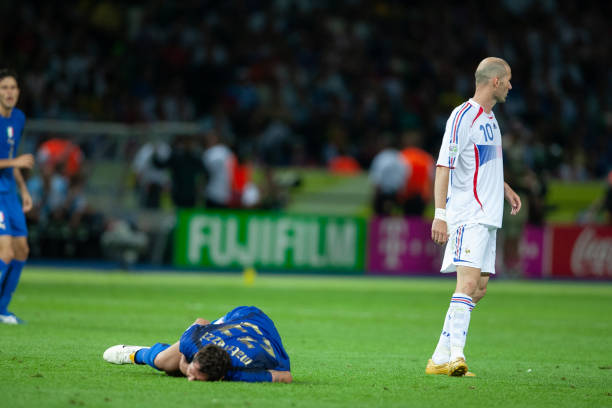
Some of football’s most enduring images have been created not during open play but from the penalty spot. Roberto Baggio’s miss in the 1994 World Cup final remains one of the defining photographs in football history, while England’s repeated heartbreak against Germany at Italia ’90 and Euro 1996 transformed penalties into a national obsession that lingered for decades.
The 2006 World Cup final added another unforgettable chapter. After Zinedine Zidane’s infamous headbutt overshadowed the match itself, Italy defeated France on penalties, with Fabio Grosso calmly converting the decisive kick. Sixteen years later, Argentina defeated France in another unforgettable World Cup final, where Emiliano Martínez’s heroics and Gonzalo Montiel’s winning penalty secured one of the greatest triumphs in modern football.
Each of these moments reminds us that the penalty shootout history is not simply a catalogue of statistics but a collection of human stories, where courage, heartbreak, redemption, and resilience exist side by side.
Why the History of Penalty Shootouts Still Divides Opinion
Despite their popularity, penalty shootouts continue to divide opinion across the football world. Critics argue that a team sport should never be reduced to a sequence of individual kicks, while others believe that no alternative combines fairness, excitement, and practicality as effectively.
Former FIFA president Sepp Blatter famously described penalties as football’s “tragedy,” believing that they place excessive emphasis on individual moments rather than collective performance. Yet supporters of the system argue that penalty shootouts test qualities that every great footballer must possess: technical excellence, emotional control, and the ability to perform under extraordinary pressure.
The debate has never truly ended, but football has repeatedly searched for alternatives, including golden goals, silver goals, and replay matches. None have proved as enduring as the penalty shootout.
The Legacy of Penalty Shootout History
More than fifty years after Karl Wald proposed his revolutionary idea, the history of penalty shootouts continues to evolve with every major tournament. New heroes emerge, heartbreaking misses become part of sporting folklore, and goalkeepers continue to discover innovative ways of unsettling opponents before the ball is even struck.
What began as a practical solution to an administrative problem has become one of the sport’s greatest theatres of emotion. Few moments in football history capture anticipation, fear, hope, and triumph with the same intensity as a penalty shootout, because every kick carries the weight of expectation while offering the possibility of immortality.
The history of penalty shootouts reminds us that football’s greatest innovations are often born not from spectacle but from necessity. By replacing the randomness of coin tosses with a contest decided by courage and composure, the game preserved its competitive integrity while creating one of its most dramatic traditions. Every time players leave the centre circle and begin the lonely walk towards the penalty spot, they become part of a story that has shaped football history for more than half a century, ensuring that the legacy of penalty shootout history will continue to define the beautiful game for generations to come.
