The future of FIFA president Gianni Infantino has come under unprecedented scrutiny as he prepares to meet senior officials from world football’s governing body in Morocco amid growing criticism over his now abandoned commercial restructuring proposal. What was initially presented as an ambitious financial initiative has instead triggered a governance crisis, with several football associations questioning Infantino’s leadership and demanding greater accountability.
The emergency meeting comes after a turbulent few days in which senior FIFA officials, UEFA leaders, and national football associations publicly criticized the proposal to create and partially sell a new commercial entity that would manage FIFA’s commercial and event operations. The backlash has intensified pressure on Infantino just months before the 2027 FIFA presidential election, raising serious questions about his political future.
Why the FIFA president has called an emergency meeting
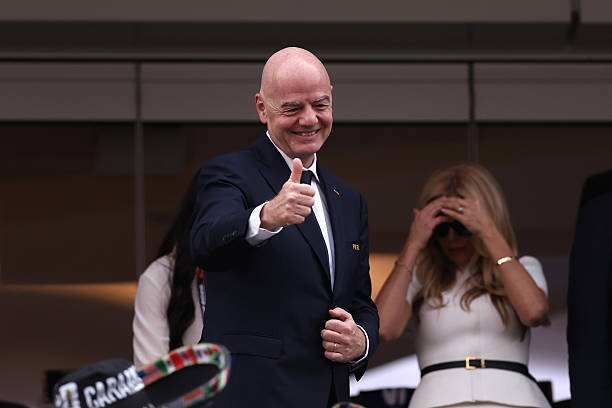
The gathering in Rabat is expected to include FIFA secretary general Mattias Grafstrom alongside members of FIFA’s management board, including finance chief Thomas Peyer, legal director Emilio Garcia Silvero, chief of staff Daniel O’Toole, member associations director Elkhan Mammadov, and media relations director Bryan Swanson.
Although FIFA has not officially disclosed the full agenda, the meeting is widely viewed as an attempt by the FIFA president to restore confidence following one of the most damaging controversies of his decade-long leadership.
Internal criticism has been unusually direct. Grafstrom reportedly described the recent events as a “sad and reproachable series of events,” while chief operating officer Kevin Lamour suggested that the investment proposal reflected the vision of a single individual rather than the wider FIFA administration. Such remarks have highlighted internal divisions rarely seen within the governing body.
The meeting therefore represents more than a routine executive session. It is an opportunity for Infantino to reassure senior officials that lessons have been learned while convincing them that FIFA can move forward without further damaging its credibility.
Why FIFA’s commercial proposal sparked controversy
The abandoned proposal centered on creating a separate commercial enterprise that would manage and monetize FIFA’s most valuable assets, including future World Cups. Critics argued that the structure effectively amounted to selling portions of football’s future commercial rights to outside investors.
Opponents believed member associations were being pressured into approving the proposal within an extremely limited timeframe while being offered additional financial incentives tied to their support.
Former FIFA adviser Carlos Cordeiro resigned over the proposal, describing it as “a bad deal for football.” He questioned both the governance process and the lack of transparency surrounding the initiative, asking fundamental questions about who would ultimately benefit, what oversight mechanisms existed, and why the proposal had been advanced so rapidly.
Those concerns have resonated across the football community, with several federations arguing that such a significant decision required far greater consultation and scrutiny.
Infantino meets with FIFA executives amid growing political opposition
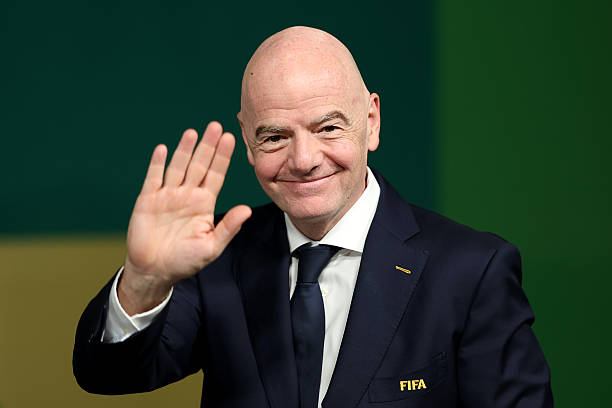
As Infantino meets with FIFA executives, he also faces mounting political resistance from within the global football community.
UEFA has publicly stated that it has lost confidence in the current FIFA leadership, while several European football associations have reportedly withdrawn their support for Infantino ahead of next year’s presidential election.
Jordan Football Association president Prince Ali has also criticized FIFA’s handling of the commercial proposal, claiming member associations were effectively being pressured over financial support. Although these allegations have not been independently verified, they demonstrate the increasingly polarized political environment surrounding FIFA’s leadership.
At the same time, several African football federations, including Morocco, Egypt, Niger, Mauritania, and DR Congo, have reaffirmed their support for Infantino, illustrating that his global backing remains significant despite the European opposition.
This geographical divide reflects the broader political realities within FIFA, where voting power extends far beyond Europe’s traditional influence.
Questions the FIFA president must answer
The emergency meeting is expected to focus on several critical issues that have emerged during the controversy.
Senior officials are likely to seek answers regarding why the commercial proposal was introduced without broader consultation, whether sufficient governance safeguards existed, how external investors would have benefited, and what long-term consequences the deal could have created for international football.
Equally important will be the issue of institutional reform. Many observers believe FIFA may need stronger internal oversight mechanisms to ensure proposals of this magnitude undergo more comprehensive review before being presented to member associations.
Infantino could also face questions about other controversial initiatives, including discussions surrounding a possible 64-team World Cup, which has generated considerable debate within football circles.
Any meaningful attempt to restore confidence will likely require the FIFA president to demonstrate a willingness to improve transparency and strengthen governance procedures.
Is Gianni Infantino likely to resign?
Despite the intensity of the criticism, there is little indication that Infantino intends to step down.
Instead, recent developments suggest he is preparing to defend his leadership while attempting to rebuild relationships with key stakeholders.
Infantino continues to enjoy substantial support across Africa, Asia, and other confederations, where FIFA’s financial redistribution programs have strengthened his political standing during his presidency.
For that reason, calls for his resignation may prove insufficient unless opposition groups can unite around a credible alternative candidate capable of securing widespread international backing.
What options do Infantino’s opponents have?

If dissatisfaction continues after Infantino meets with FIFA executives, opponents have several constitutional mechanisms available, although each presents significant challenges.
The FIFA Council could attempt to trigger an emergency meeting if enough members support such a move. Another possibility would be an extraordinary FIFA Congress, which requires formal backing from at least one-fifth of FIFA’s 211 member associations.
UEFA alone has enough member nations to initiate that process, but successfully removing a sitting president would require majority support from across the global football community.
Attention is therefore beginning to shift toward the 2027 presidential election, where potential challengers may emerge before the nomination deadline later this year.
Several names have already been mentioned in football circles, although no major candidate has officially declared an intention to contest the election.
What happens next for FIFA?
Wednesday’s meeting may not determine the future of the FIFA president, but it could significantly influence the direction of football’s governing body over the coming months.
Should Infantino succeed in rebuilding trust with senior executives, the immediate crisis may begin to ease, even though political tensions with UEFA are likely to persist. However, if divisions deepen following the discussions in Morocco, calls for broader reforms and leadership change could accelerate ahead of next year’s election.
Regardless of the immediate outcome, the controversy surrounding FIFA’s commercial proposal has exposed significant governance challenges within world football. The coming months will reveal whether Infantino can restore unity or whether this episode becomes the defining crisis of his presidency.
