When LeBron James finally announced his decision to leave the Los Angeles Lakers, the basketball world immediately turned into a guessing game. Cleveland wanted its hometown hero back. Miami dreamed of another championship reunion. Golden State imagined the long-awaited partnership between LeBron James and Stephen Curry. Yet when the dust settled, LeBron James’ move to 76ers became the story that stunned the NBA.
For a player entering what could be the final chapter of an extraordinary career, sentimentality no longer carried much weight. LeBron had already built his legacy. His next destination had to offer something more valuable than nostalgia. It had to offer the strongest opportunity to compete for another NBA championship.
LeBron James’ Move to 76ers Was Driven by One Goal

The biggest reason behind LeBron James’ move to 76ers was surprisingly simple. Winning remained his only priority.
Announcing his decision, James made it clear that he was not chasing another lucrative contract, nor was he looking for the comfort of familiar surroundings. Instead, he wanted one more realistic opportunity to compete for an NBA title, believing Philadelphia offered the best basketball situation available.
His willingness to sign a two-year veteran’s minimum contract reinforced that point. Money had ceased to influence his decisions because his résumé already contained virtually every individual and team achievement imaginable. At this stage, adding another championship ring mattered far more than adding another paycheck.
That philosophy became the foundation of LeBron James’ move to 76ers, making Philadelphia the unexpected winner of the biggest free agency race in years.
Why LeBron James Picked the 76ers
Anyone wondering why LeBron James picked the 76ers only needs to examine what Philadelphia built before his arrival.
The franchise had already assembled an impressive core around Joel Embiid and Tyrese Maxey before dramatically strengthening the roster by acquiring Jaylen Brown. Suddenly, the 76ers possessed elite scoring, championship experience, defensive versatility, and one of the league’s strongest supporting casts.
Reports also revealed that Embiid, Brown, and Maxey actively recruited James throughout free agency, while team executives made it clear that Philadelphia was prepared to build everything around one final championship push.
From a basketball perspective, the fit made perfect sense. James would not be required to carry the offensive burden every night, allowing him to preserve energy while continuing to orchestrate games as one of the league’s greatest playmakers.
This balanced roster explains exactly why LeBron James picked the 76ers instead of several other high-profile contenders.
Why Didn’t LeBron Pick the Cavaliers?
One of the biggest questions surrounding NBA free agency was why didn’t LeBron pick the Cavaliers, especially considering his deep emotional ties to Cleveland.
James has repeatedly described Northeast Ohio as home, and a farewell season there would have created one of the most memorable endings in NBA history. However, basketball decisions rarely depend on emotion alone.
Although Cleveland possesses tremendous talent with Donovan Mitchell, Evan Mobley, Jarrett Allen, and James Harden, questions remained about roster balance and spacing. Several of the Cavaliers’ stars require the ball in their hands, while the frontcourt lacks the perimeter shooting that typically complements LeBron’s style of play.
Perhaps even more importantly, James emphasized that family, legacy, and sentiment were no longer deciding factors. Winning was.
That competitive mindset ultimately explains why LeBron didn’t pick the Cavaliers, despite the emotional appeal of returning home one final time.
Why Didn’t LeBron Choose the Warriors?
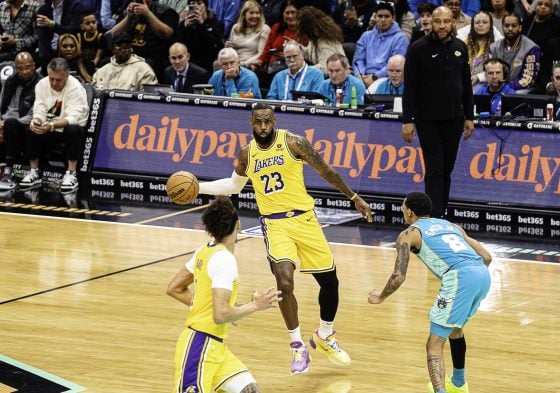
Another popular debate throughout NBA free agency centered on why LeBron didn’t choose the Warriors, especially after years of speculation about a partnership with Stephen Curry.
On paper, pairing arguably the greatest shooter in NBA history with one of basketball’s greatest all-around players seemed irresistible. Yet roster construction told a different story.
Golden State still faced uncertainty surrounding Jimmy Butler’s recovery, lacked the depth that defines championship favorites, and appeared further away from true title contention than Philadelphia.
Reports suggested the Warriors remained optimistic early in the process, but they gradually realized convincing James would be difficult because they simply could not present the clearest path toward another championship.
Understanding why didn’t LeBron choose the Warriors ultimately comes down to competitiveness rather than star power. James wanted the roster most capable of winning immediately, and he believed Philadelphia checked that box more convincingly.
How Philadelphia Became the Perfect Fit
The timing of LeBron James’ move to 76ers proved almost as important as the decision itself.
Philadelphia’s blockbuster acquisition of Jaylen Brown dramatically changed league perceptions. Before that trade, many insiders considered the franchise an outsider in the LeBron sweepstakes. Afterward, the 76ers transformed into one of the NBA’s deepest and most balanced contenders.
Joel Embiid provides dominant interior scoring, Tyrese Maxey delivers explosive pace and shot creation, while Brown supplies elite two-way versatility. James can now function as the offensive conductor without carrying the overwhelming scoring burden he often faced in Los Angeles.
The supporting cast also allows head coach Nick Nurse to manage James’ minutes intelligently throughout the regular season, preserving his energy for what Philadelphia hopes will be a deep postseason run.
That carefully assembled roster makes LeBron James’ move to 76ers appear less surprising the more closely it is examined.
Kevin Durant Defends LeBron’s Decision
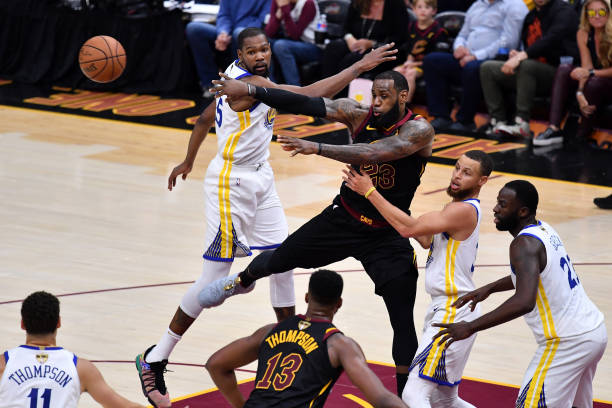
Not everyone criticized LeBron James’ move to 76ers. One of the strongest public defenses surprisingly came from longtime rival Kevin Durant.
Responding to criticism on social media, Durant argued that fans often become too emotionally invested in player movement while overlooking the extraordinary careers these athletes have built. He reminded critics that James has already given more than two decades of excellence to basketball and has earned the freedom to choose whichever situation he believes best suits the final years of his career.
Durant went even further by saying he was defending basketball itself, emphasizing that discussions surrounding legacy often become overshadowed by unnecessary debates rather than appreciation for greatness.
Coming from someone who has battled James on the biggest stages for nearly two decades, the comments carried considerable weight and highlighted the mutual respect shared between two future Hall of Famers.
Can LeBron Deliver One More Championship?
Only time will determine whether LeBron James’ move to 76ers results in another NBA title, but few would question that Philadelphia now enters the season among the league’s genuine championship favorites.
James arrives with unmatched experience, Embiid remains one of basketball’s most dominant forces when healthy, Brown contributes championship pedigree, and Maxey continues developing into one of the NBA’s elite guards. Together, they form a roster capable of challenging anyone.
The pressure will undoubtedly be enormous because expectations have shifted overnight. Philadelphia is no longer hoping to compete. The franchise now expects to contend for a championship immediately.
Whether this ultimately becomes the perfect final chapter remains unknown, but one thing is already certain. LeBron James’ move to 76ers has reshaped the NBA landscape, answered the questions surrounding why LeBron James picked the 76ers, clarified why LeBron didn’t pick the Cavaliers, and settled why LeBron didn’t choose the Warriors. For Philadelphia, the dream has become reality. For the rest of the league, the race for the Larry O’Brien Trophy just became significantly more difficult.

2 comments
[…] Wembanyama Says the Best Part of His… Liverpool Pre-Season Begins with Victory but Joe Gomez… LeBron James’ Move to 76ers: Why Philadelphia Won… Real Madrid Used Michael Olise Transfer Rumors to… Arsenal are interested in Vinicius as Real […]
[…] in which the team failed to land a marquee superstar, including long-running speculation involving LeBron James, Golden State understands that significant roster improvements may still become available through […]