The Premier League is preparing for a tougher approach to one of modern football’s most chaotic battlegrounds, with referees set to clamp down on holding, grappling and other non-footballing actions during corners and free-kicks in the 2026/27 season.
The new corner rules do not rewrite the Laws of the Game, but they will change how existing laws are enforced. Referees have been instructed to act more decisively when players use sustained holding or grappling to prevent opponents from moving or playing the ball.
The issue became increasingly prominent last season as physical confrontations inside the penalty area became a regular feature of set-pieces in the PL. With players wrestling for position before the ball was even delivered, officials often faced several possible fouls happening simultaneously.
Now, the Premier League wants a clearer response.
New corner rules target non-footballing holding
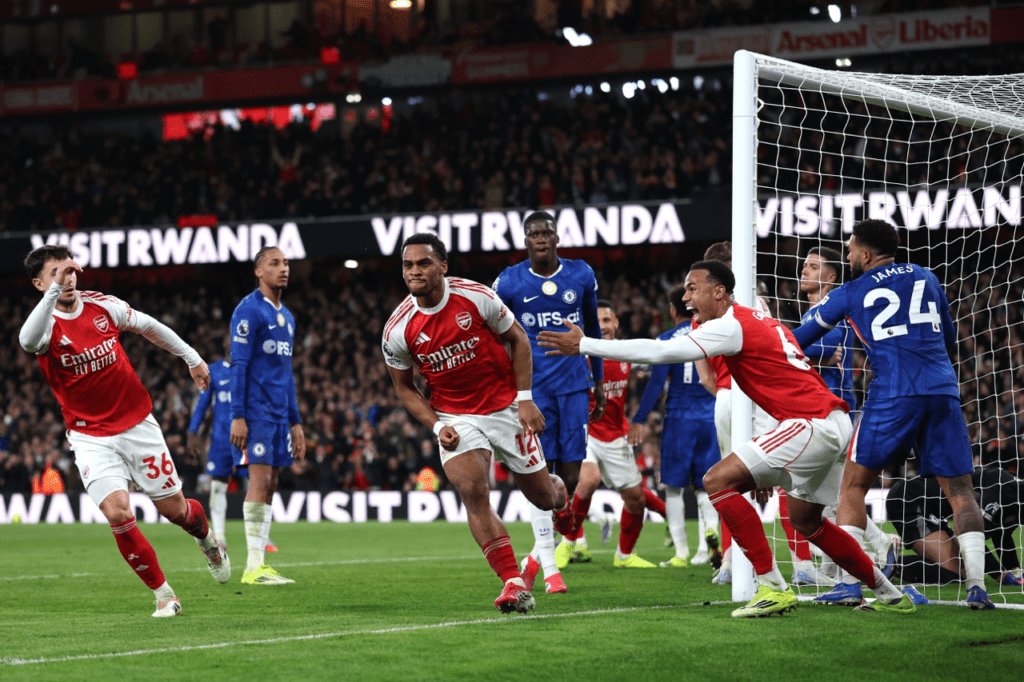
The central principle behind the new corner rules is that referees should pay greater attention to holding actions with a clear and material impact on an opponent.
Not every physical contact will become a foul. The Premier League intends to maintain its traditionally high threshold for contact, meaning football will remain a physical game. However, players whose actions have nothing to do with challenging for the ball will face greater scrutiny.
Officials will particularly focus on situations in which a player is:
- Only concentrating on an opponent rather than the ball
- Making no genuine attempt to play or challenge for the ball
- Holding an opponent with both arms
- Using sustained or impactful holding of a player or their clothing
The new corner rules therefore draw an important distinction between legitimate physical competition and deliberate obstruction.
A defender who positions himself with his back to the incoming delivery and focuses solely on stopping an attacker from making a run could now be penalised more readily. Similarly, sustained grappling that prevents a player from competing for the ball will receive greater attention.
The objective is not to eliminate physicality. It is to remove actions that officials consider to have no legitimate footballing purpose.
Why set-pieces in the PL became such a major problem
The crackdown follows a season in which holding and jostling inside the penalty area became increasingly difficult to manage.
The problem was particularly evident because multiple incidents could occur at the same time. During a corner, one player might be blocking another, two others could be wrestling near the penalty spot, while another attacker attempted to restrict the goalkeeper.
That creates a difficult challenge for referees, who must make instant decisions while following the flight of the ball and monitoring several players.
VAR has not provided a simple solution either. According to the source material, five of the 20 missed VAR interventions last season involved penalties that were not awarded after a player had been wrestled to the ground away from the ball.
That statistic highlights why the Premier League believes stronger on-field action is necessary.
The new corner rules are designed to encourage referees to identify serious holding offences earlier rather than repeatedly warning players before taking action. The hope is that stronger enforcement will eventually force players and coaches to modify their behavior.
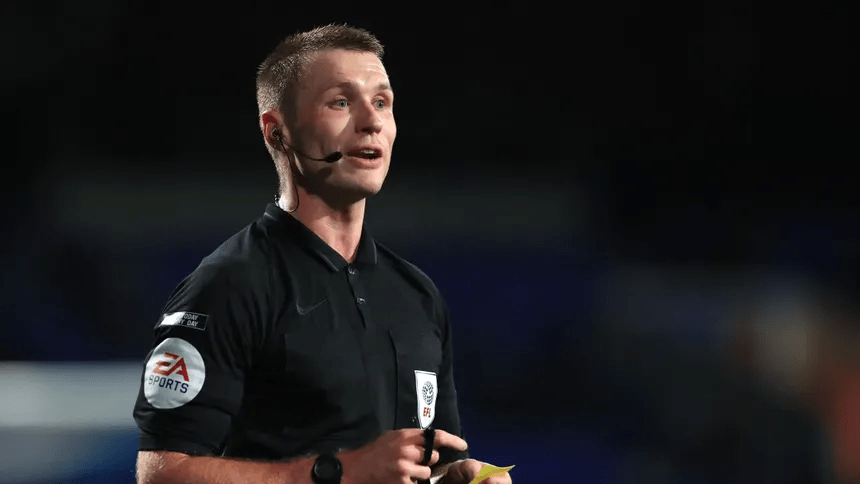
Howard Webb, the head of the Premier League’s refereeing body, has stressed that officials are being encouraged to act with greater confidence. The desired outcome is simple: fewer warnings and more appropriate sanctions when clear offences occur.
Goalkeepers will still receive special protection

The changes will also maintain strong protection for goalkeepers, particularly when their ability to play the ball is restricted.
One clear example is when an opponent holds a goalkeeper’s arm while the goalkeeper is attempting to compete for the ball. Under the Premier League’s approach, that remains a clear foul.
However, the league does not intend to adopt an excessively strict approach to every instance of contact involving a goalkeeper.
A slight bump will not automatically result in a goal being disallowed if the goalkeeper was not actively playing the ball. This remains consistent with the Premier League’s wider principle of maintaining a high threshold for fouls.
That balance will be crucial to the success of the new corner rules. Referees must become tougher on deliberate grappling without turning every corner into a sequence of stoppages and free-kicks.
Players are already being shown what will change
Before the new season, officials have visited clubs to explain the approach through meetings and video examples.
Players have been shown incidents from last season that were not penalised but would now be more likely to result in a foul under the stronger focus on non-footballing holding.
Two examples involved Keane Lewis-Potter wrestling Tomas Soucek away from the ball and Luke O’Nien dragging Pascal Struijk down with an arm around his neck.
Under the 2026/27 guidance, both incidents fall within the category of actions that have no place in normal footballing competition.
Still, some decisions will remain subjective.
Player opinion itself can differ dramatically, even within the same dressing room. The example of Marc Guehi being pulled down by Bafode Diakite showed how some players considered the contact sufficient for a penalty while others believed Guehi had exaggerated or engineered the situation.
This is where the relationship between the referee and VAR remains important. An on-field penalty can be acceptable without meaning that VAR should intervene if the decision does not meet the high threshold for a clear and obvious error.
The new corner rules will therefore not mean VAR reviews every piece of contact inside the box.
Who could benefit from the new approach?

The potential impact on set-pieces in the PL could be significant.
Last season, 269 goals were scored from set-pieces, excluding penalties and direct free-kicks. That represented a record 25.7% of Premier League goals and was the highest proportion among Europe’s leading leagues.
Arsenal were the standout performers, scoring 25 goals from set-pieces. Manchester United followed with 21, while Tottenham scored 19.
The Gunners were also exceptional defensively, conceding only seven set-piece goals, the fewest in the division.
The teams that struggled most defensively may welcome the stronger enforcement. Liverpool conceded a league-high 19 goals from set-pieces, while Chelsea and Newcastle each conceded 17.
The new corner rules could therefore reshape the balance between attacking and defending at dead-ball situations. Teams that rely heavily on physical blocking and grappling may have to adapt their routines, while clubs with sophisticated movement patterns could find greater opportunities.
Arsenal’s success last season was not built solely on physicality, as their routines, timing and organisation were also major strengths. Yet every team will need to examine how its players create space and gain positional advantages.
Can the new corner rules really end the chaos?
That is the biggest question. Football has seen many campaigns to address particular behaviors, only for enforcement to become less consistent after the opening weeks of a season. Players and supporters will therefore judge this initiative by how consistently referees apply it from August through May.
The Premier League faces a difficult balancing act. Too much intervention could make set-pieces in the PL frustratingly stop-start. Too little could allow the same chaos to continue.
The aim is to find the middle ground: punish deliberate, sustained and clearly non-footballing holding while allowing genuine physical competition for the ball.
If referees consistently apply that principle, player behaviour may gradually change. The new corner rules could then have their greatest impact not through the number of penalties awarded, but through the offences players eventually stop committing.
For a league where set-pieces have become more important than ever, that could be one of the most influential officiating changes of the 2026/27 season.
