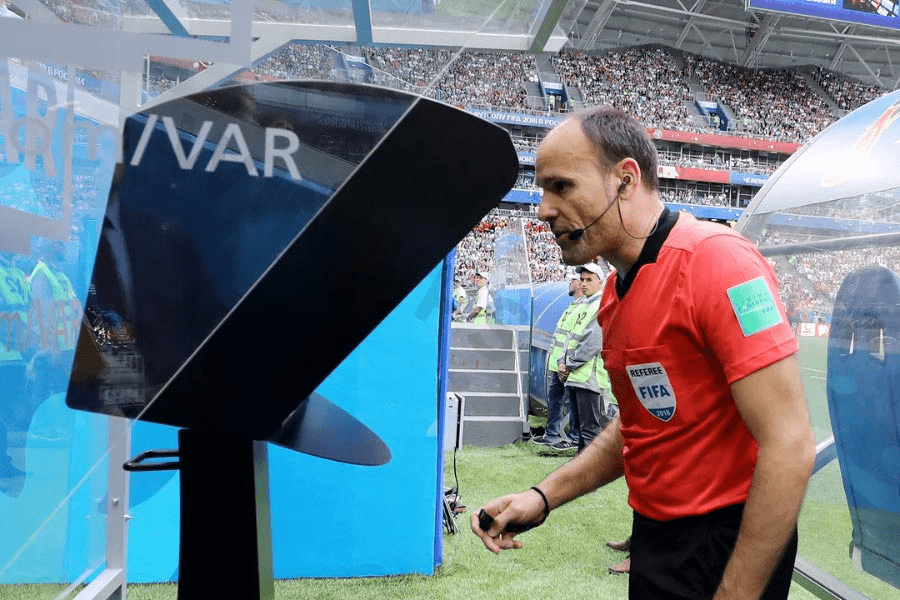
In modern football, the introduction of Video Assistant Referees (VAR) has revolutionized how refereeing decisions are made. VAR, which was first implemented in the 2018 FIFA World Cup, has become an integral part of the sport, aiming to ensure that decisions made on the pitch are as accurate as possible. While the system has been widely adopted across various competitions, its workings often remain a mystery to fans and players alike. In this article, we will delve deep into the Video Assistant Referees review process, focusing on how decisions are made and what happens behind the scenes during the review process.
What is VAR?
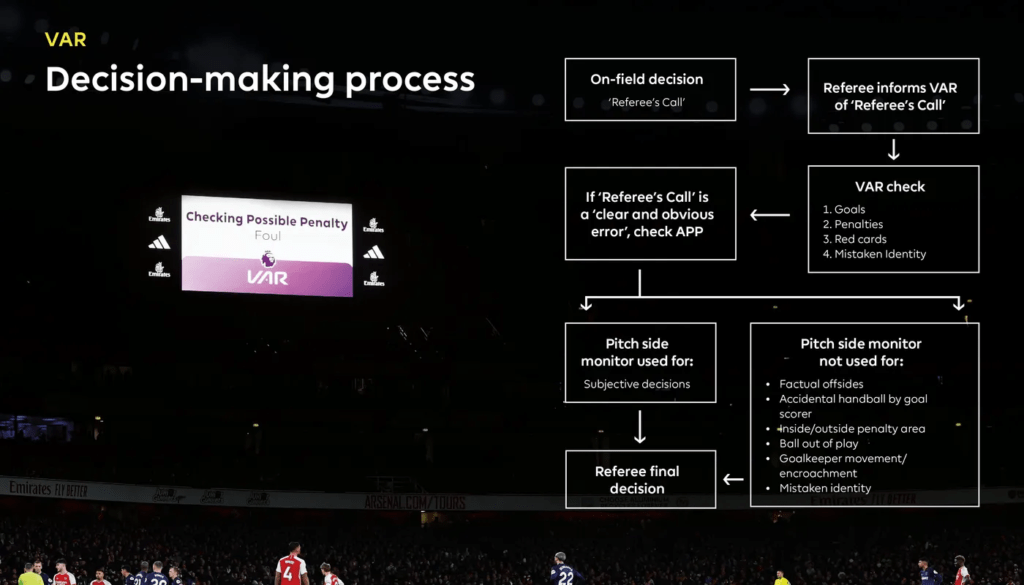
At its core, VAR is a system that assists the on-field referee by reviewing decisions that could be game-changing. These decisions typically fall into four main categories:
- Goals: Was there an offside or foul leading to the goal?
- Penalty Decisions: Was a penalty correctly awarded, or was there a mistake?
- Direct Red Cards: Was a direct red card decision accurate, or was the foul deserving of a lesser punishment?
- Mistaken Identity: Did the referee penalize the wrong player?
The system aims to minimize errors and provide clarity in situations where a referee might not have had a clear view or might have made an incorrect decision. However, while VAR is often seen as an automatic fix for refereeing mistakes, the process behind its implementation is far more intricate than it may seem.
The VAR Review Process
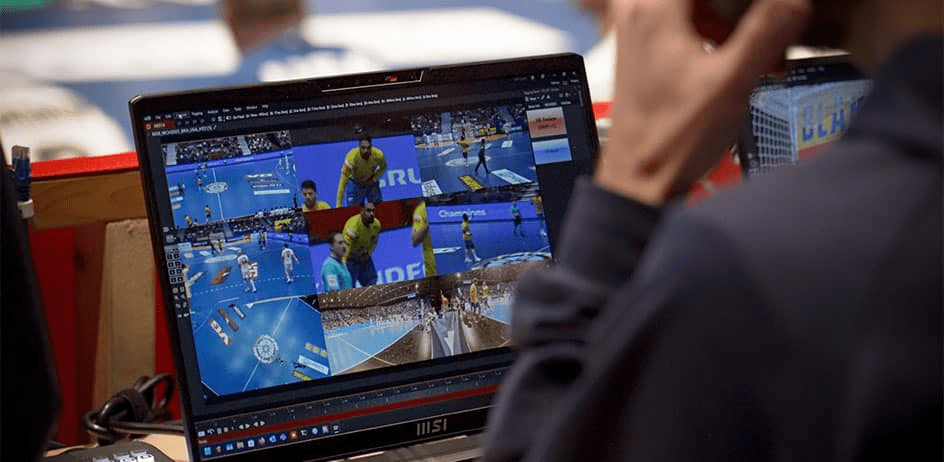
The VAR review process involves several key components, each playing a vital role in ensuring that the final decision is as accurate as possible. These components are:
- The Match Officials
- The VAR Team
- The Technology
- The Communication
Let’s break down how each element works together to make VAR decisions as precise and fair as possible.
1. The Match Officials
At the heart of the Video Assistant Referees system is the match official on the field. The referee remains the final decision-maker, but VAR acts as a backup to ensure that they have all the information needed to make the most accurate call.
Referee’s Role:
The on-field referee has the ultimate authority and can either accept or reject a recommendation made by the VAR team. If the referee is unsure of a decision or feels the need for further confirmation, they can opt for a review.
Assistant Referees:
The assistant referees support the referee in identifying situations that may require Video Assistant Referees review. This includes identifying potential offside situations, goal-line technology (if applicable), and fouls that could lead to a penalty.
2. The VAR Team
The Video Assistant Referees team operates in a remote location known as the “VAR room,” which is usually a control center or studio located away from the stadium. This team typically consists of several key personnel:
- Lead VAR (Video Assistant Referee): The lead VAR is responsible for overseeing the entire review process. They analyze the footage from multiple camera angles to assess whether the on-field referee’s decision was correct.
- Assistant VAR (AVAR): The assistant Video Assistant Referees supports the lead Video Assistant Referees by providing additional information and assisting with the analysis. The AVAR focuses on specific aspects of the review, such as the positioning of players during a potential offside or the legality of a challenge in a potential red card incident.
- Replay Operator: This person controls the video feed and ensures that the VAR team has access to all available camera angles. They may also have the ability to slow down or rewind footage to highlight key moments.
- Communications Liaison: In some setups, a communications liaison is involved to handle the audio communication between the referee on the pitch and the VAR team, ensuring that the process remains efficient and clear.
The VAR team works together to analyze every aspect of the situation. The team has access to various camera angles, slow-motion replays, and even technology such as offside lines to ensure a precise review. The more angles and data available, the better equipped the VAR team is to make an informed decision.
Also Read- Football: Goal-Line Technology Explained, How it works
3. The Technology
The technological tools that support VAR are essential to its function. They provide referees with detailed visual insights that can influence their decision. Let’s take a closer look at some of the key technologies used in Video Assistant Referees processing:
Multiple Camera Angles:
One of the most powerful tools at the disposal of the VAR team is access to multiple camera angles. These angles can be used to observe a particular incident from different perspectives, offering a clearer view of what occurred. In high-profile matches, cameras can be placed in numerous locations around the pitch, including above the goal line, along the sidelines, and in the stands, ensuring the team has an extensive visual toolkit.
Slow-Motion Replays:
Slow-motion replays are invaluable when it comes to determining the fine details of a decision. For instance, when reviewing a possible penalty or offside situation, slow-motion footage can highlight split-second moments, such as the precise moment a player makes contact with the ball or the position of a player’s foot at the time of a pass.
Offside Lines:
One of the most scrutinized aspects of VAR is determining whether a player is offside. In these cases, a digital line is drawn across the pitch to measure the position of players when the ball is played. This line is overlaid on the screen to determine if the player was ahead of the last defender. The accuracy of these lines is paramount, and the technology is designed to be as precise as possible, but even small margins can lead to intense debate.
Goal-Line Technology:
When a goal is scored, Video Assistant Referees often reviews the incident to ensure the ball completely crossed the goal line. Goal-line technology uses multiple cameras or sensors embedded in the goalposts to track the ball’s position. If there is any doubt, this technology confirms whether the ball crossed the line, helping to make a conclusive decision.
4. The Communication
Communication between the referee and the Video Assistant Referees team is essential for the review process to run smoothly. The on-field referee will communicate with the Video Assistant Referees team using a headset. The exchange of information is typically swift and direct, with the aim being to reach a final decision as quickly as possible to minimize disruption to the flow of the game.
The communication typically follows a specific pattern:
- The VAR Team Reviews the Incident: The Video Assistant Referees team will analyze the footage, paying close attention to the key moments of the incident.
- Video Assistant Referees Team Provides Information: Once they have analyzed the situation, the VAR team communicates their findings to the on-field referee, offering their recommendation based on their review.
- Referee’s Decision: After receiving the recommendation, the referee may choose to accept the VAR team’s advice or, in some cases, decide to review the footage themselves by walking to the pitch-side monitor.
- Final Decision: If the referee chooses to review the footage, they will watch the relevant clips on a monitor located at the side of the pitch. Once they have made their assessment, they will make the final decision, which may be in line with the original call or the VAR recommendation.
Challenges and Controversies
Despite its intention to improve accuracy, VAR has not been free from controversy. One of the primary challenges is the subjectivity that still exists in some decisions, such as handball or penalty situations. What one referee sees as a clear penalty might not be viewed in the same way by another, leading to disagreements.
Human Element: While the technology is objective, the human element of decision-making remains central. The VAR team’s interpretation of the footage and the referee’s final judgment can differ, and these inconsistencies can lead to debate.
Time Pressure: Another challenge is the time constraint within which the VAR team must review an incident. The goal is to provide the referee with an accurate decision without unduly disrupting the flow of the game. However, this can lead to rushed or incomplete reviews in some cases.
Transparency: Fans and players often feel disconnected from the review process because they do not have immediate access to the full context of the decision. The public doesn’t always hear the conversation between the referee and the VAR team, which can fuel frustration when a controversial decision is made.
Conclusion
The process behind VAR reviews is much more intricate than it may appear from the outside. It involves multiple layers of decision-making, technology, and human judgment, all working together to ensure the accuracy of refereeing decisions. While the system is far from perfect, it represents a significant step forward in the effort to make football more fair and transparent.
The key to improving the VAR review process lies in refining the technology, enhancing communication, and ensuring that referees are given the proper training and support to make informed decisions. As the system continues to evolve, it will undoubtedly face further challenges, but it remains an essential tool in the pursuit of fairness and accuracy in modern football.
Ultimately, while VAR has its share of controversies, its role in improving the fairness of the game cannot be denied. Through a combination of cutting-edge technology and an organized review process, VAR is helping ensure that refereeing mistakes become a thing of the past ushering in a new era of football where accuracy is paramount.