Before African nations became established forces in Olympic athletics, two African of South African nationality took part in one of the strangest marathon races in Olympic history. Their participation is a fascinating but often overlooked chapter in the history of African sport.
The remarkable journey of two African runners
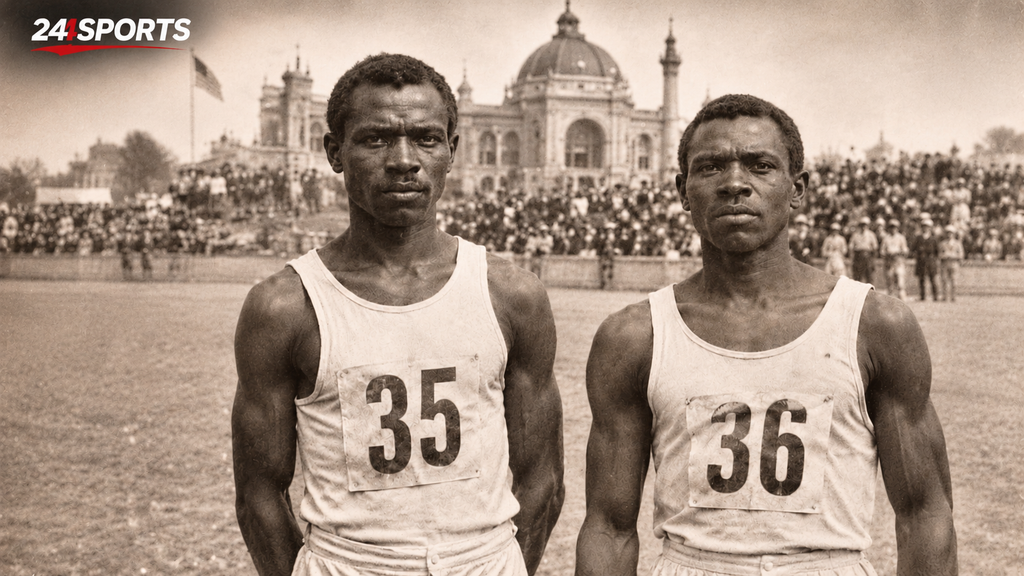
On 30 August 1904, two young men from southern Africa stood among the competitors at the starting line of an Olympic marathon in St. Louis, Missouri. They were thousands of miles from home, competing in a country they had travelled to for an entirely different purpose. Neither had an established career in competitive athletics, and neither could have imagined that their names would eventually find a place in Olympic history.
Their names were Jan Mashiani and Len Tau, also widely identified as Len Taunyane. More than a century later, their participation remains one of the most extraordinary and overlooked chapters in the history of African sport.
The story of these two African runners is not simply about an unexpected appearance at the Olympics. It is also a story of colonialism, racial prejudice, historical misidentification and two men whose achievements were almost lost to time.
How two South Africans ended up in America
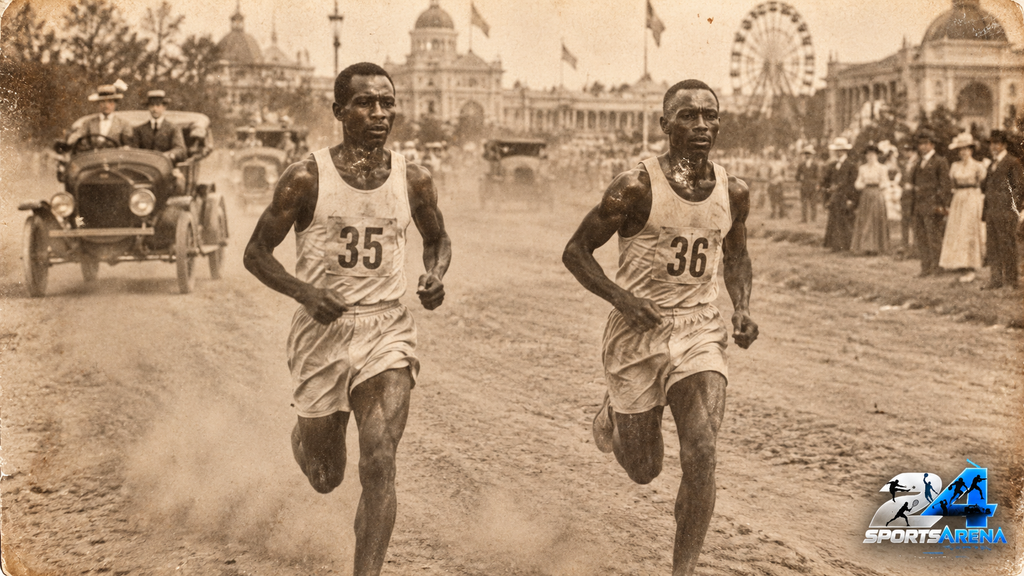
To understand how Mashiani and Tau found themselves at the 1904 Olympic Games, it is necessary to go back to the aftermath of the Second Boer War.
The conflict, fought between the British Empire and the Boer republics of the Transvaal and Orange Free State, ended in 1902. Among the Boer military figures was General Piet Cronjé, who surrendered to British forces at the Battle of Paardeberg in February 1900.
Following his surrender, Cronjé and thousands of Boer prisoners were deported to St Helena. Among the people associated with him were two Black South Africans, Jan Mashiani and Len Tau.
After the war, Cronjé travelled to the United States, where he became part of an exhibition at the Louisiana Purchase Exposition, popularly known as the 1904 St. Louis World’s Fair. The exhibition recreated scenes from the recently concluded Boer War, with Cronjé appearing as himself.
Mashiani and Tau travelled with the exhibition. Their original purpose in America was not to compete in athletics but to participate in the Boer War spectacle.
However, their lives took an unexpected turn when they became involved in the sporting events surrounding the World’s Fair.
Their running abilities had attracted attention. During the war, they had reportedly served as dispatch runners for the Boers, carrying messages across difficult terrain. Their speed and endurance eventually brought them to the attention of people organizing the Olympic marathon.
There was, however, a deeply uncomfortable dimension to their presence at the World’s Fair.
The two men were also associated with an event known as Anthropology Days, held on 11 and 12 August 1904. Participants from the fair’s international exhibits were assembled and made to compete in various physical contests for the entertainment of predominantly white spectators.
The events were presented through the racist and colonial assumptions of the period, with African and other non-European participants treated as objects of anthropological curiosity rather than athletes deserving equal dignity.
For Mashiani and Tau, the journey to the Olympics had therefore begun in circumstances far removed from the ideals of sporting equality.
The two African runners at the 1904 Olympics
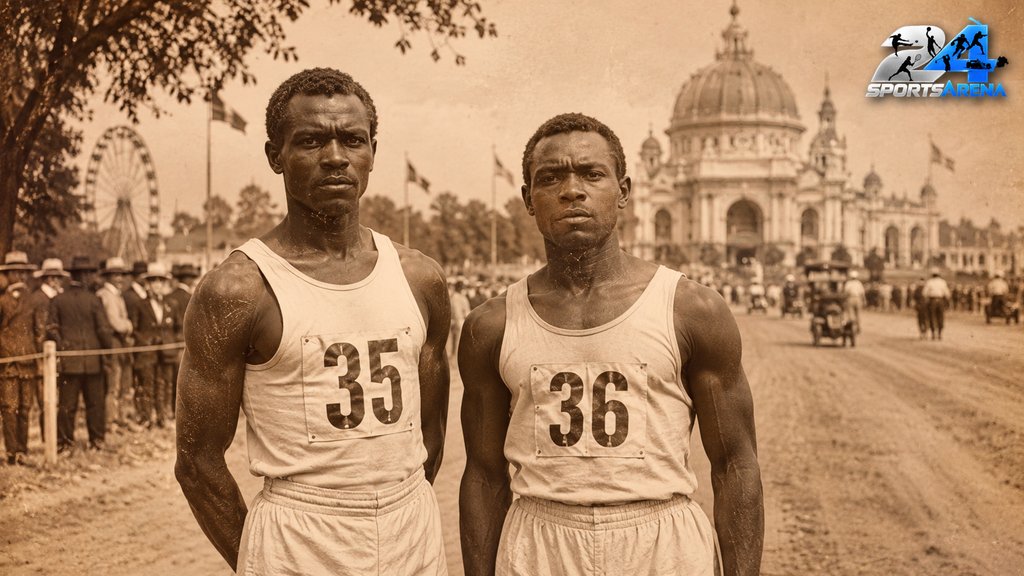
The 1904 Summer Olympics were held in St. Louis, United States, as part of the Louisiana Purchase Exposition. Unlike the modern Games, the competition was spread across several months, with sporting events organized alongside the attractions of the World’s Fair.
The marathon took place on 30 August 1904. It attracted 32 starters and featured competitors from different countries, including experienced distance runners and relatively unknown participants. Among them were Mashiani and Tau.
Their names appeared on the official marathon program as Yamasani and Lentauw. These spellings reflected the difficulties American organizers and journalists had in recording their African names. They were also incorrectly identified in contemporary records as Zulus from Zululand.
Research conducted decades later established that the two men were more likely members of the Tswana community from the western Transvaal region of southern Africa.
Their identities were eventually clarified through historical newspaper reports, archival photographs and the work of South African sports historian Floris van der Merwe.
The discovery was significant. It meant that two men whose names had been distorted in early Olympic records could finally be recognized for who they were.
The African athletes at the 1904 Olympics were not simply anonymous participants from a distant continent. They were individuals with identifiable histories, backgrounds and achievements.
There is another important distinction. Although they competed in an Olympic event, they did not officially represent a formally constituted South African Olympic team. South Africa’s official participation in the Olympic Games began in 1908, following the establishment of its National Olympic Committee in January of that year.
Nevertheless, their appearance in the 1904 marathon makes them the first Black Africans known to have competed at the modern Olympic Games.
A marathon unlike anything seen today
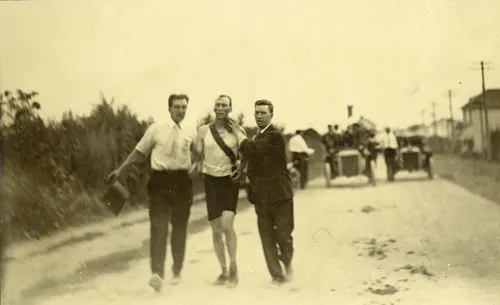
The marathon itself was one of the most extraordinary races in Olympic history. The competitors faced temperatures of approximately 32°C (90°F), extremely dusty roads and a course measuring about 40 kilometers (24.85 miles), shorter than the modern marathon distance of 42.195 kilometers.
The conditions were brutal. The roads were unpaved, and automobiles travelling alongside the competitors stirred up clouds of dust. Runners also had to navigate hills, railway crossings, ordinary road traffic and other obstacles.
Even more surprisingly, there was only one designated water station along the course, positioned approximately 12 miles from the starting point. The organizers believed that limiting water consumption would help them study the effects of dehydration on athletes.
It was an extraordinary and dangerous approach to organizing an Olympic competition.
While several runners struggled, Mashiani and Tau continued. They had little experience of organised marathon racing, but their background as dispatch runners had given them an understanding of endurance and the physical demands of covering long distances.
There was also an unusual incident involving a stray dog. According to contemporary accounts, one of the South African runners was chased away from the course by a dog and forced to run across a nearby field before returning to the route. The incident became one of the memorable anecdotes associated with the race. Although it is often attributed to Len Tau, historical research suggests that the identity of the runner involved is not entirely certain.
Despite the interruption, the two African athletes at the 1904 Olympics completed the marathon.
Tau finished ninth, while Mashiani finished twelfth after the disqualification of American runner Fred Lorz, who had travelled part of the course in an automobile before returning to the race and crossing the finish line first.
Lorz’s deception was quickly discovered, and he was disqualified. His actions handed victory to fellow American Thomas Hicks, who had himself endured a remarkable ordeal during the race, including being administered strychnine and brandy by his support team.
For Mashiani and Tau, however, simply completing the race under those conditions was an extraordinary achievement.
The forgotten names in Olympic history
For decades, the achievements of Mashiani and Tau received relatively little attention. Part of the problem was the way they were recorded in early Olympic documents. Their names were misspelt, their ethnic identities were incorrectly assigned, and very little information was available about their lives before or after the Games.
Even an official photograph of the two runners became part of the confusion. The Missouri Historical Society’s photograph had their identities switched in its original caption, making it difficult to establish which man was which.
It was through the research of Floris van der Merwe, particularly his work published in the Journal of Olympic History in 1999, that several of these historical errors were addressed.
By examining contemporary newspapers, archival photographs and official race programs, van der Merwe established that the runners recorded as Lentauw and Yamasani were most likely Len Tau and Jan Mashiani. He also clarified that they were Tswana men rather than Zulus, as early accounts had claimed.
Their story is a reminder that sporting history is not always preserved accurately. Sometimes, the people who make history are remembered incorrectly, while their achievements disappear beneath the larger narratives of their time.
There is also something particularly significant about their participation when viewed against the subsequent history of South African sport. At the 1908 London Olympics, South Africa officially competed with a national delegation. Yet no Black athlete was included in that team, despite the participation of Mashiani and Tau four years earlier.
The two men had helped write an important chapter in Olympic history, but the sporting institutions that followed did not immediately create equal opportunities for Black South African athletes.
Their experience therefore reflects a much larger struggle surrounding race, representation and recognition in international sport.
A legacy that deserves to be remembered
Today, when conversations turn to African Olympic history, names such as Abebe Bikila, Kip Keino, Haile Gebrselassie and Eliud Kipchoge readily come to mind. Their achievements have helped establish Africa as one of the world’s great centres of distance running.
But the story began much earlier. Long before African nations became prominent participants in the Olympic movement, two South African men found themselves competing in a marathon on the other side of the Atlantic. They had travelled to America as part of a World’s Fair exhibition, only to become pioneers in a sporting competition that neither could have anticipated.
Jan Mashiani and Len Tau did not win Olympic medals. They did not become international sporting celebrities, and their lives after the Games remain poorly documented. Yet their place in history is undeniable.
The story of the African athletes at the 1904 Olympics is ultimately about more than finishing positions or marathon records. It is about two men whose names nearly disappeared from the historical record, but whose participation opened an early chapter in Africa’s relationship with the modern Olympic Games.
More than 120 years later, their story deserves to be told again.
