The Brazil 1970 World Cup team remains the benchmark by which every great international side is measured. More than five decades after lifting the Jules Rimet Trophy in Mexico, that legendary squad continues to inspire football lovers, coaches and players across generations. While football has evolved tactically and physically, few teams have combined individual brilliance, collective understanding and attacking artistry as perfectly as Brazil did during the 1970 FIFA World Cup.
Winning a tournament is difficult. Winning it while entertaining the world is even rarer. The Brazil 1970 World Cup team achieved both, producing performances that have become part of football folklore. Their victories were not simply effective. They were beautiful, imaginative and fearless, turning football into an art form without sacrificing competitiveness.
Even today, discussions about the greatest World Cup winner almost always begin with Brazil’s unforgettable side of 1970.
The perfect blend of talent and teamwork
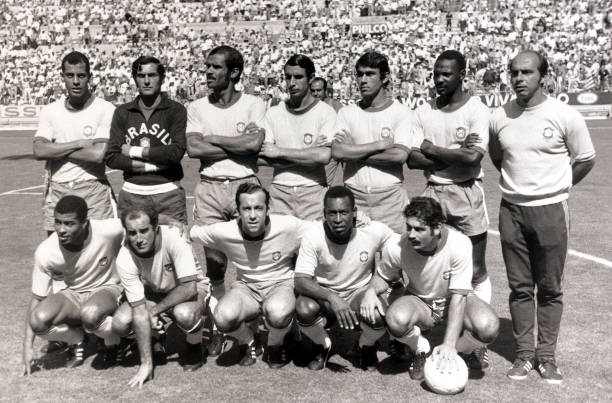
One reason the Brazil 1970 World Cup team still stands above the rest is the extraordinary quality of its players. Unlike many successful teams built around one or two stars, Brazil possessed world-class talent across every position.
Pelé was already regarded as football’s greatest player, but he was far from carrying the team alone. Jairzinho scored in every match of the tournament, becoming one of only a handful of players to achieve that remarkable feat. Tostão combined intelligence with technical excellence, while Rivelino’s powerful left foot, creativity and vision gave Brazil another dimension in attack.
Carlos Alberto, who captained the side, offered leadership and attacking quality from right-back, while Clodoaldo provided composure in midfield and Gérson controlled matches with his passing range and football intelligence.
Each player understood his role perfectly, creating a balance that allowed every individual to shine without disrupting the collective structure. It was a team filled with superstars who consistently made each other better.
Pelé reached the pinnacle of his career
Although the squad was filled with elite talent, Pelé remained its defining figure.
The 1970 FIFA World Cup represented his fourth and final appearance on football’s biggest stage. After suffering injuries during the 1962 and 1966 tournaments, many wondered whether he could still dominate at the highest level.
His response was spectacular.
Pelé scored four goals, provided numerous assists and produced moments of genius that statistics alone cannot capture. His famous dummy against Uruguay, his near goal from the halfway line against Czechoslovakia and his perfectly weighted pass for Carlos Alberto in the final demonstrated why he was football’s complete player.
Rather than seeking individual glory, Pelé embraced a leadership role, elevating everyone around him while delivering when Brazil needed him most.
Mario Zagallo created a tactical masterpiece
The success of the Brazil 1970 World Cup team was not based solely on gifted individuals. Head coach Mario Zagallo deserves enormous credit for transforming immense talent into a cohesive, disciplined and devastating unit.
Many believed it would be impossible to accommodate so many creative attacking players within one team. Zagallo ignored conventional thinking.
Instead of limiting his stars, he built a flexible tactical system that encouraged movement, positional rotation and intelligent pressing long before such concepts became widespread in modern football.
The players constantly interchanged positions, confusing opponents while maintaining defensive organisation. Full-backs joined attacks confidently, midfielders dictated possession and forwards contributed defensively when necessary.
What appeared spontaneous was actually the product of outstanding coaching and complete trust between manager and players.
A flawless World Cup campaign
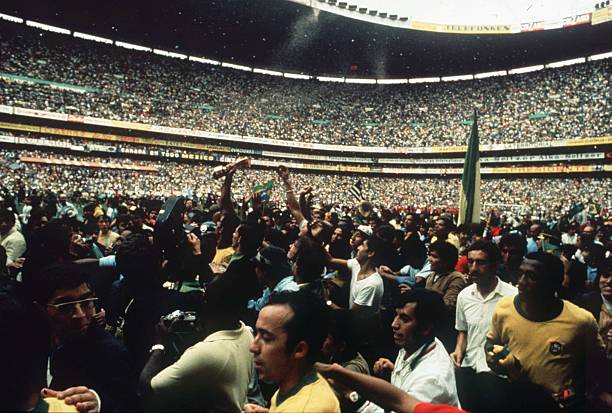
Many champions have relied on narrow victories or favourable draws. The Brazil 1970 World Cup team left no doubt about its superiority.
They won all six matches during the 1970 FIFA World Cup, defeating some of the strongest nations in world football along the way.
Their group-stage victories over Czechoslovakia, England and Romania showcased different aspects of their quality. England, the defending champions, were beaten 1-0 in one of the tournament’s most celebrated matches, remembered equally for Gordon Banks’ extraordinary save from Pelé’s header and Brazil’s overall dominance.
Brazil then overcame Peru 4-2 in an entertaining semi-final before producing one of the finest performances ever seen in a World Cup final.
Their consistency throughout the tournament separated them from many other great teams that experienced moments of vulnerability.
The greatest World Cup final performance
The final against Italy remains perhaps the defining performance of the Brazil 1970 World Cup team.
Italy entered the match as European champions and one of the strongest defensive sides in world football. Yet Brazil dismantled them with a dazzling display of attacking football, winning 4-1.
Pelé opened the scoring with a towering header before Gérson restored Brazil’s lead after Italy briefly equalised. Jairzinho continued his remarkable scoring streak, while Carlos Alberto completed the masterpiece with arguably the greatest team goal ever scored in a World Cup final.
Beginning with patient possession deep inside Brazil’s own half, every outfield player contributed before Pelé calmly rolled the ball into Carlos Alberto’s path. The captain’s thunderous finish crowned a move that perfectly captured everything special about that legendary team.
Even decades later, coaches continue using that goal as a teaching example of collective attacking football.
Football that inspired generations
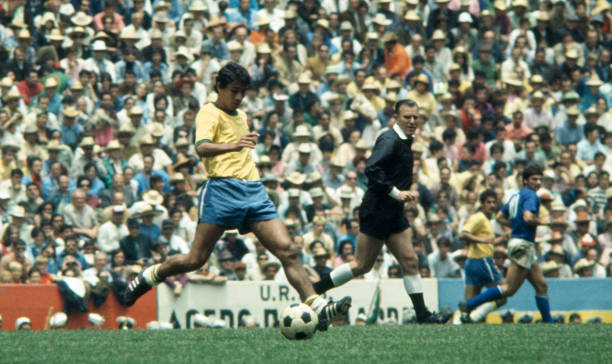
The influence of the Brazil 1970 World Cup team extends far beyond trophies and statistics.
Their style inspired countless players, coaches and supporters across the globe. Children attempted to imitate Pelé, Jairzinho and Rivelino in streets, schools and local parks, while professional coaches studied Brazil’s movement, passing combinations and positional freedom.
Many modern football philosophies that celebrate technical excellence, attacking ambition and intelligent ball circulation owe something to what Brazil displayed during the 1970 FIFA World Cup.
The team’s legacy became larger than football itself because they reminded the world that success and entertainment could exist together.
Mental strength under immense pressure
Playing beautiful football is admirable. Doing so while carrying enormous expectations is far more difficult.
Brazil entered the tournament under significant pressure following disappointing campaigns in 1962 and 1966. The nation expected nothing less than victory, particularly with Pelé approaching the final chapter of his international career.
Instead of being burdened by those expectations, the players embraced them.
Whether facing defending champions England or experienced finalists Italy, Brazil remained composed, confident and committed to their attacking identity. Their belief never wavered, even when opponents attempted to slow the game or impose a more physical contest.
That mental resilience is one of the reasons the Brazil 1970 World Cup team continues to command such admiration.
The team that won the Jules Rimet Trophy forever
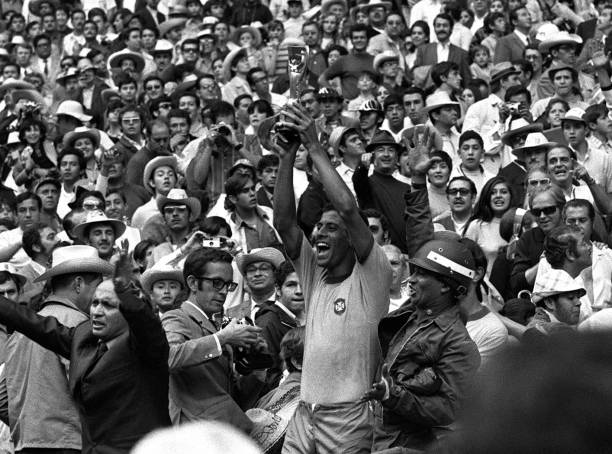
The triumph carried historic significance beyond footballing excellence.
By winning their third World Cup winner title, Brazil earned permanent ownership of the Jules Rimet Trophy under the rules in place at the time. No nation had previously achieved that honor.
The achievement symbolised Brazil’s emergence as football’s dominant global force and cemented the country’s identity as the spiritual home of the beautiful game.
Although the original trophy was later stolen and never recovered, its association with Brazil’s 1970 triumph remains permanent.
Can any team surpass them?
Several outstanding national teams have emerged since 1970.
Spain dominated international football between 2008 and 2012 with their possession-based approach, Germany produced an exceptional campaign in 2014, while Argentina’s 2022 triumph showcased remarkable resilience and leadership.
Each deserves recognition among football’s greatest champions.
Yet comparisons almost always return to the Brazil 1970 World Cup team because they achieved something uniquely difficult. They combined overwhelming success with breathtaking entertainment, making football appear effortless while defeating elite opponents.
Unlike many champions remembered primarily for results, Brazil’s performances themselves became legendary.
Why the Brazil 1970 World Cup team remains unmatched
Football has changed dramatically since Mexico hosted the 1970 FIFA World Cup. Players are faster, tactics are more sophisticated and sports science has transformed preparation.
Despite those changes, the Brazil 1970 World Cup team continues to occupy a unique place in football history because greatness cannot be measured solely by statistics or trophies. It is measured by influence, legacy and the emotions a team leaves behind.
That Brazilian side won every match, defeated world-class opposition, featured some of the greatest players ever assembled and produced football that continues to define excellence more than fifty years later. They did not merely become World Cup winner champions; they changed the way football could be played and appreciated.
For every new generation searching for the greatest team ever assembled, the conversation inevitably returns to the Brazil 1970 World Cup team. Until another side combines extraordinary talent, tactical brilliance, perfect teamwork and unforgettable football on the sport’s biggest stage, Brazil’s heroes of 1970 will continue to stand alone as the greatest team the World Cup has ever seen.

2 comments
[…] people think of iconic World Cup jerseys, Brazil’s vibrant yellow shirt from the 1970 FIFA World Cup is often the first image that comes to […]
[…] the system was introduced in 1970, the FIFA World Cup did not adopt penalty shootouts immediately. That changed in Spain in 1982 when […]