There are defeats in football, and then there are defeats that leave scars which never truly heal.
For England supporters, the 1970 World Cup quarter-final against West Germany belongs firmly in the second category. It was a match that began with dreams of back-to-back world titles and ended with disbelief, heartbreak, and the painful realization that one of the finest teams in English football history had reached the end of its reign.
England were the defending world champions. They led by two goals. They looked comfortable and in complete control. Yet by the end of an unforgettable afternoon in León, Mexico, they had surrendered their crown and watched West Germany celebrate one of the greatest comebacks the World Cup has ever seen.
The story of England vs Germany in 1970 is not simply about a football match. It is the story of a dynasty that crumbled when it seemed untouchable.
England Arrived in Mexico as Champions
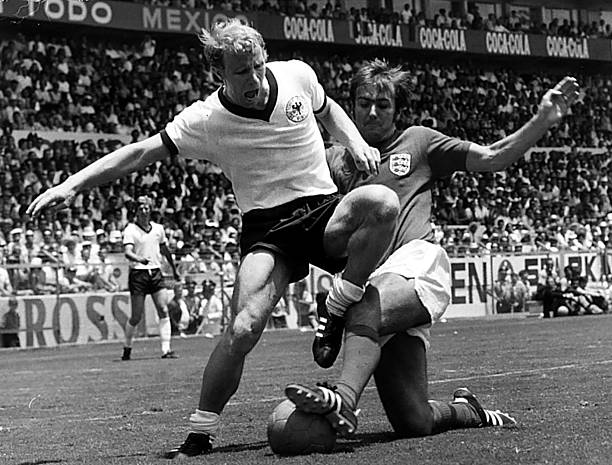
Four years earlier, England had reached the summit of world football by defeating West Germany in the 1966 World Cup final at Wembley. Sir Alf Ramsey’s side was disciplined, tactically intelligent, and packed with world-class talent.
The core of that team remained intact heading into Mexico. Bobby Charlton still orchestrated play with elegance and authority, Martin Peters remained one of the most intelligent midfielders in the game, and Gordon Banks had established himself as arguably the finest goalkeeper in world football.
England had every reason to believe they could defend their title. Their performances in the group stage had been impressive, and many observers considered them among the favourites to lift the trophy once again.
Standing in their way in the quarter-finals, however, was a familiar and dangerous opponent.
England vs Germany Was Already Football’s Great Rivalry
Even before their meeting in León, England vs Germany had become one of international football’s most compelling rivalries.
The memories of the 1966 final remained fresh in German minds, particularly the controversial third goal scored by Geoff Hurst. Many in West Germany felt they had unfinished business with England and viewed the quarter-final as an opportunity for revenge.
The stakes could hardly have been higher. The winner would move within touching distance of another World Cup final, while the loser would see their dreams end in the Mexican heat.
As the game began, however, it seemed England were about to prove once again why they were world champions.
England Took Complete Control
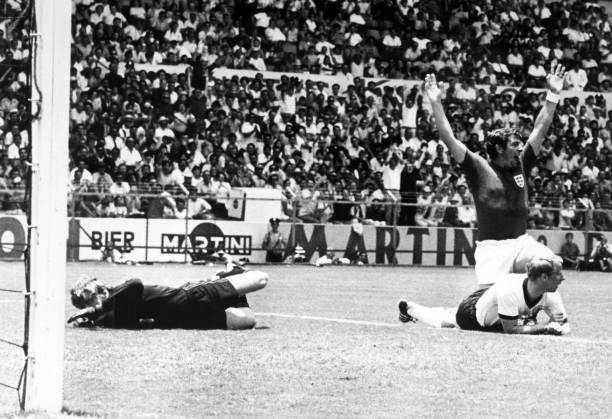
The defending champions started confidently and deservedly took the lead after half an hour.
Francis Lee played a clever ball into Alan Mullery, who calmly finished to give England a 1-0 advantage. The goal settled Ramsey’s side, and they began to dictate the rhythm of the match with the assurance of a team that had been in these situations many times before.
Shortly after the break, England struck again.
Martin Peters raced through and slotted the ball beyond goalkeeper Sepp Maier to double England’s lead. At 2-0, there seemed to be only one possible outcome.
The English players looked composed, their supporters were dreaming of another semi-final, and West Germany appeared to have run out of answers.
But football rarely follows the script.
The Illness That Changed Everything
The most important twist in the story had actually occurred before kickoff.
Gordon Banks, the hero of England’s World Cup triumph in 1966 and the man who had produced the “Save of the Century” against Brazil earlier in the tournament, had been struck down by food poisoning and was unable to play.
His replacement, Peter Bonetti, was a fine goalkeeper with an outstanding club career at Chelsea, but stepping into Banks’ shoes in a World Cup quarter-final was an almost impossible task.
No one can say with certainty that Banks would have prevented what followed, yet his absence undeniably changed the complexion of the match. England lost the reassuring presence of the world’s best goalkeeper, and Germany sensed that vulnerability.
The momentum of the game slowly began to shift.
Germany Refused to Give Up
With just over twenty minutes remaining, Franz Beckenbauer gave West Germany hope.
The elegant defender surged forward and struck a low shot from distance. Bonetti got a hand to the effort, but the ball slipped beyond him and into the net.
Suddenly, England’s comfortable lead no longer seemed secure.
The Germans grew in confidence with every passing minute, while England appeared increasingly nervous. The composure that had defined them for so much of the afternoon began to disappear.
Then came one of the most famous goals in World Cup history.
With eight minutes remaining, Uwe Seeler met a cross and somehow directed a looping header backward over Bonetti and into the net. The stadium erupted.
England had thrown away a two-goal lead, and the match was heading into extra time.
Gerd Müller Delivered the Final Blow
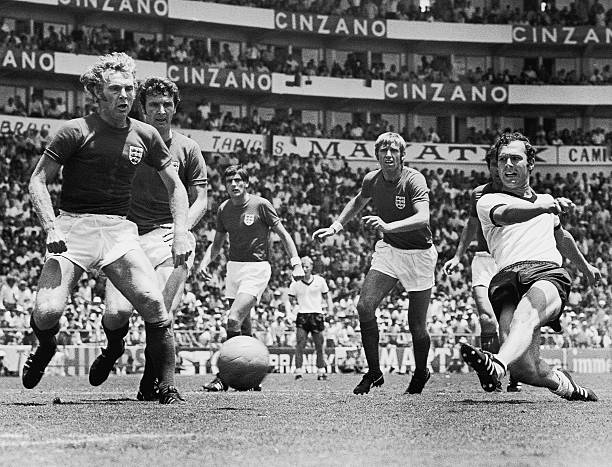
By the time extra time began, the momentum belonged entirely to West Germany.
England looked exhausted, both physically and mentally, while the Germans seemed energized by their remarkable comeback.
Then, in the 108th minute, the decisive moment arrived.
The ball fell to Gerd Müller inside the penalty area, and the great striker did what great strikers always do. He turned sharply and guided his finish beyond Bonetti to complete the comeback and make it West Germany 3-2 England.
The goal silenced England.
Only moments earlier, they had been dreaming of retaining their crown. Now they stood on the brink of elimination.
When the final whistle sounded, the defending champions were out.
The End of England’s Golden Generation
The defeat represented far more than a quarter-final exit.
It marked the end of England’s greatest generation of footballers. Bobby Charlton retired from international football shortly afterward, and several members of the 1966 team would never again compete at the highest level.
England remained a respected football nation, but they never truly recaptured the aura and quality of the side that dominated the late 1960s.
In many ways, the 1970 World Cup quarter-final collapse symbolized the end of an era.
The dynasty that had reached the pinnacle of the sport four years earlier came to an abrupt and painful conclusion in León.
Why This Match Still Hurts
What makes this defeat so difficult for England supporters is not simply the result itself but the manner in which it happened.
England were not second best from the opening whistle. They were not underdogs who fell short against a superior side. They were in complete control and held a two-goal advantage against a team that looked beaten.
Then everything unravelled.
That sense of what might have been has haunted English football for generations.
Had England held on, another 1970 FIFA World Cup final was a realistic possibility. Instead, they suffered one of the most dramatic collapses in tournament history and watched their greatest era come to an end.
A Match That Lives Forever
More than fifty years later, England vs Germany in 1970 remains one of the World Cup’s defining matches.
For Germany, it stands as a testament to resilience and belief. For England, it serves as a painful reminder that no lead is ever truly safe and that football can change in the blink of an eye.
It was the afternoon when the world champions surrendered their crown, when a dynasty came to an end, and when one of the greatest comebacks the game has ever seen unfolded under the Mexican sun.

1 comment
[…] The Brazil 1970 World Cup team remains the benchmark by which every great international side is measured. More than five decades after lifting the Jules Rimet Trophy in Mexico, that legendary squad continues to inspire football lovers, coaches and players across generations. While football has evolved tactically and physically, few teams have combined individual brilliance, collective understanding and attacking artistry as perfectly as Brazil did during the 1970 FIFA World Cup. […]