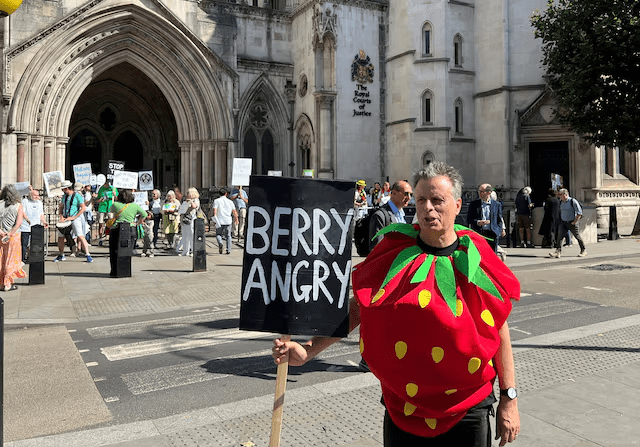
The long-running controversy surrounding plans to expand the Wimbledon tennis site has taken a new turn as opponents bring the dispute back to the UK courts in a fresh legal battle. Supporters of the campaign group Save Wimbledon Park are challenging the legality of a £200 million project proposed by the All England Lawn Tennis and Croquet Club (AELTC), arguing that the land earmarked for development is legally protected and should be preserved for public recreational use.
The latest hearing at London’s High Court marks a significant escalation in a dispute that has unfolded over several years, capturing the attention of local residents, environmental advocates, tennis fans and legal experts. At the heart of the conflict are differing visions of how to balance one of Britain’s most iconic sporting venues with historic land protections and community interests.
What the Expansion Entails
The AELTC’s ambitious project would almost triple the size of the historic Wimbledon grounds by developing parts of the former Wimbledon Park Golf Club, land it already owns. The plan includes the construction of 39 new grass courts, an 8,000-seat show court, extensive facilities for players and fans, and the relocation of qualifying rounds onto the main site — something other Grand Slam tournaments already do.
Proponents of the development argue it will modernise the Championships, improve the fan and player experience, and integrate facilities in ways that enhance the tournament’s global standing. The expansion also promises new parkland and areas of public access that the AELTC says will open up green space previously restricted as a private golf course.
The Legal Opposition: Statutory Trust and Public Use
Opponents, led by the campaign group Save Wimbledon Park (SWP), contend that the land in question is subject to a statutory trust requiring it to be preserved for public recreation — a restriction that they argue has not been lawfully overturned. Lawyers for SWP say the land was once dedicated to public use and that its redevelopment for private tennis facilities breaches those protections.
The group’s legal challenge also focuses on the historical circumstances under which the AELTC acquired the golf course, including restrictive covenants tied to land use dating back to the 1990s. Opponents say that these covenants continue to bind the site, imposing obligations that cannot be ignored in favour of the expansion.
Outside the High Court, members of SWP and local residents have expressed their opposition through protest actions, with supporters gathering in symbolic attire and holding banners outside the courts. Their message is clear: **“Save our park” and protect precious open land for the community rather than commercial development.
Previous Court Decisions and Ongoing Appeals
The legal battle did not begin with the latest court hearing. In 2024, the Greater London Authority (GLA) granted planning permission for the AELTC’s expansion after Merton Council approved the plans, despite Wandsworth Council’s earlier rejection. The GLA’s decision triggered a judicial review by SWP, which was heard by the High Court.
In July 2025, a High Court judge dismissed the initial challenge, ruling that the planning permission granted by the GLA was valid and rational. The court found that, in terms of planning law and public benefit, the decision could stand — particularly given the AELTC’s promises of expanded public parkland and the integration of on-site qualifying courts.
However, that ruling did not end the fight. In late 2025, the Court of Appeal granted permission for SWP to appeal the High Court’s decision, recognising that there are arguable grounds requiring further legal scrutiny. This development means that the dispute could extend into higher levels of the judiciary, potentially setting legal precedents about how historic land protections are interpreted in modern development planning.
Arguments from Both Sides
Campaigners’ View
For Save Wimbledon Park and its supporters, the core argument lies in legal and historical obligations tied to the land. They insist that once land is dedicated for public recreation under a statutory trust or restrictive covenant, any attempt to redevelop it for private purposes must be carefully examined and, in many cases, blocked or significantly altered.
Representatives for SWP argue that the current planning regime did not adequately assess the implications of these legal protections and that overlooking them sets a dangerous precedent for future development of protected spaces. Critics also raise concerns about environmental impact, loss of metropolitan open land, and disruption to local heritage — including aspects of a Grade II*-listed landscape designed by historic figures like Lancelot “Capability” Brown.
AELTC’s Position
The All England Lawn Tennis Club counters that the land’s former golf course status does not reflect continuous public recreational use and that, in its current form, the land is underutilised from a community perspective. The club emphasises that the expansion would add accessible parkland for local residents, expand recreational opportunities beyond Wimbledon’s fortnight each summer, and strengthen the tournament’s global position.
Club officials have also stressed compliance with planning law and the thorough consideration that planning authorities gave to environmental, social and economic impacts when granting permission. They argue that Wimbledon’s development plans deliver significant public benefits, including improved facilities, open space, and greater accessibility — aspects that outweigh concerns raised by opponents.
Public Opinion and Local Impact
Local responses to the expansion have been deeply divided. Some residents and tennis fans believe the plans will bring cultural, social and economic benefits to the area, including tourism growth and year-round park space. Others view the proposal as overdevelopment that threatens cherished green belt land and historical landscapes.
Protests outside court sessions have highlighted the emotional intensity of the issue, with campaigners decrying changes they believe will erode community heritage and restrict access to valued open space.
Meanwhile, supporters of the expansion see an opportunity for Wimbledon to modernise and thrive as a 21st-century Grand Slam host, bringing infrastructure in line with other major tournaments and boosting opportunities for players and local visitors alike.
The Stakes and What Happens Next
The outcome of the latest legal proceedings could have far-reaching implications. If the High Court sides with Save Wimbledon Park and finds the land is indeed protected by a statutory trust or restrictive covenant, the expansion plans could be delayed, altered substantially or blocked entirely. Alternatively, a ruling in favour of the AELTC would reaffirm the planning permission and allow the project to proceed — subject to any further appeal by opponents.
With permission already granted to pursue a Court of Appeal challenge, the dispute has the potential to stretch into another layer of judicial review, making this one of the most protracted and high-profile planning battles in UK sports infrastructure history.
For millions of tennis fans around the world, Wimbledon represents tradition, excellence and continuity. How this historic venue evolves — and whether expansion can coexist with legal protections and local interests — will be watched closely well beyond the lawns of SW19.