Tennis thrives on unpredictability, but even by its dramatic standards, what Anastasia Potapova has achieved at the 2026 Madrid Open stands out as something truly extraordinary. Entering the tournament as a “lucky loser” player who failed in qualifying but gained entry due to a withdrawal Potapova has rewritten history by reaching the semi-finals of a WTA 1000 event for the first time.
Her journey is not just about results; it is a story of resilience, mental strength, and the unpredictable beauty of sport. From the disappointment of qualifying defeat to the exhilaration of a deep run in one of the biggest tournaments outside the Grand Slams, Potapova’s campaign captures everything that makes tennis compelling.
What does “lucky loser” really mean?
To fully appreciate the magnitude of Potapova’s achievement, it is important to understand the concept of a “lucky loser.”
In professional tennis, players who lose in the final rounds of qualifying may still enter the main draw if another player withdraws. These replacements are called lucky losers. While the opportunity offers a second chance, it rarely leads to deep runs in major tournaments.
Historically, lucky losers have struggled to advance far because:
- They enter the draw without full preparation
- They often face higher-ranked opponents immediately
- Momentum and confidence may be low after a qualifying loss
That is why Potapova’s run is so remarkable. She has not only advanced she has become the first lucky loser to reach a WTA 1000 semi-final.
The turning point: victory over Karolina Pliskova
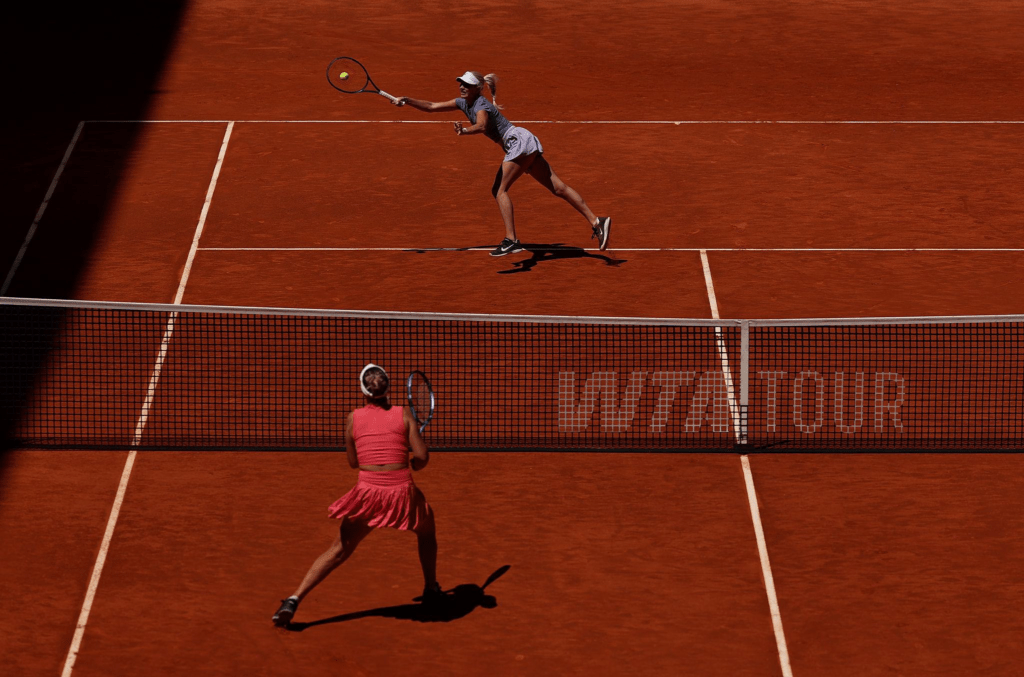
The defining moment of Potapova’s run came in a gripping quarter-final against former world number one Karolina Pliskova.
In a rollercoaster match, Potapova:
- Won the first set convincingly (6–1)
- Missed three match points in the second set
- Lost the second set in a tiebreak
- Fell behind in the final set
Yet instead of collapsing, she responded with remarkable composure winning five consecutive games to seal a 6–1, 6–7(4), 6–3 victory.
The match encapsulated her entire tournament: moments of brilliance, flashes of vulnerability, and ultimately, resilience under pressure.
Also Read- Aryna Sabalenka Wins Naomi Osaka in Madrid strong win to seal quarter-final spot
A giant-killing run
Potapova’s path to the semi-finals has been anything but easy. She has defeated some of the biggest names in women’s tennis, including:
- Elena Rybakina (world No. 2)
- Jelena Ostapenko (former French Open champion)
- Karolina Pliskova (former world No. 1)
Each victory has added weight to her story. This is not a fluke run built on favorable draws it is a campaign defined by elite-level wins against top-tier opponents.
Her ability to adapt across different match situations whether facing power hitters or tactical baseliners has highlighted the completeness of her game.
The emotional and mental battle Beyond the physical demands, Potapova’s run has been defined by mental resilience.
After missing multiple match points against Pliskova, many players would have struggled to recover. Potapova herself admitted nerves played a role, but what followed was a demonstration of composure and belief.
She later reflected on her journey, emphasizing how unexpected the situation felt:
She said she never imagined reaching the final four after losing in qualifying.
This honesty underscores the psychological rollercoaster she has experienced from disappointment to disbelief to triumph.
From junior star to breakthrough performer

Before this breakthrough, Potapova was already considered a talented player with significant potential.
- Former junior world No. 1
- Winner of the 2016 Wimbledon girls’ title
- Multiple WTA titles earlier in her career
However, consistency at the highest level had remained elusive. Her ranking hovered outside the elite tier, and she had yet to make a deep run at a major tournament of this scale.
The Madrid Open has changed that narrative.
At 25, she is now entering what many consider the prime years of a tennis career. This semi-final appearance could mark the transition from promising talent to established contender.
Tactical evolution: why her game is working
Potapova’s success in Madrid is not just about emotion it is rooted in tactical execution.
Key strengths in her game:
- Aggressive baseline play: She dictates rallies with powerful groundstrokes
- Improved serve: Crucial in tight moments, including closing matches with aces
- Mental adaptability: Ability to recover from setbacks mid-match
- Shot variation: Mixing pace and angles effectively on clay
Her victory over Rybakina, one of the most powerful hitters on tour, demonstrated her ability to absorb pace and counterattack effectively.
Against Pliskova, she showed patience and resilience, adjusting her strategy as the match evolved.
The significance of clay court success
The Madrid Open is played on clay, a surface that demands:
- Endurance
- Tactical awareness
- Movement and sliding ability
For Potapova, success on clay highlights her versatility. Unlike faster surfaces, clay rewards players who can construct points and maintain consistency over long rallies.
Her ability to thrive in these conditions suggests a well-rounded skill set one that could translate to success at other major clay events, including the French Open.
What makes this run historic
Potapova’s achievement is significant on multiple levels:
1. First of its kind
She is the first lucky loser to reach a WTA 1000 semi-final, a milestone that redefines what is possible for players entering under similar circumstances.
2. Quality of opposition
Her victories have come against elite players, not lower-ranked opponents.
3. Mental narrative
From qualifying defeat to semi-finalist, her journey embodies resilience and opportunity.
What comes next?
Potapova’s next challenge is a semi-final clash against either:
- Marta Kostyuk
- Linda Noskova
Regardless of the opponent, the stakes are enormous:
- A place in a WTA 1000 final
- A potential career-defining title
- A major boost in global ranking and recognition
For Potapova, the key will be maintaining the same level of intensity and belief that carried her this far.
A broader message: the beauty of tennis
Potapova’s story resonates beyond individual achievement. It highlights why tennis remains one of the most compelling sports in the world.
Key themes from her run:
- Second chances matter
- Rankings don’t define outcomes
- Mental strength is as important as skill
In a sport where margins are razor-thin, her journey serves as a reminder that opportunity can emerge from adversity.
Conclusion: from heartbreak to history
Anastasia Potapova’s run at the Madrid Open is more than a headline it is a narrative that captures the essence of competitive sport.
From losing in qualifying to making history as a semi-finalist, she has turned disappointment into opportunity and pressure into performance.
Whether or not she goes on to win the tournament, her achievement has already secured a place in tennis history. It is a story of resilience, belief, and the unpredictable magic that defines the game.
And perhaps most importantly, it reinforces a timeless truth: sometimes, all it takes is one second chance to change everything.