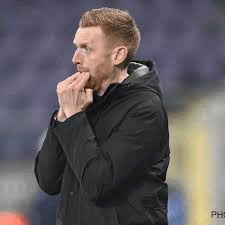
Watford Sack Coach Edward Still after just 15 matches is not simply another managerial change it is a reflection of a deeper structural pattern that has defined the club for over a decade. Still’s tenure, lasting barely three months, ended following a disappointing conclusion to the 2025–26 EFL Championship season, where Watford finished 16th and struggled to maintain form.
This episode, while abrupt, is hardly surprising when viewed within the broader context of Watford’s managerial culture. The club’s history in recent years reveals a relentless cycle of hiring and firing, often with little patience for long-term development. Still’s dismissal therefore offers an opportunity to examine not only his brief reign, but also the systemic issues that continue to shape Watford’s identity.
A Short and Difficult Tenure
Edward Still arrived at Watford in February 2026 following the departure of Javi Gracia, inheriting a squad already navigating inconsistency and uncertainty. His appointment, initially seen as a bold move given his relatively young age and experience in Belgium, came with the hope of stabilizing the team and preparing for a stronger push in the following season.
However, results failed to match expectations. Still managed only three wins in 15 matches, alongside four draws and eight defeats. Even more concerning was the team’s trajectory toward the end of the campaign. Watford went on a nine-game winless run, culminating in a heavy 4–0 defeat to league champions Coventry an outcome that effectively sealed Still’s fate.
Performance metrics alone tell part of the story, but the manner of the decline proved equally damaging. The team lost six of their final seven matches, suggesting not just poor results but a collapse in momentum and confidence.
Structural Challenges Behind the Results
Still himself pointed to deeper issues within the squad. In his final press conference, he highlighted the instability caused by players being on loan or nearing the end of their contracts, which weakened cohesion and commitment during crucial stages of the season.
This insight underscores a recurring challenge at Watford: squad continuity. Without a stable core of players committed to a long-term project, even the most tactically capable coach may struggle to implement a clear system or culture. The lack of continuity often leads to short-term fixes rather than sustainable progress.
Moreover, Still’s appointment came mid-season, leaving little time to impose his philosophy. Taking over a team in transition especially one already on its second manager of the campaign meant he was effectively managing inherited problems rather than building from scratch.
Watford’s Managerial Carousel
To understand why Still’s dismissal fits a familiar pattern, one must look at Watford’s managerial history. Since their relegation from the Premier League in 2022, the club has employed at least eight managers, with many lasting less than six months.
Even more striking is the long-term trend. Still became the 22nd full-time manager to leave Watford since 2014, a statistic that highlights the club’s extraordinary turnover rate.
This revolving-door approach is largely associated with the ownership of Gino Pozzo, who has developed a reputation for swift decision-making and minimal tolerance for underperformance. While this strategy occasionally yields short-term improvements such as promotion campaigns it often undermines long-term stability.
The 2025–26 season itself exemplified this instability. Still was the third permanent manager of the campaign, following Paulo Pezzolano and Gracia. Such frequent changes disrupt tactical consistency, player morale, and overall strategic direction.
The Cost of Instability
Frequent managerial turnover carries significant consequences beyond results on the pitch. For players, it creates an environment of uncertainty, where tactical systems and expectations change rapidly. This can hinder development, particularly for younger players who require consistent guidance.
For supporters, constant change can erode trust in the club’s leadership. Fans often struggle to connect with a long-term vision when managers are dismissed before they can fully implement their ideas.
Financially, repeated hiring and firing can also be costly, even when contracts are structured to minimize compensation payouts. Resources spent on managerial changes could otherwise be invested in squad development or infrastructure.
Was the Decision Justified?
From a purely results-driven perspective, Watford’s decision can be defended. Three wins in 15 matches, combined with a prolonged winless streak, is unlikely to meet the expectations of a club aiming for promotion.
However, the timing and context raise important questions. Still was appointed on a two-and-a-half-year contract, suggesting an initial commitment to a longer-term project. Yet he was dismissed after just three months, indicating that the club’s patience did not align with its stated intentions.
This contradiction reflects a broader issue: Watford’s strategy often appears reactive rather than proactive. Instead of allowing managers time to address structural problems, the club frequently opts for immediate change, hoping for quick improvements.

Also Read- Manchester United Edge Liverpool in Five-Goal Thriller to Seal Champions League Return
Lessons from Still’s Spell
Despite its brevity, Still’s tenure offers several lessons:
1. Context Matters
Taking over mid-season, particularly in a struggling team, significantly limits a coach’s ability to succeed. Without a pre-season to shape the squad, results are often inconsistent.
2. Squad Stability Is Crucial
A team filled with loan players or individuals nearing contract expiry lacks the cohesion required for sustained performance.
3. Patience vs. Performance
Clubs must strike a balance between demanding results and allowing time for development. Excessive impatience can create a cycle of instability.
What Comes Next for Watford?

Following Still’s departure, Watford face yet another reset. The club must decide whether to continue its pattern of short-term managerial appointments or commit to a more stable, long-term strategy.
Key priorities will include:
- Appointing a manager with a clear vision aligned with the club’s ambitions
- Building a cohesive squad with fewer short-term contracts
- Establishing continuity in playing style and recruitment
Failure to address these issues could see the cycle repeat itself, with another manager facing similar challenges in the near future.
Conclusion
The dismissal of Edward Still after just 15 games is both a specific event and a broader symbol. It highlights the immediate pressures of modern football, where results often dictate decisions, but it also reflects deeper structural issues within Watford Football Club.
Still’s record three wins, a nine-game winless streak, and a 16th-place finish provided justification for his removal. Yet his short tenure also raises questions about the club’s long-term strategy and its ability to foster stability.
Ultimately, Watford’s challenge is not simply finding the next manager, but redefining the environment in which that manager operates. Without addressing the underlying cycle of instability, even the most promising appointments may continue to end in the same way swiftly, abruptly, and without lasting

3 comments
Your breakdown of the topic is so well thought out.
Great points, well supported by facts and logic.
I wasn’t sure what to expect at first, but this turned out to be surprisingly useful. Thanks for taking the time to put this together.