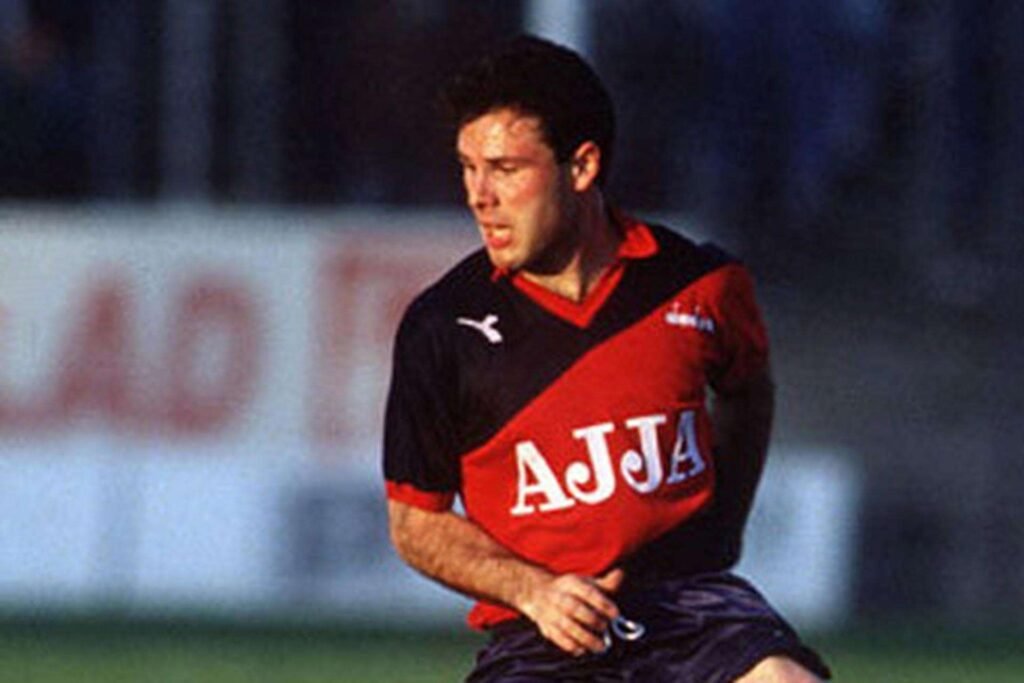
Football transfers are now a global business. Clubs spend millions recruiting players, agents negotiate lucrative contracts, and footballers can move between clubs with greater freedom than ever before. Yet, before 1995, a player could find himself unable to leave a club even after his contract had expired. That reality changed because of one Belgian footballer: Jean-Marc Bosman.
His legal battle against his former club and football’s governing authorities produced one of the most significant judgments in the history of the sport. The Bosman ruling transformed the relationship between footballers and their clubs, challenged the traditional transfer system and reshaped the European football market.
However, the judgment was not simply about allowing players to move freely. It was also about the application of European Union law to professional football and the extent to which sporting rules could restrict the rights of workers.
Before the Bosman Ruling: When Players Could Not Leave

Before 1995, professional football operated under a transfer system that gave clubs considerable control over their players.
In several European leagues, a club could demand a transfer fee for a player even after his employment contract had expired. This meant that a footballer could fulfil every obligation under his contract and still be prevented from joining another club if his former employer refused to release him without payment.
The system was defended as necessary for maintaining competitive balance and protecting clubs that invested in developing players. However, it placed footballers in a difficult position, often leaving them with little control over their professional futures.
Nationality restrictions also shaped European football. UEFA competitions imposed limits on the number of foreign players a club could field, restricting the opportunities available to footballers from other European countries.
These arrangements would eventually become the subject of a legal challenge that questioned whether football’s traditional rules were compatible with European law.
Jean-Marc Bosman: The Footballer Behind the Revolution
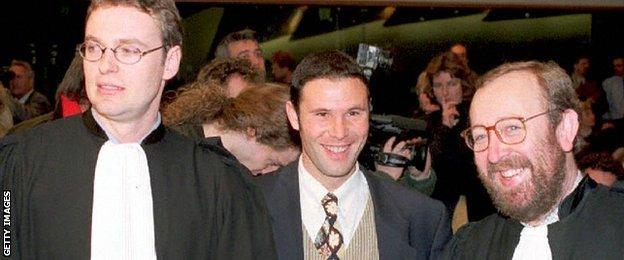
Jean-Marc Bosman was a Belgian professional footballer who played for RFC Liège in Belgium’s top division.
When his contract expired in 1990, Bosman wanted to move to French club US Dunkerque. The proposed arrangement involved a temporary transfer, with an option for a permanent move.
However, the transfer collapsed after RFC Liège questioned Dunkerque’s financial position and did not complete the necessary transfer documentation. Bosman was subsequently suspended by his Belgian club and found himself unable to secure the move he wanted.
The situation became particularly difficult because RFC Liège had offered him a substantially reduced contract, which he refused to accept. Bosman challenged the system. He argued that requiring his former club to receive a transfer fee after his contract had expired unlawfully restricted his right to work in another European Community member state.
His challenge eventually extended beyond his personal circumstances. He also questioned the nationality restrictions imposed by UEFA, arguing that they discriminated against players from other member states.
The case became known as Union Royale Belge des Sociétés de Football Association ASBL v Bosman, commonly called the Bosman case.
The Landmark Judgment of 15 December 1995
After several years of legal proceedings, the European Court of Justice delivered its judgment on 15 December 1995 in Case C-415/93.
The Court considered whether football transfer rules and nationality restrictions were compatible with Article 48 of the European Economic Community Treaty, which protected the free movement of workers. This provision is now reflected in Article 45 of the Treaty on the Functioning of the European Union.
The Court reached two particularly important conclusions. First, it held that rules requiring a club to pay a transfer fee to another club for a player whose contract had expired were incompatible with the free movement of workers where the player moved to a club in another member state.
In practical terms, a club could no longer demand compensation merely because a player had completed his contract and wished to join another club in a different EU member state.
Second, the Court held that nationality restrictions preventing clubs from fielding players who were nationals of other member states were also incompatible with European law. The judgment was significant because it established that professional football was not beyond the reach of ordinary legal principles. Although sporting organizations enjoyed considerable autonomy in regulating competitions, their rules could not disregard the rights protected by European law.
The decision did not abolish every transfer fee or every nationality restriction in football. Its legal consequences were tied to the circumstances covered by the judgment, particularly the movement of workers between EU member states.
Nevertheless, its immediate impact on European football was profound.
How the Bosman Ruling Changed the Transfer Market

The Bosman ruling fundamentally altered the balance of power between football clubs and professional players.
The Rise of Free Transfers
One of the most visible consequences was the growth of the free transfer market. Previously, clubs could demand transfer fees for players whose contracts had expired, making it difficult for those players to leave without their employers’ agreement.
Following the judgment, an EU player completing his contract could move to another club in a different EU member state without the new club paying a transfer fee to the former club.
This created opportunities for players to negotiate moves more freely and gave clubs a new incentive to manage contracts carefully.
The transfer market consequently became more strategic. Clubs increasingly had to consider contract length, renewal negotiations and the financial consequences of allowing valuable players to approach the end of their deals.
Greater Bargaining Power for Players
The ruling also strengthened the negotiating position of professional footballers. Players approaching the end of their contracts gained greater leverage because clubs faced the possibility of losing them without receiving a transfer fee.
This development contributed to more competitive contract negotiations, improved salary opportunities for some players and a stronger role for agents in securing favourable terms.
However, the benefits were not distributed equally. Elite players with strong performances and market demand were better positioned to take advantage of the new environment than less established footballers.
The Internationalisation of European Football
The removal of nationality restrictions for EU players also changed recruitment. Clubs could build squads with more footballers from other EU member states without being constrained by the previous nationality quotas in UEFA competitions.
This encouraged greater movement of talent across Europe and contributed to the increasingly international character of major leagues.
The Premier League, for example, became a destination for players from across the continent, while leading European clubs expanded their recruitment networks.
The ruling was not the only reason for football’s internationalization. Television revenue, commercial growth, improved scouting networks and global investment also played important roles. Nevertheless, the judgment removed significant legal barriers to the movement of European players.
Famous Transfers and the Bosman Legacy

The effects of the Bosman ruling can be seen in several high-profile transfers. In 1999, Steve McManaman joined Real Madrid from Liverpool after his contract expired. His move demonstrated how a player could leave a major English club without the receiving club paying a transfer fee.
Sol Campbell’s move from Tottenham Hotspur to Arsenal in 2001 was another prominent example. Campbell joined Arsenal as a free agent after his contract with Tottenham ended, making the transfer particularly controversial because of the rivalry between the clubs.
Michael Ballack also joined Chelsea from Bayern Munich in 2006 without a transfer fee after his contract expired.
These examples illustrate how the free transfer market became an important part of modern football. Clubs could recruit established players without paying a fee to their previous employers, while players could exercise greater control over their next career move.
However, it is important to distinguish between a free transfer and a transfer involving a player who remains under contract. The Bosman ruling did not prevent clubs from receiving compensation for players who moved before their contracts expired.
What the Bosman Ruling Did Not Change
Although the judgment transformed European football, its scope is sometimes misunderstood. The Bosman ruling did not abolish transfer fees altogether. Clubs can still negotiate and receive transfer fees for players who are under contract.
It also did not automatically give every footballer in the world the same free movement rights enjoyed by EU nationals under European law. The judgment concerned the movement of workers within the European Community and the nationality discrimination addressed in the case.
Furthermore, it did not remove the regulatory authority of FIFA, UEFA or national football associations. These organizations continued to regulate transfers, player registration, competitions and contractual relationships, subject to applicable law.
The judgment also did not guarantee equal bargaining power for all players. While established footballers could benefit significantly from the new arrangements, younger and less prominent players could remain vulnerable to poor contractual conditions and unequal negotiating relationships.
The ruling changed the legal environment, but it did not eliminate every imbalance within professional football.
The Personal Cost of the Bosman Revolution
For football, the Bosman ruling represented progress. For Jean-Marc Bosman, however, the journey was far less rewarding. His legal battle lasted for years and came at a considerable personal and financial cost. Although his case transformed the transfer system, his own playing career never recovered in the way he might have hoped.
Bosman became a symbol of a legal revolution that benefited generations of professional footballers, yet he struggled to enjoy the opportunities created by his victory.
His experience raises an important question about the relationship between individual sacrifice and institutional change. The player who challenged the system did not become one of its greatest beneficiaries.
Nevertheless, his contribution to football’s legal and commercial development remains undeniable.
The Bosman Ruling: A Revolution That Continues to Shape Football
More than three decades after the judgment, the Bosman ruling remains one of the most influential legal decisions in the history of professional football.
It established that football’s governing institutions could not use their regulatory authority to disregard fundamental rights protected by European law. It strengthened players’ freedom to move between clubs, transformed contract negotiations and contributed to the development of a more international European transfer market.
The ruling also demonstrated how one individual’s legal challenge could expose weaknesses in an established sporting system and bring about changes that affect an entire industry.
Jean-Marc Bosman may not have become a household name because of his performances on the pitch, but his name became permanently attached to one of football’s most important legal revolutions.
Every time a player completes a contract and moves to another European club without a transfer fee, the legacy of that decision is still being felt.
