The latest round of fixtures has put referee errors in the Premier League under fresh scrutiny after the league’s Key Match Incidents Panel (KMI Panel) identified six incorrect on-field decisions. The figure equals the highest number of mistakes recorded in a single weekend since the early part of the 2023-24 season, adding another chapter to the growing debate about officiating standards and the effectiveness of VAR.
Almost every fixture featured a contentious refereeing incident, with decisions involving Arsenal, Liverpool, Tottenham, Chelsea and several other clubs attracting considerable attention. Yet the panel’s assessment has revealed an important distinction between mistakes made by referees on the pitch and errors that should have been corrected through video review.
The KMI Panel evaluates disputed incidents every week, with five members voting on whether the referee and the video assistant referee made the correct decisions. Its findings do not necessarily reflect the views of supporters, but they offer an official assessment based on the laws of the game and the Premier League’s expected refereeing standards.
Six referee errors in the Premier League: Which decisions were wrong?

Two of the six errors were judged to be mistakes by both the on-field referee and VAR. The other four were incorrect on-field decisions, but the panel concluded that VAR intervention was not required.
The first major controversy came during Coventry City’s meeting with Everton. Coventry’s Caleb Yirenkyi appeared to have his hair pulled by Everton defender James Tarkowski inside the penalty area, but no penalty was awarded.
The KMI Panel voted unanimously, 5-0, that the decision was incorrect on the field and that VAR should have intervened. Its explanation was straightforward: Tarkowski had hold of Yirenkyi’s hair, making the incident one that required video intervention.
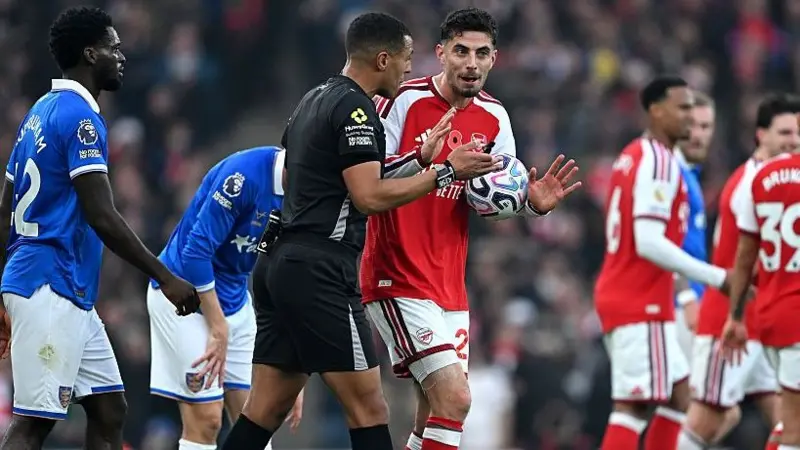
Arsenal were also denied a penalty in their match against Hull City. Kai Havertz was pulled down inside the area by Nobel Mendy, prompting VAR Michael Oliver to send referee Farai Hallam to the pitchside monitor. However, the penalty was not awarded because Havertz was considered to be in an offside position.
The panel unanimously disagreed with the outcome, voting 5-0 that both the on-field decision and VAR process were incorrect. It argued that Mendy’s holding action was clear and impactful, occurring before any potential offside offence.
Four incorrect referee decisions that VAR did not overturn
The remaining four incidents were judged to be incorrect on the field, although the panel did not consider them grounds for VAR intervention.
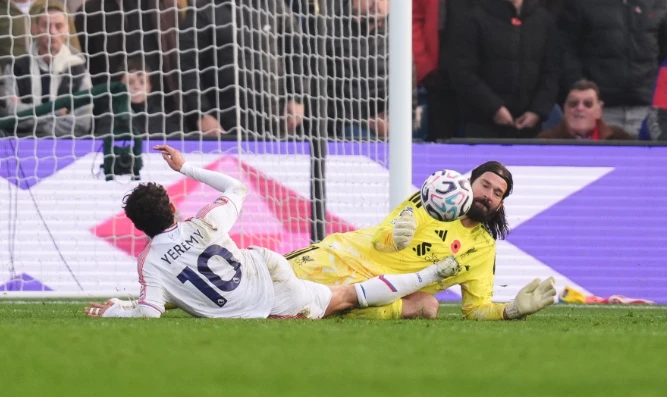
Everton’s Thierno Barry scored against Coventry in the 61st minute, but the goal was checked for a possible handball. The panel voted 2-3 that the on-field decision was incorrect, while unanimously agreeing that VAR should not have intervened. It believed the ball probably struck Barry’s hand accidentally, but the available footage did not provide conclusive evidence.
Another controversial decision came in Liverpool’s match against Crystal Palace. Palace were awarded a stoppage-time penalty after contact between Milos Kerkez and Dario Osorio. The KMI panel voted unanimously that the penalty decision was incorrect, explaining that the contact was inevitable because of a clash of heads. However, it did not consider the decision a clear and obvious error that required VAR intervention.
Ipswich Town’s penalty against Bournemouth was also questioned. Lewis Cook was penalized for a foul on Abdoul Ouattara, but the KMI panel voted 1-4 that the referee was wrong. It concluded that Ouattara had stepped across Cook, who had not made a challenge. Nevertheless, the decision did not meet the threshold for VAR intervention.
The final incident involved Bournemouth’s Marcus Tavernier, who was involved in a potential second-yellow-card offence. The panel voted 2-3 that the on-field decision was incorrect, concluding that Tavernier had deliberately delayed the restart. As a second-yellow-card decision cannot be reviewed by VAR, there was no possibility of intervention.
Controversial decisions the KMI Panel considered correct
Not every high-profile incident from the weekend was classified as an officiating error. Several decisions that generated debate among supporters and clubs were upheld by the panel.
Tottenham had complained about Jayden Bogle’s challenge on Mathys Tel, arguing that the Leeds United defender should have been sent off. However, the panel voted 3-2 that the referee and VAR were correct. The majority felt Bogle was attempting to challenge for the ball and that his left leg landed on Tel’s ankle without the speed, force or intensity required for serious foul play.
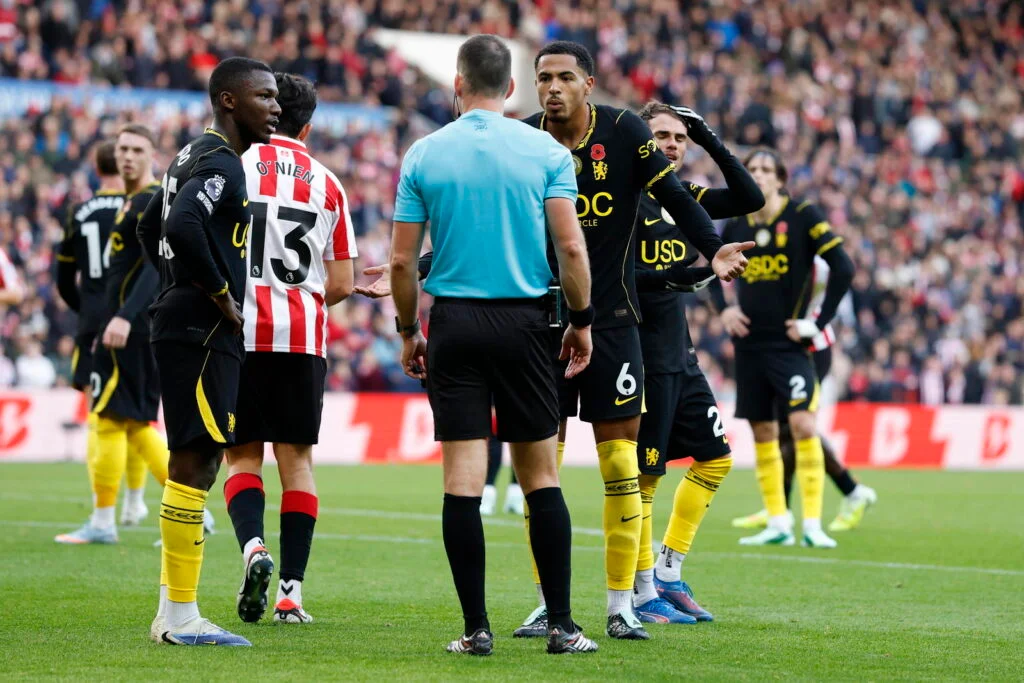
Chelsea’s Cole Palmer also went down following a challenge by Sunderland’s Luke O’Nien near the penalty area. The panel voted 4-1 that the decision was correct, although it acknowledged that contact had been made and that a free-kick should have been awarded because the incident occurred outside the box.
Sunderland’s penalty against Chelsea, awarded after Levi Colwill was judged to have tripped Brian Bobbey, received unanimous approval. The panel considered the decision correct, pointing to upper-body holding by both players before a careless trip by the Chelsea defender.
The final incident concerned a possible foul by Manchester United goalkeeper Senne Lammens on Aston Villa goalkeeper Zion Suzuki before Patrick Dorgu’s 96th-minute equalizer. The panel voted 5-0 that the goal was correctly allowed, deciding that the contact made by Lammens was not impactful.
What do the referee errors in the Premier League tell us about VAR?

The findings have renewed questions about the consistency of refereeing and the role of VAR in English football. Although the KMI Panel identified six incorrect decisions, it classified only two as missed opportunities for video intervention.
That distinction is central to understanding the panel’s work. It assesses the referee’s original decision separately from whether the available evidence meets the high threshold required for VAR to intervene. A decision can therefore be wrong without being considered a clear and obvious error.
The Premier League’s Key Match Incidents Panel also has implications beyond public debate. Its assessments contribute to a merit table that accounts for 50% of referees’ bonus payments, giving the findings a direct professional significance.
The panel was scrapped in the Scottish Premiership during the summer after clubs became frustrated with its voting patterns. In England, however, it remains an important part of the league’s refereeing assessment process.
For supporters, the distinction between an incorrect decision and an error that cannot be overturned is often difficult to accept. Six mistakes in one weekend, alongside the red card correctly shown to Brentford’s Igor Thiago, represent a significant number of contentious incidents.
Ultimately, the latest findings show that the debate over referee errors in the Premier League is not simply about how many decisions go wrong. It is also about whether VAR’s intervention threshold is sufficiently effective in correcting mistakes without undermining the authority of officials on the pitch.
