On July 30, 1966, at Wembley Stadium, football history was made, or stolen, depending on which side of the argument you stand on. The 1966 World Cup controversial goal that gave England their third in the final against West Germany remains the most debated moment in the sport’s history. Six decades later, no verdict has fully settled the argument. And honestly? That’s exactly what makes it so compelling.
This is not just a story about a ball and a line. This is a story about a referee under impossible pressure, a nation desperate for glory, and a moment that the 1966 World Cup controversial goal debate has kept alive across generations of football fans.
England vs West Germany: 1966 World Cup Final
England were hosting the 1966 World Cup, their first and, to date, only time lifting the trophy. The nation was electric. Alf Ramsey‘s side had ground their way through the tournament, grinding out results with discipline and tactical precision. West Germany stood between them and immortality in the final.
By the second half, the game was level at 2-2. Extra time loomed. The crowd at Wembley was tense, desperate, and loud. Then came the moment that the 1966 World Cup controversial goal debate was born from, a moment that would outlast every player on that pitch, every manager, and even the referee himself.
The Referee Who Changed Everything
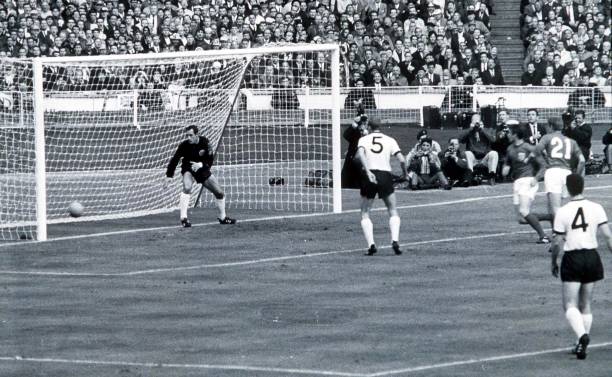
78 minutes into extra time, Geoff Hurst received the ball on the edge of the box. He turned and fired a fierce shot that struck the underside of the crossbar, bounced down somewhere near the goal line and spun back out into play.
The English players immediately screamed goal. The German players screamed no goal. Referee Gottfried Dienst, a Swiss official, was unsure. He consulted his Soviet linesman, Tofik Bakhramov, for several long seconds. Bakhramov pointed to the center circle. Goal given.
England went on to win 4-2. The nation celebrated. But the 1966 World Cup controversial goal had only just begun its long life in the football argument hall of fame.
What Did the Evidence Say?
In the decades since, scientists, physicists, and football historians have all tried to solve the mystery. And the 1966 World Cup controversial goal has been analyzed with technology that simply didn’t exist at Wembley that afternoon.
A 1996 study by the University of Oxford used digital image processing on the original footage and concluded the ball did not fully cross the line. A separate analysis by scientists at the University of Cambridge reached a similar conclusion. The ball, according to modern analysis, was approximately 6cm short of being fully over the line.
But football in 1966 did not have goal-line technology. It did not have VAR. It had Gottfried Dienst, a linesman from the Soviet Union, and a crowd so loud you could barely hear yourself think. The 1966 World Cup controversial goal was, by every modern standard, a mistake, but by the rules of the game at that moment, it was a legal decision.
The Men Behind the Decision
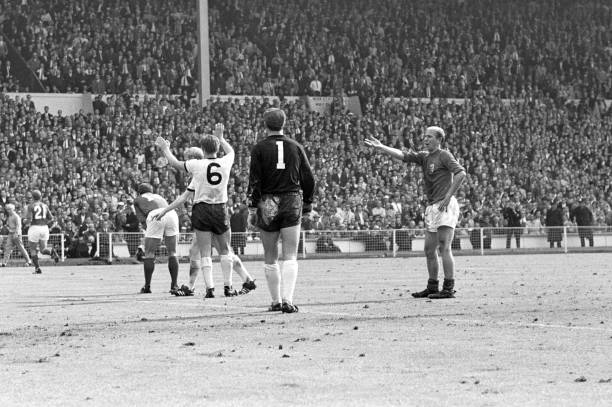
Gottfried Dienst was one of Europe’s most respected referees in the 1960s. He had officiated at the highest level consistently and was trusted by FIFA. But this was a World Cup final. The pressure was unlike anything he had faced before.
Tofik Bakhramov, the Soviet linesman who became forever known as “the Russian linesman” confirmed the goal without hesitation, at least outwardly. What he actually saw from his angle on the touchline has been debated ever since. Some argue he was perfectly positioned. Others argue he couldn’t possibly have seen whether the ball crossed. Bakhramov died in 1993 without ever fully clarifying what he believed he witnessed.
The 1966 World Cup controversial goal, then, is not just about a ball and a line. It is about two men making a split-second decision in one of the most pressurised moments in sporting history, with no tools to help them — and having to live with the consequences forever.
The Reaction of 1966 West Germany Players
West Germany have never accepted the goal. Not in 1966, not in the years after, and not now. Helmut Haller, Hans Tilkowski, and the rest of that West German squad went to their graves, or into retirement, insisting the ball did not cross the line. The 1966 World Cup controversial goal became, for Germany, a wound that never fully healed.
It is telling that when Germany finally ended England’s long dominance over them, most famously in 1970 in Mexico, overturning a 2-0 deficit to win 3-2 in extra time, German fans celebrated it partly as justice for 1966. Football has a very long memory.
Why the 1966 World Cup Controversial Goal Still Matters
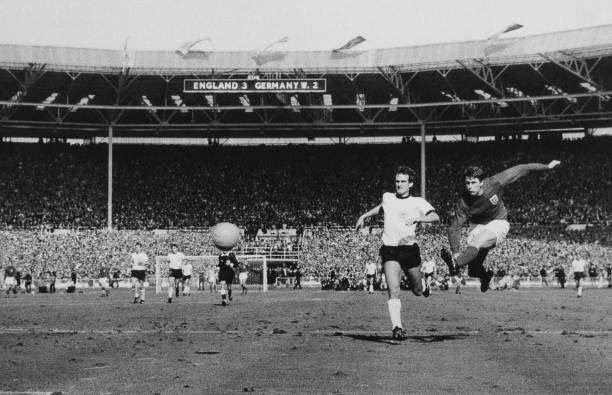
You might ask: why does a goal from 60 years ago still matter? The answer is simple, it changed everything. England won the World Cup because of that goal. Everything that followed, the national pride, the mythology, the endless comparisons of every England squad to the 1966 team, the weight of expectation that has crushed English football for six decades, all of it flows from that one moment.
The 1966 World Cup controversial goal also accelerated football’s eventual adoption of goal-line technology. Every conversation about introducing modern officiating tools in football referenced Wembley 1966 as Exhibit A for why human judgment alone was not enough. The goal that may not have been a goal helped create a better, more accurate game.
And it gave us one of football’s great unsolvable arguments. Fans who weren’t even born in 1966 debate it passionately today. That is the power of the 1966 World Cup controversial goal, it refuses to die.
The Verdict
Was it in? The honest answer, based on the best evidence available, is probably not. The ball most likely did not fully cross the line. But in football, as in life, probability is not the same as certainty. Gottfried Dienst gave the goal. Tofik Bakhramov confirmed it. The scoreboard read 3-2 to England. And the rest is history.
The 1966 World Cup controversial goal will remain football’s greatest unanswered question. Not because we lack evidence — but because even the evidence doesn’t fully close the door. And perhaps that’s exactly how football likes it. Messy. Passionate. Unresolved.
Just like the game itself.

2 comments
[…] dream of reaching a first men’s FIFA World Cup final since 1966 came to a devastating end after Argentina produced a remarkable late comeback to secure a dramatic […]
[…] victory also ensured England recorded their highest World Cup finish since lifting the trophy in 1966 and their best-ever result at a World Cup staged outside […]