The 2026 World Cup final ended with more than just Spain celebrating a historic triumph, as tempers boiled over moments after the final whistle in New Jersey. Argentina manager Lionel Scaloni was forced to intervene and separate players after a series of confrontations broke out on the pitch following Spain’s 1-0 extra-time victory.
Ferran Torres’ 106th-minute winner secured Spain’s first FIFA World Cup title since 2010, but the celebrations were briefly overshadowed by chaotic scenes involving players from both teams in the aftermath of an intensely physical contest.
World Cup Final Ends in Heated Confrontation
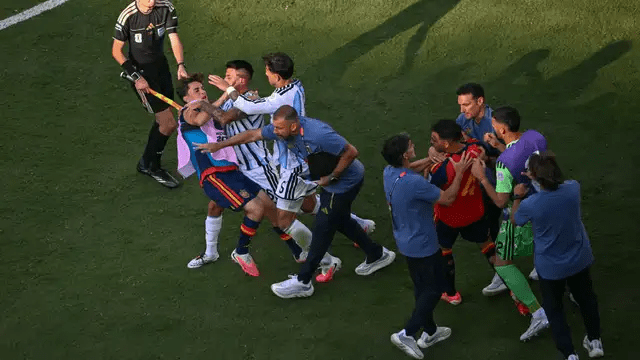
The World Cup final had already been filled with aggressive challenges and repeated stoppages before emotions finally spilled over after the match ended.
As soon as referee Slavko Vinčić blew the final whistle, several Argentina players rushed toward members of the Spain squad, leading to a heated exchange between both sets of players.
Television footage captured players pushing and arguing as tensions escalated across the pitch, forcing coaching staff and match officials to step in before the situation worsened.
Lionel Scaloni quickly entered the scene and played a crucial role in calming his players, repeatedly pulling members of the Argentina squad away from further confrontation.
His intervention prevented the incident from developing into a much larger altercation during what should have been Spain’s moment of celebration.
Scaloni Acts as Peacemaker
Although disappointed by Argentina’s defeat, Scaloni demonstrated strong leadership in the closing moments of the World Cup final.
Rather than joining the protests, the Argentina manager immediately focused on restoring order as he moved between players from both teams.
Video footage circulating after the match showed Scaloni speaking to several of his own players while physically guiding them away from confrontations with Spanish opponents.
His calm response contrasted sharply with the frustration displayed by many Argentine players following the loss.
The coach’s actions earned praise from observers who noted that his intervention likely prevented the post-match clashes from escalating further.
A Physical Match from Start to Finish
The heated scenes after the World Cup final reflected the nature of the contest itself.
Spain and Argentina produced a fiercely contested encounter that featured close to 50 fouls, making it one of the most physical World Cup finals in recent memory.
Argentina collected four yellow cards during the match, while midfielder Enzo Fernández was sent off after receiving a second booking in stoppage time at the end of normal time for a reckless challenge on Pau Cubarsí.
Frequent interruptions prevented either side from establishing sustained attacking rhythm, with both teams engaging in intense midfield battles throughout the contest.
The physical nature of the game frustrated Spain, whose players repeatedly appealed for stronger disciplinary action from the referee.
Spain Dominate Despite Narrow Victory
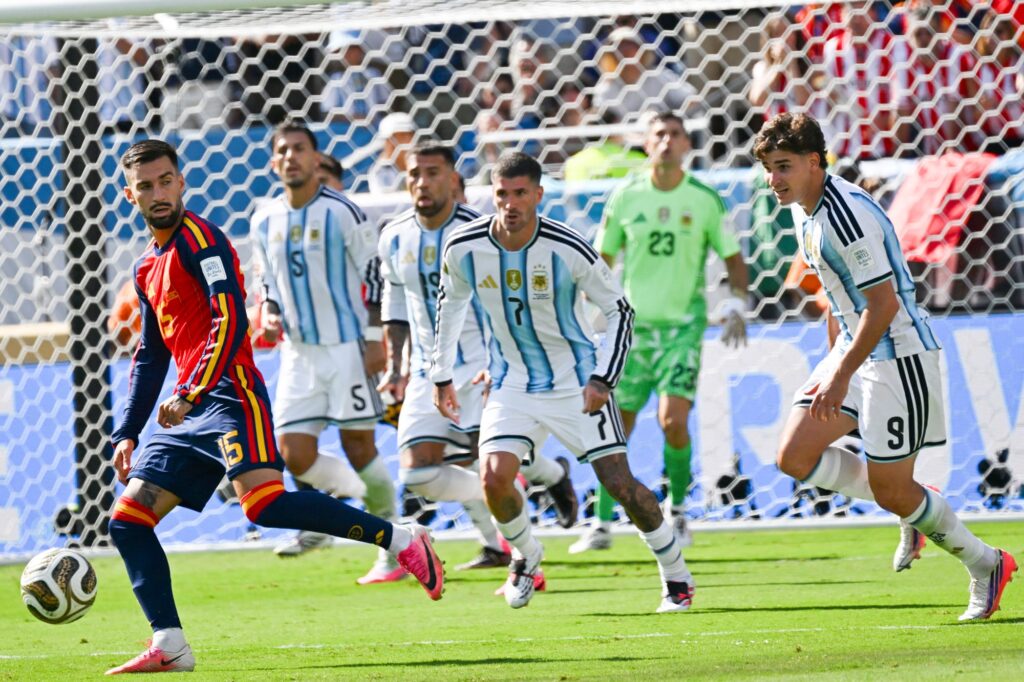
Although the scoreline remained close, Spain were clearly the superior side throughout the World Cup final.
Luis de la Fuente’s team controlled possession, created the overwhelming majority of the opportunities, and consistently forced Argentina onto the defensive.
Statistically, Spain’s dominance was clear.
La Roja finished with 20 attempts on goal, including 12 efforts on target, while also recording 31 touches inside Argentina’s penalty area.
Argentina, meanwhile, struggled to create attacking opportunities against Spain’s disciplined defensive structure.
The defending champions managed only two shots during the entire match, neither of which tested Spain goalkeeper Unai Simón.
They also recorded just eight touches inside Spain’s penalty area across 120 minutes of football.
Those numbers illustrated how effectively Spain controlled the final despite requiring extra time to secure victory.
Torres Delivers Spain’s Historic Moment in 2026 FIFA World Cup Final
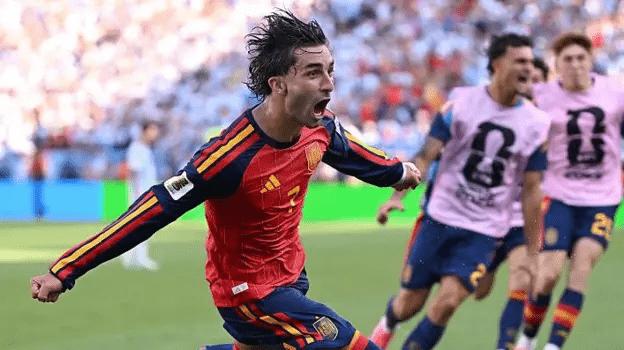
The decisive moment in the World Cup final arrived in the 106th minute.
Substitute Nico Williams headed the ball into the path of Ferran Torres, who reacted quickly to fire a powerful finish beyond Emiliano Martínez from close range.
The goal sparked wild celebrations among Spain’s players and supporters as Torres delivered the strike that secured the country’s second FIFA World Cup title and their first since lifting the trophy in South Africa sixteen years earlier.
Spain remained composed during the closing stages despite Argentina’s attempts to force an equalizer.
The dismissal of Leandro Paredes deep into stoppage time further summed up Argentina’s growing frustration as the match slipped beyond their reach.
Argentina Face Difficult Questions
Defeat in the World Cup final marks a disappointing end to Argentina’s title defense after they entered the tournament as reigning world champions.
While Lionel Scaloni’s side showed resilience throughout the knockout stages, they struggled to impose themselves against Spain’s organized and technically superior team.
Attention will now inevitably turn toward the future of Lionel Messi, whose international career remains uncertain following another remarkable World Cup campaign.
The veteran captain was unable to inspire Argentina to consecutive World Cup titles and now faces questions over whether he will continue representing his country at future international tournaments.
Scaloni will also need to assess how Argentina rebuilds after falling short on football’s biggest stage.
Spain Celebrate Deserved World Cup Glory
While post-match tensions briefly distracted from the occasion, the lasting memory of the World Cup final will be Spain’s deserved triumph.
After combining defensive solidity with technical excellence throughout the tournament, Luis de la Fuente’s side completed an outstanding campaign by defeating the reigning champions when it mattered most.
Their disciplined performance in the final reflected the consistency they had shown throughout the competition, while Ferran Torres’ extra-time winner secured a place in Spanish football history.
Although the evening concluded with heated confrontations between players, Lionel Scaloni’s swift intervention ensured emotions did not overshadow Spain’s achievement. For La Roja, the World Cup final ultimately ended in unforgettable celebrations as they reclaimed football’s biggest prize for the first time since 2010, while Argentina departed knowing they had been second best in a fiercely contested but deserved Spanish victory.

1 comment
[…] one of the dominant forces in international football after a remarkable period of success under Scaloni. However, the issues developing away from the pitch have reportedly created frustration among […]