For many football fans, the Spain 2010 World Cup triumph is remembered for one moment: Andrés Iniesta scoring the winning goal against the Netherlands in extra time of the final.
But the real story began years earlier.
Long before Spain lifted the trophy in Johannesburg, before Xavi controlled matches with surgical precision and before the world became obsessed with possession football, a quiet revolution was taking place behind the scenes.
The foundations of the Spain 2010 World Cup victory were not built during the tournament itself. They were created in youth camps, coaching seminars, and training sessions that most football fans never saw.
By the time Spain became world champions, the machine had already been perfected.
And football would never be the same again.
Spain’s Golden Generation Did Not Appear Overnight
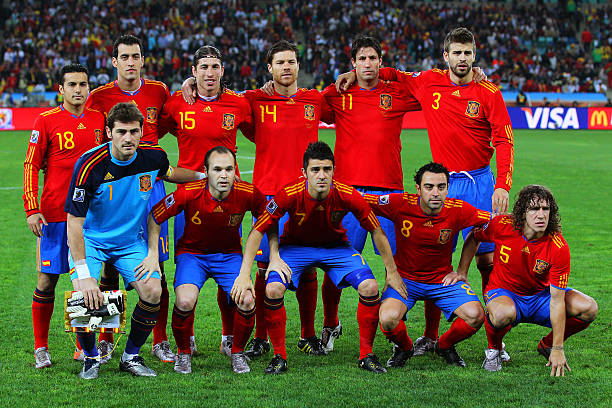
For decades, Spain had all the ingredients needed for success.
The country produced talented players, passionate supporters, and some of Europe’s biggest clubs. Yet international success remained frustratingly out of reach.
Spain frequently entered tournaments as favorites but often exited earlier than expected.
The problem was not talent. The problem was identity.
Different generations of players arrived with different styles. There was no clear football philosophy connecting youth development to the senior national team.
That changed in the late 1990s and early 2000s. Spanish football leaders began asking a simple question:
What if every age group played the same way?
The answer would eventually shape the Spain 2010 World Cup triumph.
The Hidden Origin of Tiki-Taka
The origin of tiki-taka did not start with the senior national team.
It began at youth level.
Spanish coaches gradually embraced a possession-based philosophy focused on technical ability, intelligent movement, and short passing combinations.
Young players were encouraged to keep the ball rather than simply clear it.
Training sessions prioritized decision-making over physical dominance.
Players learned to create triangles across the pitch, constantly offering passing options to teammates.
The philosophy was heavily influenced by developments at Barcelona’s famed La Masia academy, where Johan Cruyff’s ideas had transformed youth development.
Spain’s youth teams adopted many of the same principles.
As players moved through different age groups, they encountered the same football language and tactical concepts.
The result was remarkable continuity.
By the time players reached the senior team, they already understood exactly how Spain wanted to play.
The Generation That Perfected the System
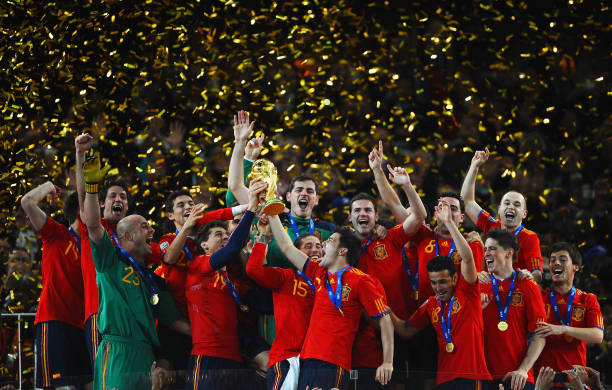
A special group of players arrived at exactly the right moment. Xavi Hernández became the metronome. Andrés Iniesta provided creativity and elegance. Sergio Busquets offered intelligence and positional discipline. David Villa delivered goals. Carles Puyol supplied leadership. Iker Casillas brought world-class reliability in goal.
These players were not simply talented individuals. They were perfect fits for the system.
Spain 2010 World Cup squad operated almost like a club team rather than a national side.
Many players had spent years playing together for Spain’s youth teams and for Barcelona.
Their understanding appeared almost telepathic. They knew where teammates would move before the pass was made.
That chemistry became one of Spain’s greatest weapons.
Winning Before 2010
The warning signs arrived before South Africa.
Spain won the UEFA European Championship in 2008 and finally ended their reputation as underachievers.
The victory confirmed that their possession-based approach could succeed at the highest level.
Opponents struggled to get the ball. When they did regain possession, Spain often recovered it within seconds. The team did not simply control matches. They controlled time, rhythm, and emotion.
By the start of the 2010 World Cup, Spain were ranked among the favorites.
Yet few people realized just how dominant they would become.
The Most Dominant Team That Barely Scored
One of football’s greatest paradoxes is that the Spain 2010 World Cup champions were not a high-scoring team.
They scored only eight goals throughout the entire tournament.
Every knockout-stage victory came by a 1-0 scoreline. On paper, those numbers seem ordinary. On the pitch, they were anything but. Spain’s dominance came through control rather than chaos.
Opponents often spent long periods chasing shadows. The ball moved endlessly from player to player while Spain patiently waited for openings.
Many matches felt inevitable. Once Spain took the lead, it was incredibly difficult to recover possession often enough to mount a comeback.
The Final That Changed Football
The 2010 World Cup final against the Netherlands remains one of the clearest demonstrations of Spain’s philosophy.
The match was physical, tense, and often ugly. The Dutch attempted to disrupt Spain’s rhythm through aggressive challenges and relentless pressure.
Yet Spain never abandoned its identity. They continued passing. They continued controlling possession. They continued believing in the system. The defining statistic remains extraordinary.
Spain completed approximately 619 passes during the final. For many observers, it was a glimpse into football’s future. The game was no longer solely about speed, strength, or direct attacks. Control had become a weapon.
Eventually, Iniesta’s famous extra-time goal delivered a 1-0 victory and Spain’s first World Cup title. The scoreline was narrow but the impact was enormous.
How the World Reacted to Spain 2010 World Cup Win
Following the Spain 2010 World Cup victory, football entered a tactical transformation. Coaches across the globe began studying Spanish methods.
Youth academies adjusted training programs. Possession statistics became increasingly important. Teams sought players comfortable receiving the ball under pressure.
The influence extended beyond Spain.
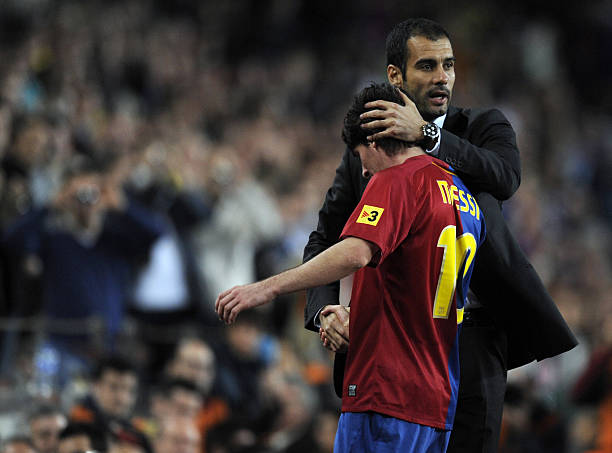
Pep Guardiola’s Barcelona, already dominating European football, reinforced the belief that possession football could overwhelm opponents. National teams and clubs everywhere attempted to replicate the formula.
Some succeeded. Many failed. What became clear was that Spain’s style required far more than passing for the sake of passing.
It demanded intelligence, patience, technical excellence, and complete tactical commitment.
The Legacy of Spain’s 2010 World Cup Team
The origin of tiki-taka may be debated among football historians, but its greatest showcase arrived in South Africa.
Spain demonstrated that a team could dominate the world’s biggest tournament through possession and positional intelligence.
Their success was not built on individual brilliance alone. It was built on years of planning, coaching consistency, and a shared football identity.
The hidden training grounds and youth programs mattered just as much as the famous names on the pitch.
That is why the Spain 2010 World Cup triumph remains one of the most influential victories in football history.
A Dynasty Built in Silence
When people remember Spain 2010 World Cup victory, they often focus on Iniesta’s goal. But the real achievement was much bigger than a single moment.
Years before South Africa, coaches quietly built a football philosophy that united every level of Spanish football.
By 2010, the system was complete. The players trusted it completely and the results followed.
Spain barely scored. They won every knockout game 1-0. Yet they controlled matches in a way the football world had rarely seen before.
That is the paradox of the Spain 2010 World Cup champions. The most dominant team of their era did not overwhelm opponents with goals.
They overwhelmed them with control.

4 comments
For the reason that the admin of this site is working, no uncertainty very quickly it will be renowned, due to its quality contents.
Çok yararlı bir makale olmuş. Severek takip ediyorum. Teşekkür ederim.
I’m often to blogging and i really appreciate your content. The article has actually peaks my interest. I’m going to bookmark your web site and maintain checking for brand spanking new information.
[…] Torres’ 106th-minute winner secured Spain’s first FIFA World Cup title since 2010, but the celebrations were briefly overshadowed by chaotic scenes involving players from both teams […]