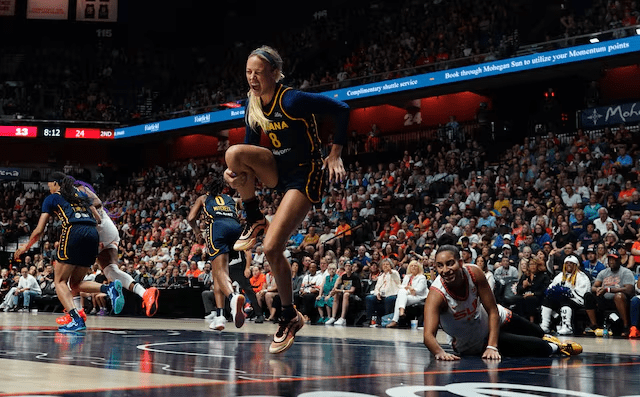
In a devastating blow to their already ailing roster, the Indiana Fever confirmed that guard Sophie Cunningham will miss the remainder of the 2025 WNBA season due to a torn MCL in her right knee. The injury occurred during their 99–93 overtime victory over the Connecticut Sun when teammate Bria Hartley collided with Cunningham during a pass, causing her to walk off the court limp and later require additional evaluation. Medical assessments confirmed the severity of the injury, prompting the team to rule Cunningham out for the season, although she is expected to fully recover.
The Injury: Context and Impact
Cunningham sustained the injury in the second quarter of Indiana’s win against the Sun. Immediately after the collision, she collapsed to the floor clutching her right knee—an ominous sight that cast a pall over what should have been a celebratory win. Diagnostic imaging subsequently showed a torn medial collateral ligament (MCL), effectively ending her season.
This announcement comes amid a relentless wave of setbacks for the Fever. Already missing key players—Caitlin Clark (groin), Aari McDonald (foot fracture), and Sydney Colson (ACL tear)—the team’s backcourt has been decimated. With Cunningham joining that list, the Fever now face an increasingly uphill battle to remain competitive in the tightly contested playoff race.
Roster Changes and Hardship Moves
In an attempt to fill the void left by Cunningham, the Fever quickly signed veteran guard Shey Peddy to a seven-day hardship contract, and released rookie Kyra Lambert—who had just made her WNBA debut—to create roster flexibility. Peddy, a seasoned guard with experience on multiple teams, brings defensive grit and leadership during this crisis period.
Beyond the Court: Emotional Fallout and Public Reactions
The psychological and emotional fallout from Cunningham’s injury was palpable. In a heartwarming show of solidarity, Caitlin Clark—herself sidelined—posted a simple yet touching four-word message expressing support for her injured teammate, underscoring the strong bond within the Fever locker room.
In parallel, the incident ignited a flurry of controversial commentary. Sophie’s sister, Lindsey, called out the WNBA on social media for failing to protect player safety with inconsistent officiating. This sparked a heated backlash online—prompting Cunningham to respond to critics and defend her sister. The situation highlighted the broader tensions of player safety concerns, league handling, and the emotional strain on players and families.
Cunningham herself addressed rumors insinuating malice from Hartley during the collision, stressing the two are close and that no ill intent was involved in the play. She expressed respect and understanding toward Hartley, rejecting suggestions of dangerous or unsportsmanlike conduct.
What This Means for Indiana’s Season
At 19–16, the Fever are precariously positioned in the playoff picture, and yet to fully lock in a berth. With less than a month remaining in the regular season, the loss of three key guards could severely restrict rotation options. Decisions about resting or managing the limited remaining healthy players—including Clark if she returns—loom large as the team navigates these last games.
Closing Thoughts
The Indiana Fever’s season has spiraled into a nightmarish sequence of unfortunate events. Cunningham’s season-ending MCL tear is the latest blow, compounding growing concerns about competitive sustainability. However, the team’s swift move to bring in a veteran, the expressed solidarity among teammates, and Cunningham’s public grace and empathy point to a resilient culture that may carry them through this dark stretch.
As the Fever battle to stay in playoff contention and hope for Caitlin Clark’s return, their ability to adapt without key contributors will define their season’s trajectory. Despite the adversity, the unity and determination they’ve shown suggest they refuse to quietly fade away.