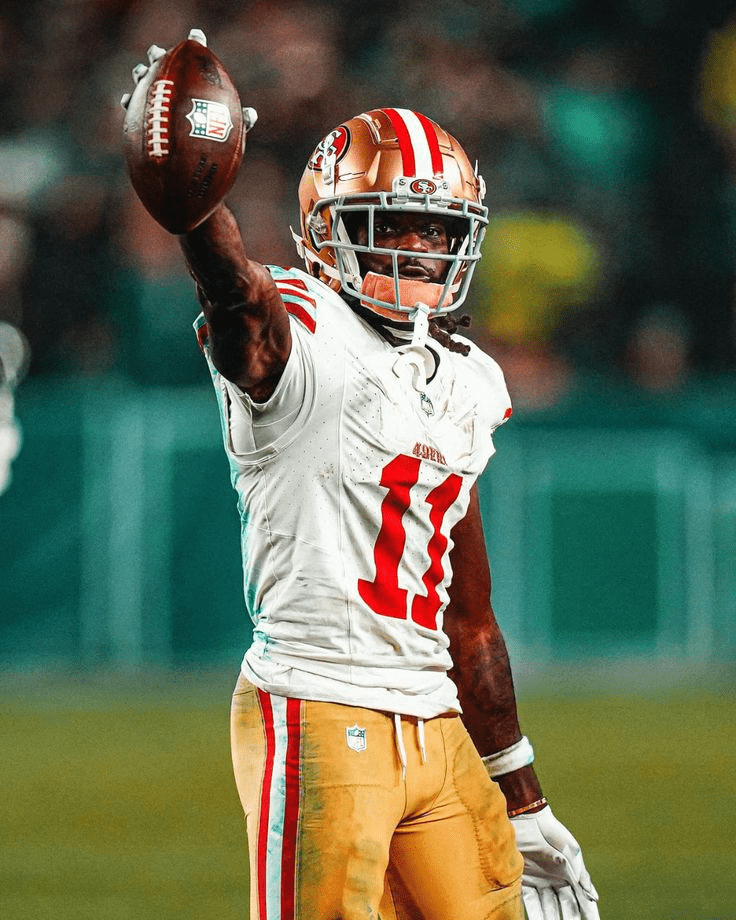
The San Francisco 49ers have made it clear that while a split with wide receiver Brandon Aiyuk appears inevitable, they are in no hurry to finalize his departure. This calculated patience reflects not indecision, but strategy financial, competitive, and organizational.
At the center of the situation is a complicated mix of injury setbacks, contract disputes, and shifting team priorities. The result is one of the most intriguing roster dilemmas in the NFL heading into the 2026 season.
No Timeline, No Rush: Shanahan’s Message
Head coach Kyle Shanahan has been direct in addressing the situation: there is no set timeline for Aiyuk’s removal from the roster.
According to reports, Shanahan emphasized that the team is focused on doing “what’s right for the 49ers,” rather than rushing to accommodate another franchise or making a quick decision without benefit.
This stance highlights a key principle in modern NFL roster management value maximization. The 49ers are not willing to release a talented player for nothing if there is still a possibility of receiving compensation.
Why Aiyuk Is Still on the Roster
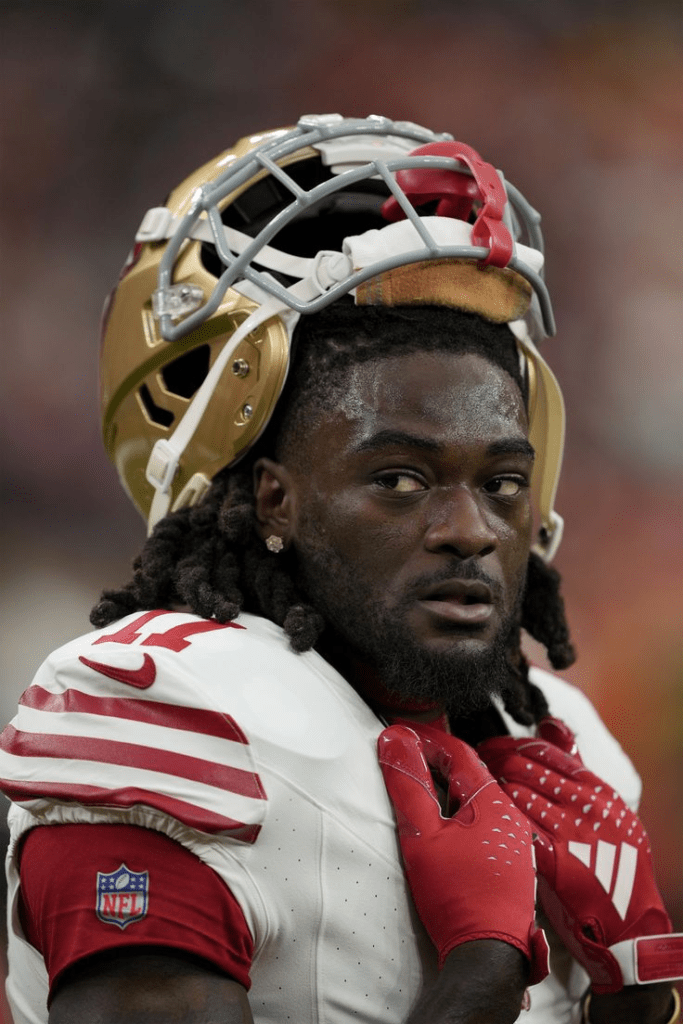
At first glance, keeping a player who is unlikely to play again for the team may seem unusual. But several critical factors explain the 49ers’ patience.
1. Trade Value Still Exists
Even with his recent issues, Aiyuk remains a proven talent. He recorded 1,342 receiving yards and seven touchdowns in 2023, establishing himself as one of the team’s top offensive weapons.
The 49ers are hoping that:
- A receiver-needy team emerges
- A late-round draft pick can be secured
- Some form of return justifies holding onto him
As Shanahan put it, the team hopes to “get something for it” rather than letting him go for free.
2. Financial Considerations
Money is perhaps the biggest reason for the delay.
Aiyuk signed a four-year, $120 million contract in 2024, but complications arose when the team voided his guaranteed money after he failed to attend rehab sessions following a serious knee injury.
Releasing him immediately would:
- Create significant dead cap charges
- Provide little immediate financial relief
- Eliminate any chance of trade compensation
Waiting especially until after key league dates like June 1 can improve the team’s salary cap situation.
3. Leverage in Negotiations
The 49ers are also playing a strategic waiting game.
Other teams, such as the Washington Commanders, are reportedly interested but reluctant to trade, hoping San Francisco eventually releases Aiyuk.
By holding onto him:
- The 49ers maintain leverage
- They force interested teams to consider trade offers
- They avoid being pressured into a bad deal
- How the Situation Deteriorated
Aiyuk’s current situation represents a dramatic fall from prominence.
From Star Receiver to Uncertain Future
- Drafted in the first round in 2020
- Became a key offensive weapon
- Earned All-Pro recognition in 2023
However, things quickly unraveled:
- Suffered a torn ACL and MCL in 2024
- Missed significant time recovering
- Failed to participate fully in team rehab programs
This breakdown in communication and commitment strained the relationship between player and organization.
Absence and Contract Fallout
By 2025, Aiyuk was essentially inactive, and the team took the drastic step of:
- Voiding his future guarantees
- Placing him on the “left squad” list
This effectively signaled the beginning of the end.
A Strategic Delay, Not Emotional Decision
One important clarification: the 49ers’ delay is not personal.
Reports suggest the decision is driven entirely by business logic:
- The team has already paid Aiyuk significant money
- There is no urgency to release him
- Waiting could yield even minimal returns
In fact, insiders describe the situation as a “strategic pause” rather than a standoff.
Impact on the 49ers’ Roster
While Aiyuk’s future remains unresolved, the 49ers have already begun reshaping their receiving corps.
New Additions
The team has brought in:
- Veteran wide receiver Mike Evans
- Free-agent signing Christian Kirk
These moves signal a clear shift away from reliance on Aiyuk.
Changing Offensive Identity
With new personnel, the 49ers are likely:
- Adjusting their passing game
- Building around different skill sets
- Preparing for a future without Aiyuk
This transition reduces the urgency to resolve his situation immediately.
Potential Outcomes
Several scenarios could unfold in the coming weeks or months.
1. Trade Before the Season
This remains the preferred option for the 49ers.
- Likely return: late-round draft pick
- Requires another team to absorb or restructure his contract
2. Post-June 1 Release
If no trade materializes, the team could:
- Release Aiyuk after June 1
- Spread cap penalties over multiple years
- Gain modest financial flexibility
3. Extended Stalemate
There is also the possibility that:
- Negotiations drag on
- Teams wait for a cheaper opportunity
- The situation resolves late in the offseason
League-Wide Implications
Aiyuk’s situation reflects broader trends in the NFL:
1. Player Empowerment vs Team Control
While players often push for trades or releases, teams increasingly:
- Control timelines
- Prioritize financial efficiency
- Resist external pressure
2. Injury Risk and Contract Value
Aiyuk’s case highlights how quickly value can change:
- A major injury can alter career trajectory
- Contract guarantees can be voided
- Teams become more cautious with long-term deals
3. Strategic Roster Management
Modern NFL teams operate like businesses:
- Every roster spot has financial implications
- Timing matters as much as talent
- Patience can create leverage
What This Means for Aiyuk
For Aiyuk himself, the situation is complicated.
Challenges
- Limited recent game tape due to injury
- Questions about commitment and rehab
- Uncertainty around future role
Opportunities
- Fresh start with a new team
- Chance to rebuild value
- Potential reunion with familiar systems or coaches
Despite the current uncertainty, his talent ensures he will likely get another opportunity.
The Bigger Picture
The 49ers’ approach underscores a fundamental shift in how NFL teams handle roster decisions.
Rather than acting quickly, they are:
- Taking a measured, calculated approach
- Balancing financial and competitive priorities
- Waiting for the best possible outcome
This patience may frustrate fans or other teams, but it reflects a disciplined organizational philosophy.
Patience as a Strategy
The decision by the San Francisco 49ers to remain “in no rush” regarding Brandon Aiyuk is not about hesitation—it is about control.
By holding their position, the team is:
- Protecting its financial interests
- Maintaining leverage in negotiations
- Keeping options open for the best possible return
For Aiyuk, it marks the uncertain end of a once-promising chapter in San Francisco. For the 49ers, it is another example of how modern NFL franchises navigate complex roster decisions with patience and precision.
In the end, the situation will resolve as Shanahan suggested but on the 49ers’ terms, not anyone else’s.