At 14, a workplace accident took away his left arm. It could have ended his dreams of becoming a footballer before they had properly begun. Instead, Jimmy Hasty went on to become one of the most remarkable players in Irish football history, scoring over 100 goals for Dundalk and helping the club end a 30-year wait for a league championship.
He could not use two arms to shield the ball, challenge opponents or maintain his balance in the conventional way. Yet he possessed an extraordinary sense of balance, remarkable control and a natural instinct for finding the back of the net.
For six seasons, Hasty entertained supporters, bewildered defenders and became a beloved figure at Dundalk FC. His story, however, was not destined to end on a football pitch. In October 1974, at just 38, his life was cut short by violence during Northern Ireland’s Troubles.
This is the story of Jimmy Hasty, the one-armed footballer whose extraordinary career deserves to be remembered far beyond the borders of Ireland.
The Accident That Changed Jimmy Hasty’s Life
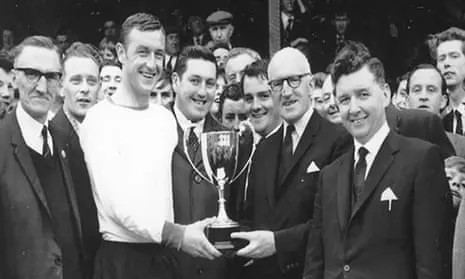
James Hasty was born in 1936 in Sailortown, a working-class dockland neighborhood in Belfast, Northern Ireland. Growing up, football was an important part of his life. Like many boys of his generation, he spent his childhood playing on local pitches, developing the skills and instincts that would eventually take him into professional football.
But his childhood took a devastating turn when he was just 14.
Hasty had secured a job at Jennymount Mill in Belfast. On his first day at work in 1950, his left arm became caught in an industrial machine. The injuries were so severe that the arm had to be amputated.
For a young teenager with dreams of playing football, it was a life-changing tragedy. Football required physical coordination, balance and the ability to compete against opponents in challenging situations. Losing an arm presented obstacles that most players would never have to consider.
Yet Hasty refused to abandon the game.
He returned to football, initially playing in junior competitions before making his way into more competitive football. His determination was extraordinary, but so was the ability he developed.
The one-armed footballer learned to compensate for the physical limitations that came with his injury. He developed exceptional balance, could play with both feet and became particularly dangerous in the air.
What he lacked in conventional physical advantages, he made up for with intelligence, technique and natural footballing ability.
How a One-Armed Footballer Convinced Dundalk to Sign Him

Before joining Dundalk, Hasty played for Newry Town, where his performances began attracting attention.
His goalscoring ability was difficult to ignore. He was tall, strong, technically gifted and possessed an impressive understanding of the game.
In 1960, Dundalk chairman Jim Malone travelled to watch him play. Malone was immediately impressed and became convinced that Hasty had the qualities needed to strengthen his team.
There was, however, one problem. When Malone informed the Dundalk board that he wanted to sign a striker who had only one arm, the reaction was far from encouraging. Some members questioned whether the club should take such a risk.
One board member reportedly described the idea as signing a freak. Malone refused to change his mind. In fact, he had already taken matters into his own hands, using his personal cheque to secure Hasty’s services.
It was an extraordinary act of faith in a player whose ability Malone believed deserved an opportunity.
On 20 November 1960, Hasty made his debut for Dundalk against Cork Celtic at Oriel Park. The match attracted considerable attention, with supporters curious to see the unusual new signing.
He did not disappoint. Hasty scored on his debut and immediately demonstrated that his disability had little bearing on his ability to influence a football match. His movement, composure and attacking intelligence impressed spectators.
A one-armed footballer had arrived in Dundalk, and he was already making his presence felt.
The Rise of Dundalk’s One-Armed Wonder

What followed was a remarkable six-year spell at Dundalk. Hasty quickly became one of the club’s most important players. Standing approximately 6ft 1in, he possessed the physical presence of a traditional center-forward, but his game involved much more than strength.
He could hold up the ball, bring teammates into play, create opportunities and score with either foot. His aerial ability made him particularly difficult to defend against.
Former teammate Francie Callan, who partnered him in attack, later recalled how his balance and movement made it easy to forget that he was playing with one arm.
Hasty’s performances attracted spectators wherever Dundalk travelled. People came to watch the unusual striker, but they soon discovered that there was considerably more to him than his physical condition.
He was a genuinely outstanding footballer. Over six seasons, Hasty scored 103 goals for Dundalk, establishing himself as one of the club’s most memorable attacking players.
His greatest domestic achievement came during the 1962/63 season, when Dundalk won the League of Ireland title, ending a 30-year wait for the championship. It was a historic achievement for the club, and Hasty was central to it.
The striker had helped transform a team that had waited decades for domestic success into league champions. His contribution was so significant that he became one of the most celebrated players in the club’s history.
The one-armed footballer had gone from being a signing that some club officials questioned to becoming one of the most important figures in Dundalk’s modern history.
The European Night That Made History
Dundalk’s league triumph in 1963 earned the club a place in the following season’s European Cup, where they faced Swiss champions FC Zürich. The first leg was played in Dublin, with Dundalk losing 3-0. The result left the Irish champions facing a difficult challenge in Switzerland.
Few expected them to produce anything remarkable in the return fixture. But on 25 September 1963, Dundalk delivered one of the most significant performances in the club’s history.
Playing away from home, they defeated FC Zürich 2-1. The victory was historic. Dundalk became the first Irish side to win an away match in European competition.
Hasty played a decisive role in the result. He assisted Dundalk’s opening goal before scoring the second, giving the visitors a memorable victory. Although Zürich progressed 4-2 on aggregate, the Irish champions had achieved something that would be remembered for generations.
For Hasty, it was another defining moment in an already remarkable career. The one-armed footballer had not simply found a place in professional football. He had helped an Irish club make history on the European stage.
His performance also demonstrated the quality of a player whose abilities had initially been questioned because of his disability.
Beyond Football: The Tragic Death of Jimmy Hasty

Despite his achievements on the pitch, Hasty’s life away from football was far from straightforward. He remained based in Belfast throughout much of his playing career, even while representing Dundalk across the border in the Republic of Ireland.
After leaving Dundalk in 1966, he briefly played for Drogheda before eventually retiring from professional football and returning to civilian life. He had a wife, Margaret, and two young sons, Paul and Martin.
But Northern Ireland was experiencing one of the darkest periods in its modern history. The Troubles, a prolonged period of political and sectarian conflict, had brought widespread violence to the region. Ordinary people frequently became victims of attacks connected to the conflict.
On 11 October 1974, Hasty was walking to work in Belfast when he was shot and killed by a paramilitary gunman. He was just 38 years old.
His death was a devastating loss to his family, former teammates and the Dundalk supporters who had admired him throughout his career. No one was ever charged with his murder.
A footballer who had overcome an extraordinary physical setback had ultimately lost his life to an entirely different kind of violence.
It was a tragic end to a remarkable story.
The Legacy of Jimmy Hasty
For many years, Jimmy Hasty’s story survived largely through the memories of former teammates, supporters and his family. Much of his playing career had taken place before the widespread availability of televised football footage. As a result, generations of supporters could hear about his extraordinary abilities without ever having the opportunity to watch him play.
That changed when footage of Dundalk’s historic European Cup victory over FC Zürich was rediscovered in 2015 during research for a BBC Radio Ulster documentary.
For his son Paul, seeing his father in action was an incredibly emotional experience. It provided visual confirmation of the stories he had heard throughout his life.
In 2023, UEFA released One-Armed Wonder: The Extraordinary Story of Jimmy Hasty, a documentary examining his life, football career and tragic death.
The film subsequently won the Sports Emmy for Outstanding Short Sports Documentary in 2024, bringing renewed international attention to his remarkable story.
Today, Hasty remains one of the most celebrated figures in Dundalk’s history.
His achievements are also part of a wider sporting tradition of athletes who have challenged conventional ideas about disability and physical ability. Long before discussions about inclusion in professional sport became widespread, Hasty was demonstrating that footballing excellence could not be measured by the number of arms a player possessed.
He never needed sympathy to earn his place on the pitch. He earned it through his talent.
Jimmy Hasty’s story is ultimately about more than a footballer who played with one arm. It is about a young boy who refused to surrender his ambition, a club chairman who believed in his ability, and a striker who became a legend despite the doubts of those who initially questioned his suitability for the game.
Football has produced countless extraordinary players, but few stories are quite like his.
And perhaps that is why, decades after his final appearance, the name Jimmy Hasty still deserves to be remembered.
