The winner had crossed the finish line. The medals were being prepared, spectators were beginning to leave and the excitement surrounding the Olympic marathon had largely disappeared. Then, from the darkness outside the stadium, a lone figure appeared.
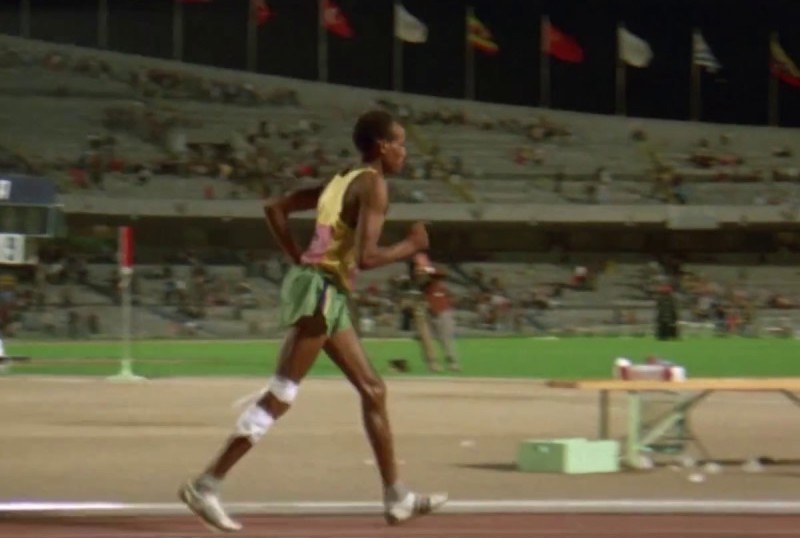
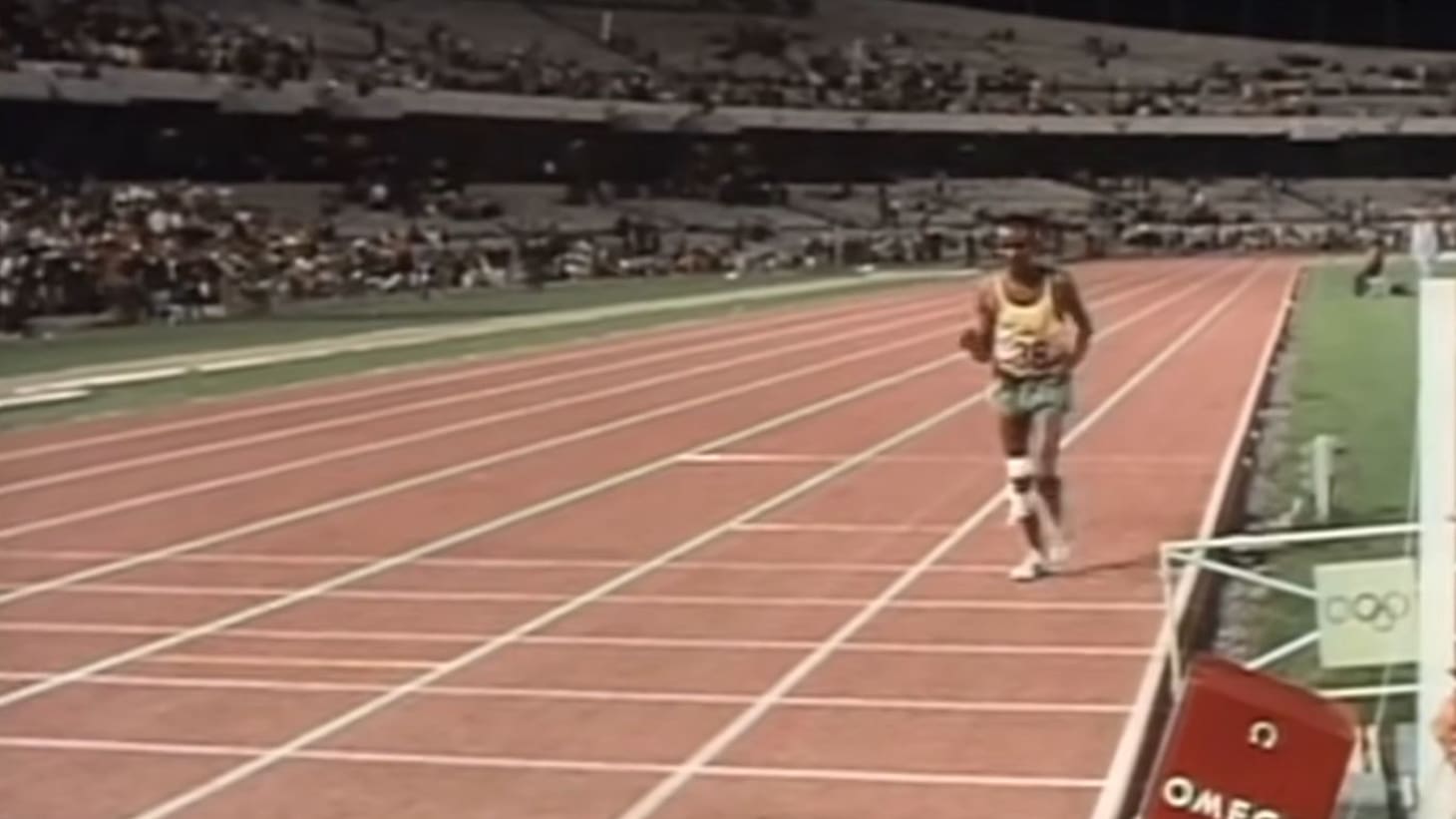
His right leg was heavily bandaged. His body was exhausted, and every step seemed to demand more strength than he could possibly have left. Yet he kept moving, slowly making his way around the track as the remaining spectators rose to their feet.
His name was John Stephen Akhwari, a marathon runner from Tanzania. More than an hour after the winner had finished, Akhwari finally crossed the line.
He had no medal to collect, no record to celebrate and no podium waiting for him. But what happened that evening at the 1968 Mexico City Olympics would become one of the most enduring stories in sporting history.
It was a performance that demonstrated something medals and finishing positions could never fully capture: the determination to finish what one has started.
Before Mexico City: Who Was John Stephen Akhwari?
Born in Mbulu, Tanzania, John Stephen Akhwari was a distance runner who had established himself in athletics before the world came to know his name.
He represented Tanzania in international competitions and had developed a reputation as a capable long-distance athlete. His participation in the Olympic marathon was therefore not the result of a fortunate invitation or an attempt to make up the numbers. He was a serious competitor representing his country on the biggest sporting stage.
The 1968 Summer Olympics were particularly significant for Tanzania. The country, which had gained independence from Britain in 1961, was still establishing its identity in international sport.
Akhwari was among four Tanzanian athletes sent to Mexico City, all hoping to bring recognition to their young nation.
However, competing in Mexico presented a challenge that extended beyond the strength and endurance required to run a marathon.
Mexico City sits approximately 2,300 metres above sea level. At that elevation, the reduced availability of oxygen can make endurance events considerably more demanding, particularly for athletes who have not trained under similar conditions.
For runners accustomed to lower altitudes, the environment presented a serious physiological challenge.
Akhwari began experiencing cramps during the race, and the demanding conditions made an already difficult competition even harder.
But the worst was still to come.
The Fall That Nearly Ended John Stephen Akhwari’s Olympic Marathon
The men’s marathon took place on 20 October 1968. Seventy-five athletes started the race, representing different countries and running for the ultimate Olympic prize. Among them was Ethiopian distance-running legend Mamo Wolde, who would eventually claim the gold medal. Akhwari was also among the competitors, determined to complete the race for Tanzania.
As the runners approached the halfway stage, the competition became increasingly demanding. During a struggle for position involving several athletes, Akhwari became caught up in a collision and fell heavily onto the road. The consequences were devastating.
He suffered a badly injured right knee, which was dislocated, and sustained an injury to his shoulder. The fall left him in considerable pain, and his chances of completing the marathon appeared to have disappeared.
Medical personnel attended to him and provided treatment. With the extent of his injuries, withdrawing from the race would have been an entirely understandable decision. In fact, 18 of the 75 athletes who started the marathon did not finish.
For Akhwari, however, the race was not over. After receiving medical attention and having his injured knee bandaged, he made the decision to continue. He returned to the course, knowing that he still had a considerable distance to cover.
What followed would turn an ordinary Olympic participant into an international symbol of perseverance.
The Long Road to the Finish Line at the 1968 Mexico City Olympics
By the time Akhwari resumed running, the leading competitors were already moving towards the finish.
Mamo Wolde eventually won the marathon in 2 hours, 20 minutes and 26.4 seconds. His Ethiopian compatriots, Mamo Wolde and Abebe Bikila’s era of dominance in distance running had already established Ethiopia as a formidable force, and Wolde added another Olympic marathon triumph to the country’s growing legacy.
But while the celebrations were taking place, Akhwari was still out on the course. He could no longer run normally. His injured leg forced him to walk, limp and occasionally struggle forward. Every movement brought fresh pain, but he continued.
The sun began to set, and the stadium gradually emptied. Spectators who had come to witness the marathon were leaving, while attention shifted towards the medal ceremonies and other Olympic events.
Yet somewhere along the course, one runner was still making his way towards the finish. Eventually, news reached the stadium that another competitor was approaching. Television crews and spectators returned their attention to the track. Then Akhwari appeared.
His right leg was wrapped in bandages, and he could barely maintain a normal running motion. Nevertheless, he entered the stadium and began the final lap.
The remaining spectators applauded as he made his way around the track. It was a remarkable reception for an athlete who was about to finish last among the 57 competitors who completed the race.
When he eventually crossed the finish line, the applause was extraordinary. He had finished the marathon. He had finished injured, exhausted and more than an hour behind the Olympic champion.
But he had finished.
“My Country Sent Me Here to Finish the Race”
Perhaps the most memorable part of John Stephen Akhwari’s story came after he crossed the finish line. Journalists naturally wanted to understand why he had continued running despite the severity of his injuries and the obvious impossibility of winning a medal.
His response would become one of the most famous statements associated with the Olympic Games. When asked why he had refused to quit, Akhwari reportedly replied:
“My country did not send me 5,000 miles to start the race; they sent me 5,000 miles to finish the race.”
The statement captured the spirit of his performance.
For Akhwari, representing Tanzania meant more than simply appearing at the starting line. He had travelled thousands of miles to compete for his country, and he believed that responsibility required him to reach the finish.
It was not about winning anymore. It was about fulfilling a commitment.
His words eventually travelled far beyond Tanzania and became an enduring reference point in conversations about determination, discipline and sporting character.
His appearance in Bud Greenspan’s documentary film about the 1968 Olympics also helped preserve the moment for future generations. The footage showed the exhausted runner making his way around the stadium long after the other competitors had finished.
It was a reminder that some of the most memorable Olympic performances have nothing to do with medals.
John Stephen Akhwari Was More Than One Marathon
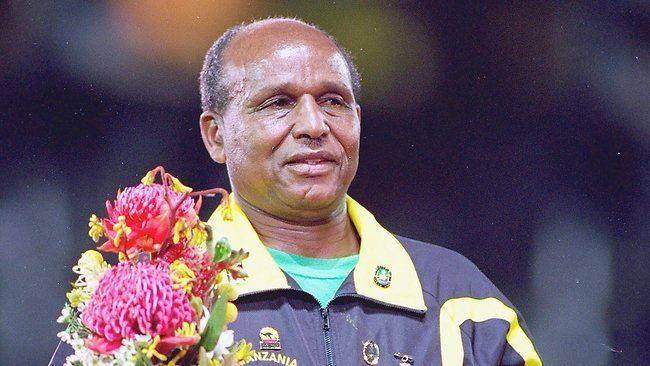
One of the things that often gets overlooked when discussing John Stephen Akhwari is that his athletic career did not begin or end in Mexico City. He was an accomplished distance runner who continued competing after the 1968 Games.
At the 1970 Commonwealth Games in Edinburgh, Scotland, Akhwari finished fifth in the marathon. He also competed in the 10,000 metres, finishing ninth.
His marathon performance at those Games demonstrated that he was a serious athlete with the ability to compete against some of the world’s best distance runners.
He recorded a personal best of 2 hours, 15 minutes and 5 seconds in the marathon in 1970, a significant improvement on the time associated with his famous Olympic appearance.
In Tanzania, his achievements earned him considerable recognition. In 1983, he received the National Hero Medal of Honour, acknowledging his contribution to the country’s sporting history.
He also established the John Stephen Akhwari Athletic Foundation, which supports Tanzanian athletes pursuing opportunities to represent their country at the Olympic Games.
His legacy therefore extends beyond a single evening in Mexico City. He became an advocate for the next generation of Tanzanian athletes, helping others pursue the same Olympic dream that had taken him thousands of miles from home.
The Olympic Legacy of John Stephen Akhwari
More than half a century after that remarkable evening, John Stephen Akhwari remains one of the most recognisable figures in Olympic history.
His story is frequently used to illustrate the Olympic spirit, but its significance goes beyond the familiar message about perseverance. It challenges the way sporting success is measured.
In professional sport, attention naturally gravitates towards winners, champions, record-breakers and medal recipients. Finishing positions determine rankings, while statistics provide convenient ways of comparing athletes across generations.
But Akhwari’s experience demonstrated that an athlete’s contribution cannot always be measured by a stopwatch. He did not win the 1968 Olympic marathon. He did not even finish among the leading competitors. Yet his determination to complete the race gave him a place in sporting history that many Olympic champions would envy.
His performance also offers an important perspective on African sporting history. Tanzania was still a relatively young independent nation when Akhwari represented it in Mexico City. His journey formed part of a broader period in which African athletes were increasingly making their presence felt on the international stage.
Today, African distance runners are among the most celebrated athletes in the world. Names such as Eliud Kipchoge, Haile Gebrselassie and Kenenisa Bekele have helped shape modern marathon and long-distance running.
Akhwari belongs to an earlier generation that helped establish this tradition.
His story is not simply about refusing to quit. It is about representing something bigger than oneself, maintaining a sense of purpose when circumstances become difficult and understanding that reaching the finish line can sometimes matter more than reaching it first.
On that evening in Mexico City, the Olympic champion had already been crowned. The medals had effectively been decided, and most of the spectators had gone home. But one final runner still had something to prove.
John Stephen Akhwari finished his race, and in doing so, gave the world one of its most unforgettable sporting moments.
