The FIFA World Cup has always showcased the greatest players, the most memorable matches, and the biggest moments in football history, yet one element often goes unnoticed despite being at the center of every kick, pass, tackle, and goal. The ball itself has evolved dramatically over the decades, reflecting advances in technology, design, manufacturing, and the changing demands of the modern game.
Every World Cup match ball tells a story about its era. From the simple hand-stitched leather balls used in the early tournaments to today’s aerodynamically engineered creations, each official ball has influenced how football is played at the highest level. Some have earned praise for their consistency, while others have divided opinion among players and goalkeepers because of their unpredictable movement.
The evolution of the official World Cup match ball mirrors the evolution of football itself, making each edition an important chapter in the rich history of the FIFA World Cup.
The Early Years of the World Cup Match Ball
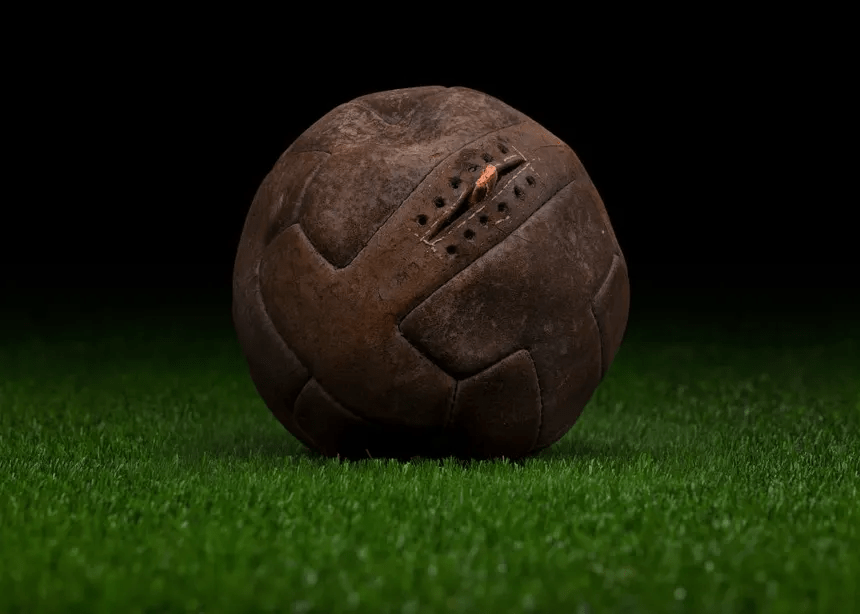
The inaugural FIFA World Cup in 1930 did not feature a single standardized ball throughout the tournament. Instead, both finalists brought their preferred match balls to the final between Uruguay and Argentina, resulting in an unusual compromise. Argentina’s ball was used during the first half, while Uruguay’s was used after the interval as the hosts recovered to win 4-2.
The 1934 tournament in Italy introduced greater consistency, although leather construction remained the standard. These early balls featured stitched leather panels and external laces that absorbed water during wet conditions, making them significantly heavier as matches progressed.
The same basic design continued through the 1938 World Cup in France and, after the interruption caused by the Second World War, returned for the 1950 tournament in Brazil.
Although primitive by today’s standards, these early World Cup balls in history laid the foundation for every innovation that followed.
The 1954 Revolution Began Modern Football Design
The 1954 FIFA World Cup in Switzerland marked one of the earliest significant improvements in football design.
Manufacturers introduced balls with more balanced panel construction and improved internal bladders, resulting in greater consistency during matches. While leather remained the primary material, the quality of production improved considerably compared to previous decades.
By the time Sweden hosted the FIFA World Cup in 1958 and Chile followed in 1962, footballs had become more reliable, although heavy rain could still cause problems because leather continued absorbing moisture.
These tournaments represented the final years before football technology entered a period of rapid modernization.
Adidas Changed the World Cup Forever

One of the biggest milestones in World Cup balls in history arrived in 1970 when Adidas became the official supplier of the tournament.
The company introduced the legendary Telstar, arguably the most famous World Cup match ball ever produced.
Its distinctive black-and-white 32-panel design was created to improve visibility on black-and-white television broadcasts, which remained common at the time. Although football supporters today associate this appearance with the traditional football, the Telstar was revolutionary when it debuted.
The success of the Telstar ensured Adidas would remain closely associated with the FIFA World Cup for decades to come.
The company also supplied the Telstar Durlast for the 1974 tournament in West Germany, featuring improved waterproof coating while maintaining the now-iconic appearance.
Innovation Accelerated During the 1980s
The 1978 Tango introduced another landmark design that became one of football’s most recognizable visual identities.
Rather than relying solely on contrasting colours, the Tango featured an optical pattern that created the illusion of twelve identical circles across the surface. Its popularity proved so enduring that variations of the design appeared in several subsequent tournaments.
The Tango España, used in 1982, represented another important advance because it became the first official World Cup match ball to incorporate synthetic materials alongside traditional leather, reducing water absorption significantly.
Mexico 1986 brought perhaps the most important technological breakthrough yet with the Adidas Azteca.
The Azteca became the first completely synthetic World Cup match ball, eliminating many of the problems associated with leather while offering improved durability, consistency, and performance under varying weather conditions.
This innovation permanently changed football manufacturing.
The Modern Era of World Cup Match Ball Technology
By the 1990 FIFA World Cup in Italy, the Adidas Etrusco Unico introduced an internal layer of black polyurethane foam, improving water resistance and ball responsiveness.
Four years later, the Questra debuted in the United States, featuring lightweight synthetic foam technology inspired by space exploration. Players appreciated its softer touch and increased speed through the air.
France 1998 introduced another historic first with the Tricolore.
It became the first official World Cup match ball to feature multiple colors rather than the traditional black-and-white appearance. Incorporating blue, white, and red to reflect the French national flag, the Tricolore combined visual innovation with significant improvements in ball control and durability.
The new millennium continued this trend.
The Fevernova, used during the 2002 FIFA World Cup in South Korea and Japan, abandoned the classic Tango-inspired graphics entirely in favor of a bold gold, green, and red design that reflected Asian cultural influences.
Its striking appearance symbolized football’s increasingly global identity.
Technology Sparked Debate in the Twenty-First Century
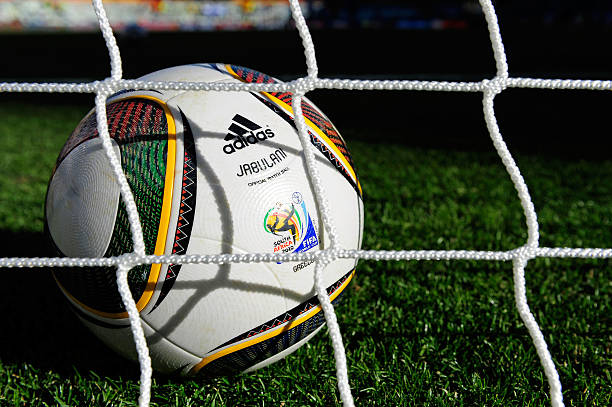
Among all World Cup balls in history, few have generated as much discussion as the Jabulani, introduced for the 2010 FIFA World Cup in South Africa.
Designed using only eight thermally bonded panels, the ball featured an exceptionally smooth surface intended to improve aerodynamics. Instead, numerous goalkeepers criticized its unpredictable movement, while several outfield players also struggled to judge its flight accurately.
Despite the controversy, the Jabulani became one of the most talked-about World Cup match ball designs ever created.
Adidas responded by introducing the Brazuca for the 2014 tournament in Brazil.
Developed through extensive testing involving hundreds of professional players, the Brazuca featured six identical panels with deeper seams that provided greater grip, improved stability, and more predictable flight characteristics. It received widespread praise from players and experts alike.
Recent World Cup Balls Continue Pushing Innovation
Russia 2018 witnessed the return of one of football’s most beloved names with the Telstar 18.
Inspired by the original 1970 design, the ball blended classic aesthetics with modern technology, incorporating an embedded NFC chip that allowed supporters to interact digitally with the product using smartphones.
The 2022 FIFA World Cup in Qatar introduced Al Rihla, meaning “The Journey” in Arabic.
Designed to travel faster than any previous official World Cup match ball, Al Rihla featured precision-engineered panel shapes that enhanced aerodynamic stability while supporting the increasingly fast-paced nature of modern football.
Its vibrant colours reflected Qatar’s architecture, culture, and national identity, demonstrating how modern match balls have become expressions of host nations as well as sporting equipment.
Why the World Cup Match Ball Matters So Much
Every World Cup match ball influences the way football is played, often in subtle but significant ways.
Advances in materials affect first touch, passing accuracy, shooting power, and goalkeeping reactions. Changes in aerodynamics alter how free kicks bend through the air, while improved manufacturing ensures greater consistency throughout an entire tournament.
The evolution of World Cup balls in history also reflects football’s broader technological journey. What began as heavy stitched leather spheres has transformed into scientifically engineered equipment developed through years of laboratory testing and player feedback.
Each official World Cup match ball therefore represents far more than a piece of sporting equipment. It becomes part of the tournament’s identity, forever associated with the unforgettable goals, iconic celebrations, and historic moments that define every edition of the FIFA World Cup. As football continues embracing innovation, future generations will undoubtedly witness even more remarkable developments, but every new design will always owe something to the remarkable journey that began with the very first World Cup ball in 1930.
