When football fans discuss the greatest national teams in history, the conversation usually revolves around Brazil’s golden generations, Spain’s tiki-taka masters, or Lionel Messi’s Argentina. Rarely does anyone mention Uruguay 1930.
Yet this tiny South American nation achieved something no other country can ever claim. They became the World Cup first champions, winning the inaugural FIFA World Cup on home soil and establishing themselves as football’s first global powerhouse.
Nearly a century later, the story of Uruguay 1930 remains one of the most remarkable achievements in sporting history. It is a tale of national pride, footballing excellence, and a dynasty that deserves far more recognition than it receives today.
Why Uruguay Hosted the First World Cup
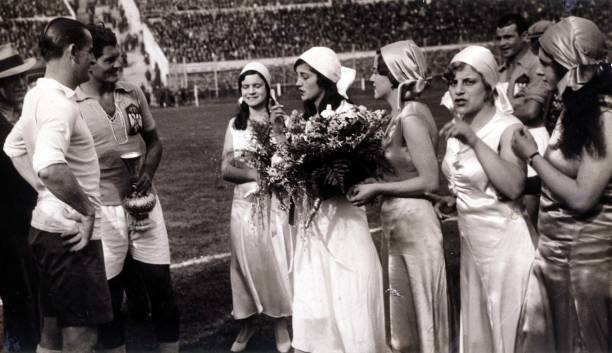
Before the 1930 World Cup, football at the international level was dominated by the Olympic Games.
Uruguay had already announced themselves as a football superpower by winning Olympic gold medals in 1924 and 1928. Their stylish and technically gifted football amazed European audiences, many of whom had never seen South American teams play before.
To celebrate the centenary of Uruguay’s independence, FIFA awarded the country hosting rights for the first-ever World Cup.
It seemed a fitting choice. Uruguay were not only one of the strongest teams in the world but were also willing to finance travel and accommodation for visiting nations.
Even so, organizing the tournament proved difficult.
The European Boycott
One of the biggest challenges facing the 1930 World Cup was convincing teams to participate.
Travel from Europe to South America required a long and expensive sea voyage. Many nations were reluctant to commit the time and resources needed to make the journey.
As a result, several major European football powers declined the invitation.
England, Scotland, Italy, Germany, and Spain were among those absent. Only four European nations eventually participated: France, Belgium, Romania, and Yugoslavia.
The lack of European representation has sometimes led critics to downplay the achievement of Uruguay 1930.
However, that argument ignores one important fact: Uruguay had already proven their quality by defeating Europe’s best teams in the Olympic tournaments of 1924 and 1928.
They were not champions because others stayed home. They were champions because they were already the best team in the world.
A Nation Ready for History
The excitement surrounding the tournament was unlike anything Uruguay had ever experienced.
A brand-new stadium, the Estadio Centenario, was constructed specifically for the competition. It quickly became a symbol of national pride and remains one of football’s most iconic venues.
The country embraced the event completely.
For Uruguayans, the World Cup was more than a football tournament. It was an opportunity to showcase their nation to the world and confirm their status as football’s leading power.
The pressure on the players was immense, but they responded magnificently.
Uruguay’s Road to the Final
The hosts began their campaign cautiously but effectively.
They defeated Peru 1-0 in their opening match before overcoming Romania 4-0 to secure a place in the semi-finals.
There, they produced one of the tournament’s most dominant performances.
Facing Yugoslavia, Uruguay found themselves trailing early but quickly responded. Their attacking quality overwhelmed the visitors as they stormed to a convincing 6-1 victory.
The result sent them into the final against their fierce rivals, Argentina.
It was the dream matchup.
Two neighboring football giants. One trophy. One chance to become football’s first world champions.
The Historic 1930 World Cup Final
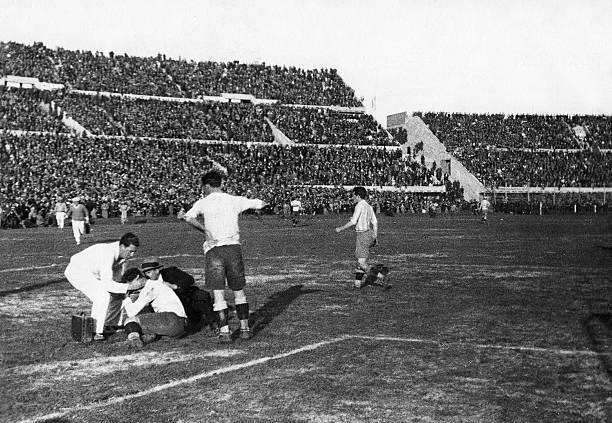
On July 30, 1930, more than 80,000 spectators packed into the Estadio Centenario for the final of the 1930 World Cup.
The atmosphere was electric.
Uruguay struck first through Pablo Dorado, sending the home crowd into celebration. Argentina responded brilliantly, however, scoring twice before halftime to take a 2-1 lead.
For the first time in the tournament, Uruguay faced genuine adversity.
What happened next cemented their place in football history.
The hosts emerged from the break with renewed determination. Pedro Cea equalized before Santos Iriarte fired Uruguay into the lead. With Argentina desperately searching for another goal, Hector Castro added a fourth late in the match.
The final whistle sparked scenes of celebration across the country.
Uruguay had defeated Argentina 4-2.
Football had its first world champions.
A National Holiday Like No Other
The impact of the victory was immediate.
The Uruguayan government declared a national holiday to celebrate the achievement.
Thousands filled the streets. Flags waved from buildings. Football became an even deeper part of the country’s identity.
It is difficult to imagine today just how significant this triumph was.
Uruguay had a population of fewer than two million people, yet they stood at the summit of the footballing world.
Their success was a reminder that greatness is not determined by size, wealth, or population. It is determined by talent, preparation, and belief.
Why Uruguay’s Golden Generation Deserves More Respect
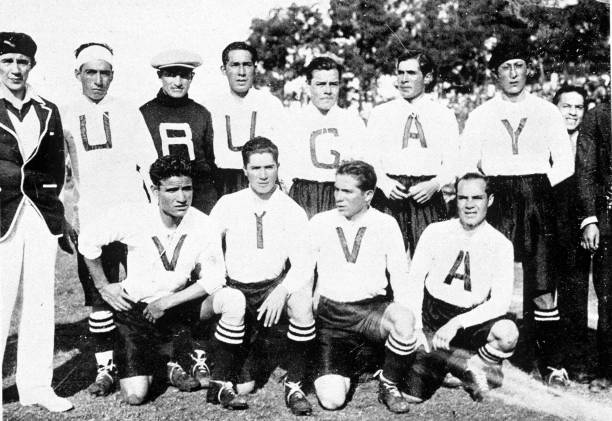
When discussing football dynasties, teams are often judged by their dominance over an extended period.
By that standard, the World Cup first champions deserve far more recognition.
Between 1924 and 1930, Uruguay won two Olympic gold medals and the inaugural World Cup. They consistently defeated the strongest teams available and introduced a level of technical sophistication that influenced football around the globe.
Players such as José Nasazzi, Héctor Scarone, José Andrade, and Pedro Cea became national heroes and international stars.
Yet their achievements are often overlooked because they played nearly a century ago.
Modern football fans can easily recall famous teams from recent decades, but the pioneers who built the game’s global appeal frequently fade into the background.
That should not be the case with Uruguay 1930.
The Legacy of the Original World Champions
The influence of Uruguay’s first golden generation can still be felt today.
Their victory established the World Cup as football’s premier international tournament. It demonstrated that football could unite an entire nation and captivate audiences across continents.
More importantly, it proved that excellence is not reserved for the largest countries.
Uruguay would later reinforce that legacy by winning another World Cup in 1950, producing one of the greatest upsets in football history against Brazil.
But everything began in 1930.
Everything began with the team that lifted the first trophy.
Uruguay 1930: The Forgotten Dynasty
Football history is filled with legendary champions, but only one nation can claim to have started it all.
Uruguay 1930 was not merely a tournament winner. It was the birth of a dynasty that shaped international football and established standards that future generations would strive to match.
The World Cup first champions combined skill, courage, and national pride to create a legacy that has endured for nearly a century.
They may not receive the attention given to modern superpowers, but their place in football history is secure.
The original world champions deserve far more recognition than they receive today.
Give them their flowers.

1 comment
[…] inaugural FIFA World Cup in 1930 did not feature a single standardized ball throughout the tournament. Instead, both finalists […]