Football, often referred to as “the beautiful game,” is a sport played by millions around the world, but for many new fans or those unfamiliar with the intricacies of the game, the offside rule can seem perplexing. Despite being one of the most fundamental rules in football, the offside rule is often misunderstood or misapplied, even by experienced spectators. The goal of this article is to provide a comprehensive and clear understanding of the offside rule, explaining its significance, application, and how it functions in real match situations.
What is the Offside Rule?
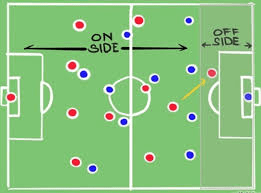
In its simplest form, the offside rule is designed to prevent a player from gaining an unfair advantage by hanging back and waiting for a pass near the opponent’s goal. According to Law 11 of the Laws of the Game, a player is in an offside position football:
- They are nearer to the opponent’s goal line than both the ball and the second-last defender when the ball is passed to them (except when they are in their own half of the field).
- They are actively involved in the play, such as by receiving the ball or interfering with an opponent.
The rule ensures that players cannot simply “camp” near the opposition’s goal in hopes of receiving a long pass, which would fundamentally disrupt the flow and fairness of the football game.
However, being in an offside position is not a violation in itself. A player is only penalized if they interfere with play or interfere with an opponent while in that position.
Key Components of the Offside Rule
Let’s break down the key components of the offside rule, which are often misunderstood:
1. Positioning:
A player is considered to be in an offside position when:
- They are closer to the opponent’s goal line than both the ball and the second-last defender.
- This assessment is made at the moment the ball is played to them, not when they receive it.
2. Active Involvement:
A player can only be penalized for being offside if they are actively involved in the play. This could mean:
- Receiving the ball directly.
- Interfering with an opponent’s ability to play the ball (for example, by blocking their line of sight or challenging them for the ball).
- Gaining an advantage from being in that position, such as by being in a location where the ball rebounds off a post or defender.
3. Exceptions:
A player cannot be offside from:
- A goal kick.
- A throw-in.
- A corner kick.
4. The “Second-Last Defender”:
In football, the last defender is often considered the goalkeeper, but the second-last defender is critical in the offside decision. A player must be behind both the ball and the second-last defender (not counting the goalkeeper) to avoid being football.
The Offside Trap: A Defensive Strategy
In real match situations, the offside trap is a defensive strategy employed by teams to catch attacking players offside. The defending players move up the field just before the attacking team plays the ball, forcing the attacking players into an offside position. This tactic is risky but effective when executed correctly.
However, it requires perfect timing and coordination, and even a tiny mistake can lead to the attacking team having a clear goal-scoring opportunity. The offside trap is especially useful against players who rely on pace to get behind defenders, as it denies them that space to run into.
For example, in the 2018 FIFA World Cup, the Croatian defense used the offside trap effectively against Denmark, neutralizing some of their quick attackers. In contrast, teams like Manchester City under Pep Guardiola are famous for using the offside trap in the Premier League to limit their opponents’ counter-attacks.
Also Read- West Ham Vice-Chair Karren Brady Resigns, Closing a Defining Chapter in Club History
Real Match Examples and Offside Decisions
Understanding how the offside rule applies in real match situations can help illuminate its complexities. Below are some scenarios to help clarify when and how the rule is enforced.
Scenario 1: The Long Pass
In a match between Arsenal and Liverpool, imagine that an Arsenal midfielder passes the ball forward to a striker, Pierre-Emerick Aubameyang, who is making a run towards the Liverpool goal. Aubameyang is closer to the goal than the ball and the second-last defender (let’s say the last defender is the Liverpool goalkeeper).
In this case, Aubameyang is in an offside position when the ball is passed to him. If he receives the ball in this position, the referee will blow the whistle and penalize him for being offside football.
However, if Aubameyang is level with the second-last defender when the ball is passed, he is onside and will be allowed to play.
Scenario 2: Interfering with Play
In the 2014 World Cup quarter-final between Brazil and Colombia, Brazil’s David Luiz took a free kick that bounced around the penalty box. Fred, who was in an offside position when the ball was kicked, didn’t touch the ball but positioned himself in a way that blocked Colombia’s goalkeeper, David Ospina, from seeing and reacting to the ball.
In this case, even though Fred didn’t touch the ball, he was penalized for interfering with the goalkeeper’s ability to play the ball, which is a violation of the offside rule.
Scenario 3: The Player Behind the Ball
In a match between Chelsea and Tottenham Hotspur, Harry Kane receives a pass inside Chelsea’s penalty box. At the moment the ball is played, there are two Spurs players closer to Chelsea’s goal than Kane and the ball. However, since Kane is not the last player, he is onside as long as he does not go beyond the second-last defender (the Chelsea defender closest to the goal).
Even if Kane is ahead of the other defenders, as long as the ball is passed in a way that keeps him behind the second-last defender, he will be deemed to be onside football.
The Role of the Linesman (Assistant Referee)
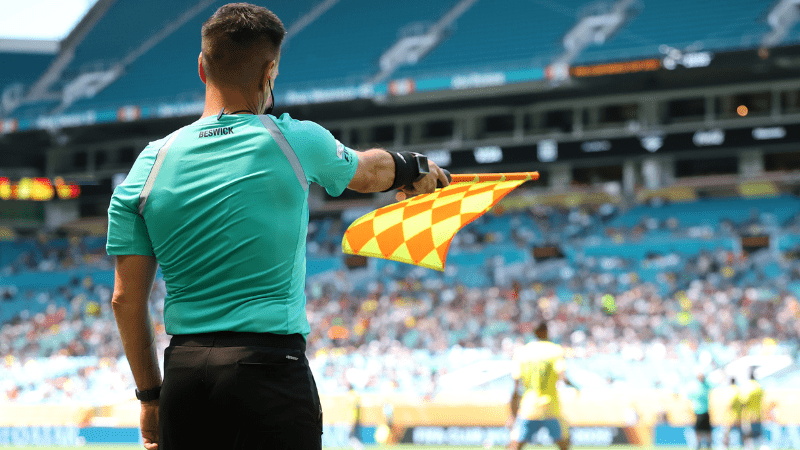
The assistant referee, often called the linesman, plays a crucial role in enforcing the offside rule. Positioned along the touchline, they use their position to monitor the attacking players’ positions in relation to the Match defenders.
When an offside offense occurs, the linesman raises their flag to indicate to the referee that they believe an offside violation has occurred. The referee then makes the final decision, often consulting with the linesman. However, in the case of VAR (Video Assistant Referee) being available, the assistant referee’s decision can be reviewed, and the offside call can be either confirmed or overturned. football
VAR and the Offside Rule
In recent years, VAR has significantly impacted how offside decisions are made. With the advent of technology, match officials are now able to analyze offside situations with greater precision. Inches matter in modern football, and VAR allows referees to draw lines over video footage to determine whether a player was offside when the ball was played.
However, the introduction of VAR has also led to debates over the use of marginal offsides. For instance, players are sometimes penalized for being offside by just a few millimeters. This has sparked a conversation about whether such tight calls should be given as offside, with some arguing that technology is making the football rule too rigid.
Why the Offside Rule Is Important
The offside rule serves several important purposes in football:
- Maintaining Fairness: It prevents players from hanging around the opponent’s goal in an attempt to score easily, ensuring that goals are scored based on skill, teamwork, and positioning rather than exploiting an unfair advantage.
- Promoting Teamwork: It encourages teams to develop strategic attacks that require timing, communication, and coordination, rather than relying on one player to stand near the opponent’s goal and wait for a pass.
- Preventing “Goal-Hanging”: Without the offside rule, attackers could “goal-hang” or stay near the opponent’s goal without having to contribute to the flow of play. This would make the game less dynamic and exciting football.
The offside rule, while often misunderstood, is essential to the integrity and flow of football. In real match situations, understanding how it works whether in an attacking situation, defending scenario, or through the use of VAR can greatly enhance your appreciation of the game. While it may seem complex at times, the offside rule is fundamentally designed to ensure fair play and to make the game more dynamic and exciting for both Match players and fans alike.