Another international duty has brought another familiar problem for elite clubs, with Liverpool facing fresh concerns after Cody Gakpo was forced off during the Netherlands’ 2-1 victory over Serbia and subsequently returned to his club for further assessment. Gakpo lasted only 17 minutes after suffering the injury following a heavy challenge from Serbia’s Saša Lukić, adding his name to an increasingly worrying list of players affected during the international window.
Gakpo is hardly an isolated case, with Liverpool also seeing Alexander Isak return from Sweden with an injury, while Kylian Mbappé, Kai Havertz, Jamal Musiala and several other prominent players have been affected during the current break. For clubs that invest enormous sums in assembling squads, employ specialised medical and performance teams and rely on their players throughout demanding domestic and European campaigns, watching an important player leave for international duty only to return injured creates an uncomfortable tension between club football and the international game.
That tension raises a question that has become increasingly difficult to ignore: should clubs ever have the right to prevent players from going on international duty?
Why International Duty Cannot Simply Be Rejected
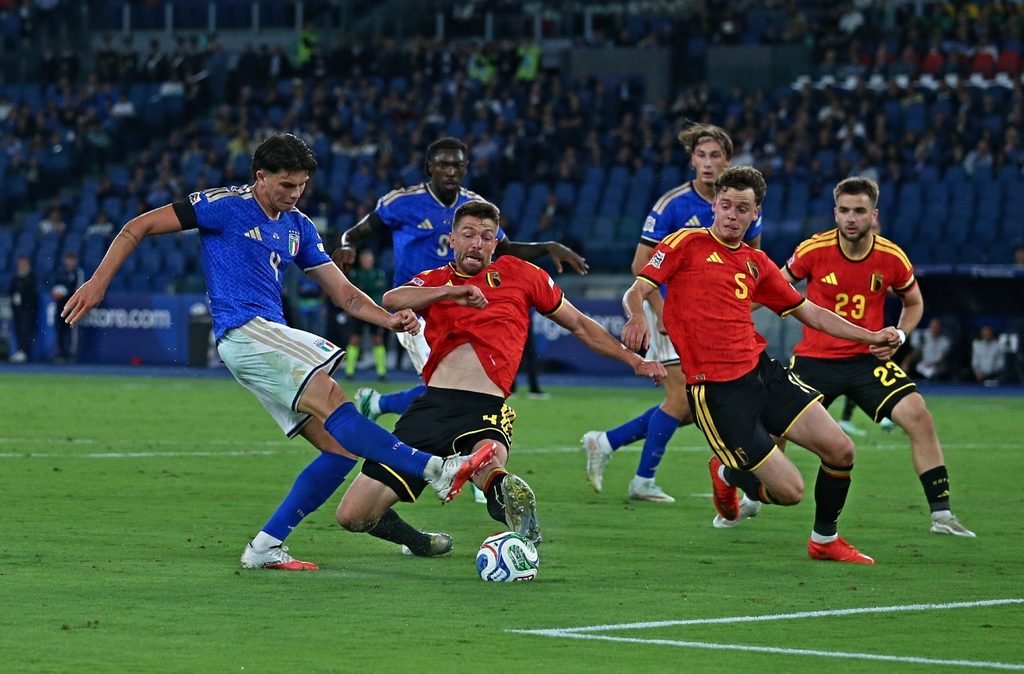
There is an obvious reason FIFA does not give clubs a general right to retain their players whenever they consider international football inconvenient. International football is an established part of the sport’s structure, and players represent their countries as well as their clubs, meaning a system in which individual clubs could simply refuse to release players would make international competitions extremely difficult to organise.
FIFA’s Regulations on the Status and Transfer of Players therefore provide for the mandatory release of players during international windows covered by the international match calendar, while also preventing agreements between players and clubs that would stop such release. The principle is relatively straightforward because, without it, clubs could begin deciding which international matches their players were permitted to participate in based on their own sporting interests.
Imagine, for example, Real Madrid deciding that Kylian Mbappé should remain in Spain because the club is entering a crucial period in the title race, or Arsenal refusing to release a defender because an important Premier League fixture is approaching. If such decisions became available to every club, international football would quickly become subordinate to the interests of individual teams, particularly those with the financial resources and squad depth to make such demands.
The problem for clubs, however, begins once their players leave the training ground and enter an entirely different sporting environment.
Jurgen Klopp has previously spoken about the uncertainty surrounding international breaks, particularly because club managers have limited control over what happens to their players once they join their national teams. Pep Guardiola has similarly expressed concerns about the possibility of players returning from international duty injured, with the Manchester City manager once saying he was effectively hoping his players would return without problems.
Those concerns are understandable because the consequences of an injury do not necessarily end with the international fixture in which it occurred. A player could miss weeks or months of club football, forcing the club to alter its tactics, rely on less experienced alternatives or enter the transfer market to address a position it had not expected to strengthen.
The Rules Already Give National Teams Significant Protection

The existing regulatory framework reflects the importance FIFA places on international football, although it does not leave clubs completely without protection.
Where a player is unable to comply with a national-team call-up because of injury or illness, the relevant association may require the player to undergo a medical examination by a doctor of its choice. Where the player wishes, that examination can take place in the country where the player’s club is registered, creating a mechanism through which disputes over a player’s fitness can be independently assessed rather than determined solely by one side.
This is important because the system has to balance competing interests. A club should not be able to declare a healthy player unavailable simply because it needs him for a domestic fixture, while a national association should not be able to ignore legitimate medical concerns simply because an important international match is approaching.
FIFA also provides financial protection for clubs through the Club Protection Programme, which can provide indemnification to qualifying clubs when a player suffers an injury during an international “A” match. The programme recognises that clubs bear significant financial consequences when their players are injured while representing their countries.
Financial compensation, however, cannot completely resolve the problem.
If Liverpool lose Gakpo for an important Premier League fixture because of an injury suffered while playing for the Netherlands, an eventual financial payment does not replace the player’s goals, tactical importance or availability. A club cannot insure its way back to three points, and the sporting consequences of losing a key player can be far greater than the immediate financial cost associated with his absence.
Would a Club Veto Create More Problems?

There is therefore a legitimate argument for giving clubs greater protection, but an unrestricted power to prevent international duty could create problems of its own.
The wealthiest clubs would arguably have the greatest incentive to retain their players, particularly during periods when domestic competitions become congested, and national teams could consequently find themselves unable to select important players simply because their clubs considered upcoming fixtures more important.
The problem would become even more complicated before major tournaments, when the sporting and commercial interests surrounding international football are at their highest. If clubs were allowed to determine when their players could represent their countries, the principle of international competition based on national representation would become significantly harder to preserve.
There is also a question of the player’s own interests. For many footballers, representing their country is one of the highest achievements of their careers, and a club should not necessarily have the unilateral power to remove that opportunity simply because the player’s absence creates a sporting inconvenience.
At the same time, players are not machines, and the modern football calendar places enormous demands on them. International fixtures are added to domestic league matches, domestic cups, continental competitions and increasingly demanding tournament schedules, while players are expected to travel long distances and maintain elite physical performance throughout the season.
That is why the debate cannot simply be reduced to clubs versus national teams. The player’s welfare has to remain central to any discussion about how the calendar is organised.
The Real Question May Be About Sharing the Risk

The stronger argument may therefore be that football needs to reconsider how the risks created by international football are distributed rather than simply handing clubs an absolute veto over international duty.
There is a reason clubs are reluctant to surrender their players during international windows, just as there is a reason national associations cannot accept clubs deciding independently which players they will release. Both sides have legitimate interests, and the challenge is creating a framework that recognises those interests without allowing either side to dominate the other.
One possible direction is greater coordination over player workload, travel and recovery, particularly where players are already carrying significant physical demands before joining their national teams. The more congested the calendar becomes, the more important it is for FIFA, confederations, leagues, clubs and national associations to consider not merely how many matches can be fitted into a season, but whether the players expected to participate can reasonably sustain that workload.
The current system already contains mechanisms designed to manage some of the financial and medical risks, including the Club Protection Programme and procedures for assessing injured players. What remains more difficult is addressing the sporting consequences when an important player returns to his club injured.
Perhaps, then, the question should not simply be whether clubs should be allowed to say “No, you cannot go.”
The more important question is whether football’s governing bodies can create a system in which clubs, national teams and players share the risks of international football more fairly, while preserving a player’s right to represent his country and protecting clubs from consequences that can fundamentally alter their seasons.
Because international duty is not going away, and neither are the clubs waiting anxiously for their players to come home.
