Football has produced countless comeback stories. Injured stars return to lift trophies. Veterans extend careers beyond expectations. Clubs rise from the lower divisions to challenge the elite.
But few stories can match the magic of the Roger Milla World Cup retirement comeback.
Imagine a player who had already left professional football behind. A player living peacefully on a remote island in the Indian Ocean. A player who was 38 years old at a time when most footballers were long retired. Then imagine that player receiving a call from his country’s president asking him to return for the biggest tournament in world football.
That player was Roger Milla.
What followed at the 1990 FIFA World Cup became one of the most unforgettable chapters in football history. It was a story filled with goals, celebration, national pride, and a corner-flag dance that captured the imagination of millions around the world.
Roger Milla World Cup Retirement Comeback: A Career That Seemed Complete
Before the famous comeback, Roger Milla had already enjoyed an impressive career.
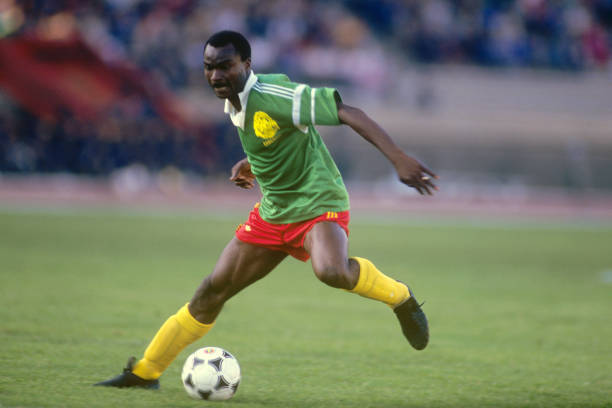
Born in Yaoundé, Cameroon, in 1952, Milla developed into one of Africa’s finest footballers. He spent most of his professional career in France, playing for clubs such as Valenciennes, Monaco, Bastia, Montpellier, and Saint-Étienne.
His talent was never in doubt. He was named African Footballer of the Year in 1976 and again in 1990, becoming one of the continent’s most respected players.
Milla also represented Cameroon at the 1982 World Cup in Spain. That tournament remains memorable because Cameroon exited without losing a single match. The Indomitable Lions drew all three group games but were eliminated on goal difference, leaving many observers convinced they deserved better.
By the end of the 1980s, however, Milla believed his time at the highest level had passed.
Roger Milla World Cup retirement was not accompanied by a grand farewell ceremony. He simply stepped away from elite football and settled into a quieter life on Réunion Island, a French territory in the Indian Ocean. He continued playing at a recreational level, but international football appeared to be firmly behind him.
At 38 years old, very few people expected to hear his name again on the world stage.
The Presidential Intervention That Changed History
The turning point came before the 1990 World Cup in Italy.
Cameroon were preparing for the tournament, but Milla was not part of the original plans. Many believed the team should focus on younger players who were actively competing at the highest level.
Then came an extraordinary intervention.
Cameroon President Paul Biya reportedly contacted football authorities and strongly pushed for Milla’s inclusion in the squad. The request carried significant weight. Despite concerns about age and fitness, the veteran forward was called back into the national team.
The Roger Milla World Cup retirement suddenly came to an end.
Milla accepted the invitation and returned to international football. Few expected him to play a major role. Most viewed his inclusion as a gesture of respect toward a national icon rather than a serious football decision.
The football world was about to discover just how wrong that assumption was.
Cameroon Shock the World at Italia 90
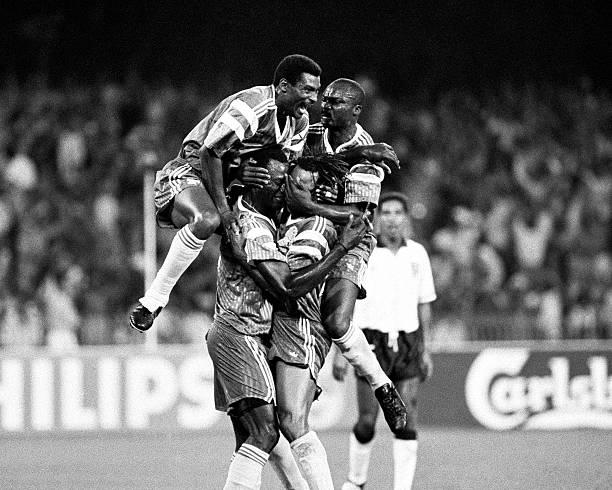
Cameroon arrived at the 1990 World Cup as complete outsiders.
Drawn alongside defending champions Argentina, Romania, and the Soviet Union, they were expected to struggle. The focus was on established football powers, not an African team carrying a 38-year-old striker who had recently emerged from retirement.
The tournament began with one of the greatest shocks in World Cup history.
Cameroon defeated Diego Maradona‘s Argentina 1-0 in the opening match. The result immediately grabbed global attention and signaled that the Indomitable Lions were not in Italy merely to participate.
Yet the biggest moments of the Roger Milla World Cup retirement story were still to come.
Four Goals That Changed Everything
Milla initially started matches on the bench.
When he entered Cameroon’s second group game against Romania, everything changed.
The veteran forward scored twice, showcasing intelligence, movement, and composure that younger defenders struggled to handle. His impact transformed the game and helped Cameroon secure a vital victory.
Then came the celebration.
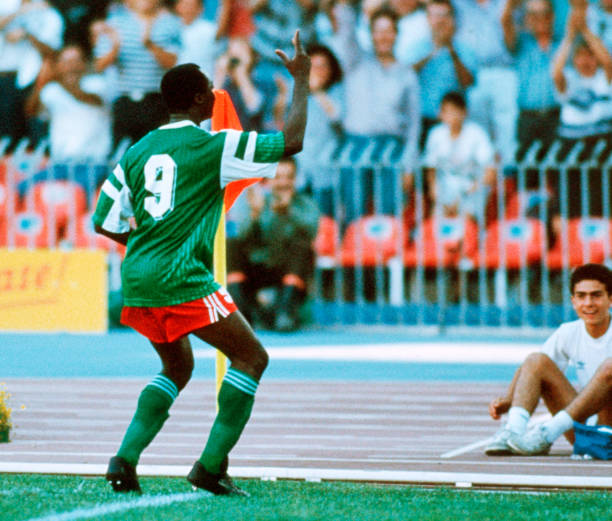
After scoring, Milla sprinted toward the corner flag and broke into a joyful dance. The image instantly became iconic. His celebration reflected freedom, confidence, and pure enjoyment of football.
The dance quickly became one of the defining moments of the entire tournament.
Milla was not finished.
In the Round of 16 against Colombia, he again emerged as Cameroon’s hero. He scored two more goals in extra time, helping his nation reach the quarter-finals.
One goal came after famously dispossessing goalkeeper René Higuita, whose adventurous style had left him vulnerable outside his penalty area.
Once again, the dance followed.
The Roger Milla World Cup retirement comeback was no longer simply a football story. It had become a global phenomenon.
A Historic Quarter-Final Run
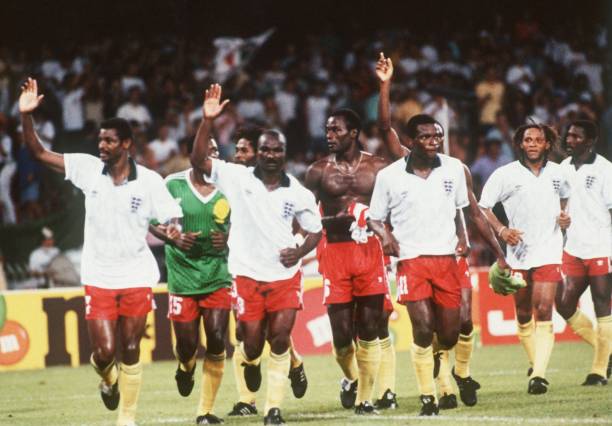
Cameroon’s journey eventually ended in the quarter-finals against England.
The African side pushed one of football’s traditional powers to the limit before losing 3-2 after extra time.
Although defeat was painful, their achievement was historic.
Cameroon became the first African nation to reach a World Cup quarter-final, breaking barriers and inspiring future generations across the continent.
Milla finished the tournament with four goals, all scored as a substitute.
For a player who had been living in semi-retirement only months earlier, the accomplishment was extraordinary.
Roger Milla World Cup retirement comeback had become one of the greatest underdog stories the sport had ever seen.
Roger Milla World Cup Retirement Comeback: Making History Again at 42
Most players would have ended their careers after such a remarkable tournament.
Roger Milla had other ideas.
Four years later, he returned for the 1994 World Cup in the United States.
At 42 years old, he scored against Russia and became the oldest goalscorer in World Cup history, a record that still stands today.
The achievement added another layer to an already legendary career and reinforced his place among football’s most unique figures.
Why Roger Milla’s Story Still Matters
Statistics alone cannot explain why the Roger Milla World Cup retirement story remains so beloved.
Yes, he scored four goals at the 1990 World Cup. Yes, he became the oldest World Cup goalscorer. Yes, he helped Cameroon make history.
But his legacy goes beyond numbers.
Milla reminded football fans that the game is about more than tactics, transfers, and trophies. It is about dreams, surprises, and moments that make people smile.
His comeback challenged assumptions about age and limitations. His dancing celebration showed that success could be enjoyed rather than merely endured.
Most importantly, he gave the world a story that continues to inspire decades later.
A retired footballer living quietly on an island received a phone call, returned to the biggest stage in sport, and danced his way into history.
Roger Milla World Cup retirement comeback remains one of football’s greatest fairytales, a reminder that sometimes the most unbelievable stories are the ones that actually happened.

1 comment
[…] Cameroon arrived at the 1990 FIFA World Cup in Italy, few expected the Indomitable Lions to survive a […]