World Cups are usually remembered for iconic goals, legendary players, and unforgettable moments. The 1950 World Cup had all of those. But it also had something else: confusion, withdrawals, political complications, logistical disasters, and one of the most shocking upsets in football history.
In many ways, the 1950 World Cup was the tournament that almost never happened.
From teams pulling out at the last minute to India withdrawing over a dispute involving footwear, the competition was filled with drama before a ball was even kicked. And somehow, it all ended with one of the greatest shocks the sport has ever seen.
The 1950 World Cup remains one of football’s strangest and most fascinating stories.
The World Cup Returns After a 12-Year Absence
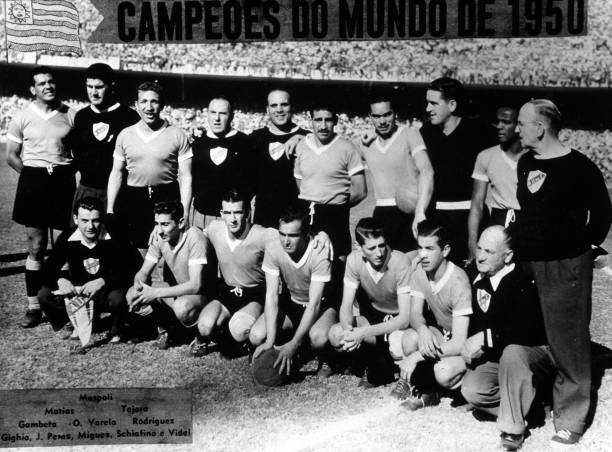
The world looked very different when the tournament arrived in Brazil.
The previous World Cup had taken place in 1938. The outbreak of World War II forced the cancellation of the 1942 and 1946 editions, leaving football’s biggest competition on hold for over a decade.
When FIFA finally decided to revive the tournament in 1950, there was excitement everywhere. However, the reality was far from smooth.
Many countries were still recovering from the devastation of war. Travel was expensive, infrastructure remained damaged in many regions, and several football associations struggled financially.
As a result, qualifying for the 1950 World Cup became chaotic almost immediately.
Teams Started Pulling Out
The original plan was for sixteen nations to participate.
That never happened.
Several countries withdrew before the tournament began. Some faced financial difficulties. Others struggled with travel arrangements. A few simply decided not to participate.
Scotland famously qualified but refused to travel because they had failed to finish first in the British Home Championship, despite earning a World Cup place.
Turkey also withdrew after qualifying.
These exits created significant problems for FIFA, which was already trying to organise the first World Cup since the war.
Yet the most famous withdrawal came from India.
Why India Pulled Out of the 1950 World Cup
Few football stories have generated as much debate as India’s withdrawal from the 1950 World Cup.
For decades, a popular story claimed that India refused to participate because FIFA would not allow players to compete barefoot.
At the time, several Indian footballers were accustomed to playing without boots or wearing minimal footwear. FIFA insisted that all participants follow international regulations requiring proper football boots.
The story quickly became one of football’s most famous myths.
The reality is slightly more complicated.
While the footwear issue likely played some role, historians generally agree that several factors contributed to India’s withdrawal. Travel costs were high, preparation time was limited, and the tournament was not viewed with the same prestige it enjoys today.
Football administrators in India reportedly prioritised other competitions, including the Olympics.
Still, the image of a nation missing the World Cup because of shoes has endured for generations.
Whether entirely true or partially exaggerated, it remains one of the most remarkable stories associated with the 1950 World Cup.
Brazil’s Ambitious Dream
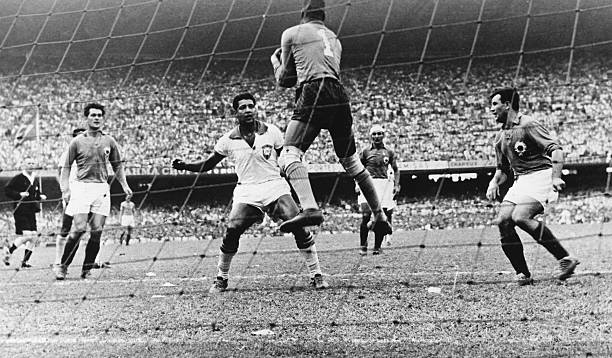
Despite the organisational headaches, Brazil was determined to make the tournament a success.
The country invested heavily in preparations and built the enormous Maracanã Stadium in Rio de Janeiro.
At the time, it was the largest football stadium in the world.
Brazil expected more than just hosting rights. They expected victory.
Their national team was loaded with talent and entered the tournament as overwhelming favourites.
The Brazilian public believed the trophy already belonged to them.
Newspapers printed celebratory headlines before the decisive match had even been played.
That confidence would soon prove disastrous.
A Unique Tournament Format
Unlike modern World Cups, the 1950 edition did not feature a traditional knockout final.
Instead, the tournament used a final group stage involving four teams:
- Brazil
- Uruguay
- Spain
- Sweden
The winner of the group would become world champion.
Brazil dominated the competition, scoring goals for fun and crushing opponents along the way.
By the time they reached the final match against Uruguay, the situation seemed simple.
Brazil only needed a draw to win the World Cup.
Uruguay needed a victory.
Almost nobody believed the Uruguayans could pull it off.
The Maracanazo
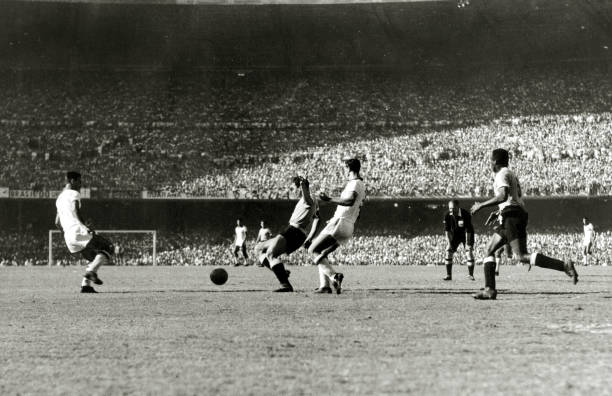
What happened next became one of football’s most famous moments.
An estimated 200,000 spectators packed the Maracanã Stadium on 16 July 1950.
Many had already started celebrating.
Brazil took the lead early in the second half and appeared to be cruising toward the title.
Then everything changed.
Uruguay equalised through Juan Alberto Schiaffino.
The atmosphere inside the stadium shifted instantly.
With just minutes remaining, Alcides Ghiggia broke down the right flank and fired a shot past Brazilian goalkeeper Moacir Barbosa.
Uruguay led 2-1.
The crowd fell silent.
What followed became known as the Maracanazo, meaning “the blow of the Maracanã.”
It remains one of the greatest upsets in football history.
The Silence That Shocked the World
Many players later described the silence inside the stadium as surreal.
A crowd of roughly 200,000 people had gone from celebration to disbelief in a matter of minutes.
Brazilian journalist Nelson Rodrigues famously referred to the defeat as the nation’s “Hiroshima.”
For Brazil, the loss became a national trauma.
For Uruguay, it became football immortality.
Even today, the Maracanazo remains one of the defining moments in World Cup history.
Why the 1950 World Cup Still Matters
The 1950 World Cup was far from perfect.
Teams withdrew. Schedules changed. Travel problems emerged. The tournament format confused many observers.
Yet despite all its flaws, it produced one of football’s most enduring stories.
It demonstrated the unpredictability that makes the World Cup special. No matter how strong a team appears, no matter how confident a nation becomes, football always has the power to surprise.
The tournament also marked the beginning of Brazil’s long journey toward becoming a global football powerhouse. The pain of 1950 helped shape the teams that would later dominate world football.
A World Cup Unlike Any Other
Looking back, the 1950 World Cup feels almost impossible to believe.
A tournament returning after a 12-year absence. Nations withdrawing at the last minute. India becoming linked forever to a footwear controversy. A final group stage deciding the champion. And a stunning upset witnessed by the largest crowd football has ever seen.
Modern World Cups are carefully planned global spectacles.
The 1950 World Cup was messy, chaotic, and unpredictable.
And that is exactly why it remains one of the most fascinating tournaments football has ever produced.

7 comments
Hi there to all, for the reason that I am genuinely keen of reading this website’s post to be updated on a regular basis. It carries pleasant stuff.
This was beautiful Admin. Thank you for your reflections.
Makaleniz açıklayıcı yararlı anlaşılır olmuş ellerinize sağlık
I just like the helpful information you provide in your articles
gerçekten güzel bir yazı olmuş. Yanlış bildiğimiz bir çok konu varmış. Teşekkürler.
Hocam detaylı bir anlatım olmuş eline sağlık
Emeğinize sağlık, bilgilendirmeler için teşekkür ederim.