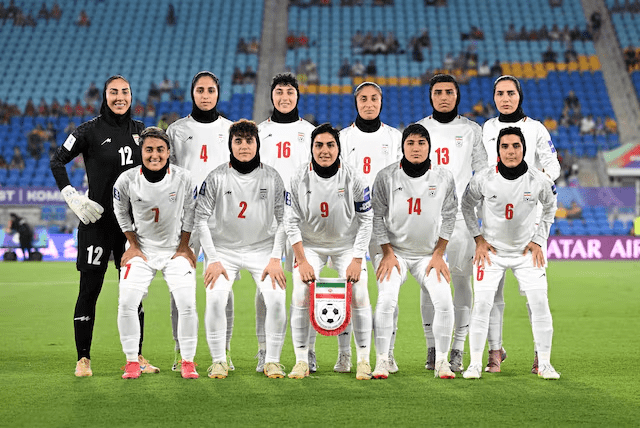
Members of the Iran women’s national football team have faced intense backlash and safety concerns after several players remained silent during the national anthem before their opening match of the AFC Women’s Asian Cup.
The incident occurred before Iran’s group-stage match against the South Korea women’s national football team in Australia. Instead of singing the anthem as is customary before international matches, some Iranian players stood quietly, a gesture widely interpreted as a silent protest connected to political tensions and conflict affecting their homeland.
What followed was a fierce reaction from state-linked figures in Iran, with a prominent television presenter publicly condemning the team and calling them “wartime traitors.”
Why the Anthem Silence Happened
The protest came during a period of extreme turmoil in Iran. Reports indicate that military conflict and political unrest were escalating in the country while the team was competing abroad.
Remaining silent during the anthem is a symbolic act often used by athletes to express dissent or solidarity with political movements. In Iran’s case, the gesture carried enormous risk because criticism of the government or perceived disloyalty can lead to severe consequences.
Human rights advocates say the players’ silence was likely meant to show concern for people affected by the crisis back home and to distance themselves from the Iranian regime.
State Media Reaction: “Traitors” Accusation
The reaction from Iranian state-aligned media was swift and severe. A state TV presenter denounced the players on air, labeling them “traitors during wartime” and suggesting they should face punishment for not singing the anthem.
In Iran, accusations of treason especially during wartime carry extremely serious implications. Analysts warn that such rhetoric can place athletes in real danger when they return home.
Because the players are representing the country internationally, the government typically expects them to demonstrate loyalty and patriotism publicly. Any perceived political defiance can provoke backlash.
Concerns for the Team’s Safety
Following the public condemnation, international organizations and activists began expressing concern for the players’ safety.
The global football players’ union FIFPRO called on football authorities to ensure the athletes are protected, particularly if they return to Iran after the tournament.
Human rights advocates and journalists have also urged governments especially the Australian authorities hosting the tournament to consider offering protection or asylum if the players feel unsafe returning home.
Such fears are not theoretical. Iranian athletes have previously faced arrests, bans, or forced retirements after making political gestures or statements.
Pressure on the Players During the Tournament
Reports suggest the pressure on the team intensified after the controversy.
By their next match in the tournament, some Iranian players were seen singing and saluting during the anthem, which observers believe may have occurred under pressure from officials monitoring the team.
The sudden change in behavior highlighted the delicate situation the athletes are navigating balancing personal beliefs, safety concerns, and the expectations of their government.
The Match Itself
On the field, Iran suffered a difficult start to the tournament. South Korea defeated them 3–0 in the opening match of Group A.
While the result was disappointing from a sporting perspective, the political controversy surrounding the anthem quickly overshadowed the football itself.
The team is scheduled to play additional group matches in the tournament, including a key game against the Philippines women’s national football team, which could determine whether they advance to the knockout stage.
A Pattern of Protest in Iranian Football
This is not the first time Iranian footballers have used anthem silence as a form of protest.
During the 2022 FIFA World Cup, the men’s national team also refused to sing the anthem before a match against England in apparent solidarity with protesters in Iran.
That moment drew global attention and demonstrated how athletes sometimes become symbols of wider political struggles.
Sport and Politics Collide
The situation illustrates how international sports events can become platforms for political expression, especially for athletes from countries experiencing unrest or strict political control.
For the Iranian women’s team, a brief moment of silence during the anthem has turned into a major controversy with potentially serious consequences. Their actions have sparked debate worldwide some viewing them as courageous, others condemning them as disloyal.
For now, the players remain focused on the tournament. But the questions surrounding their safety and future may continue long after the final whistle of the Asian Cup.